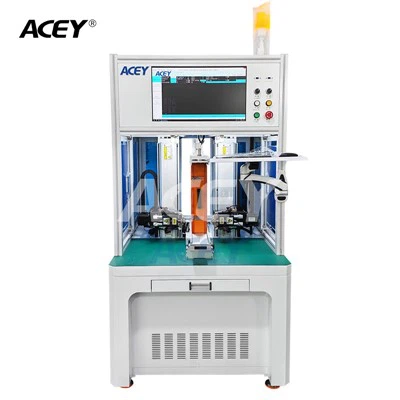
Analyzing the data collected by a Battery Pack Test System is a crucial step in understanding the performance, safety, and reliability of battery packs. As a leading supplier of Battery Pack Test Systems, we understand the significance of this process and are here to guide you through the key aspects of data analysis.
Understanding the Data Types
Before delving into data analysis, it's essential to understand the different types of data collected by a Battery Pack Test System. These typically include:
- Voltage Data: Voltage is one of the most critical parameters in battery testing. It provides insights into the state of charge (SOC), state of health (SOH), and potential issues such as over - voltage or under - voltage conditions. Monitoring voltage during charging, discharging, and rest periods can reveal the battery's ability to hold a charge and its internal resistance.
- Current Data: Current data shows the flow of electrical charge in and out of the battery pack. By analyzing the current profile, we can determine the charging and discharging rates, which are important for assessing the battery's power capabilities and efficiency. Abnormal current spikes or fluctuations may indicate short - circuits or other internal faults.
- Temperature Data: Temperature has a significant impact on battery performance and lifespan. High temperatures can accelerate chemical reactions within the battery, leading to reduced capacity and increased degradation. Monitoring temperature during testing helps identify overheating issues and ensure the battery operates within a safe temperature range.
- Capacity Data: Capacity is the amount of charge a battery can store. Measuring capacity over multiple charge - discharge cycles provides information about the battery's long - term performance and degradation rate. A decreasing capacity over time may suggest that the battery is reaching the end of its useful life.
Data Visualization
One of the first steps in data analysis is visualizing the collected data. Graphs and charts are powerful tools for presenting complex data in an easy - to - understand format.
- Line Graphs: Line graphs are ideal for showing the relationship between variables over time. For example, a line graph can be used to plot voltage, current, or temperature changes during a charge - discharge cycle. This allows us to identify trends, such as gradual voltage drops or temperature increases, and detect any sudden changes that may indicate a problem.
- Scatter Plots: Scatter plots are useful for exploring the relationship between two variables. For instance, we can create a scatter plot of voltage versus current to analyze the battery's internal resistance. A linear relationship between voltage and current indicates a stable internal resistance, while a non - linear relationship may suggest internal damage.
- Histogram Plots: Histograms are used to display the distribution of a single variable. For example, a histogram of capacity measurements can show the spread of capacity values across multiple battery packs. This helps us understand the consistency of the battery production process and identify any outliers.
Statistical Analysis
Statistical analysis techniques can provide deeper insights into the data.
- Mean, Median, and Standard Deviation: Calculating the mean, median, and standard deviation of key parameters such as voltage, current, and capacity helps us understand the central tendency and variability of the data. A high standard deviation may indicate inconsistent battery performance or manufacturing defects.
- Correlation Analysis: Correlation analysis measures the relationship between two or more variables. For example, we can analyze the correlation between temperature and capacity to determine how temperature affects battery capacity. A strong negative correlation may suggest that high temperatures lead to reduced capacity.
- Regression Analysis: Regression analysis can be used to model the relationship between variables and make predictions. For instance, a linear regression model can be used to predict the battery's capacity based on its age and usage history. This helps in estimating the remaining useful life of the battery.
Fault Detection and Diagnosis
Data analysis also plays a crucial role in fault detection and diagnosis. By comparing the collected data with predefined thresholds and normal operating patterns, we can identify potential faults in the battery pack.
- Threshold - Based Detection: Setting thresholds for voltage, current, temperature, and other parameters allows us to quickly identify abnormal values. For example, if the voltage exceeds the upper threshold during charging, it may indicate an over - voltage condition. Alarms can be set to notify operators when these thresholds are crossed.
- Pattern Recognition: Machine learning algorithms can be used to recognize normal and abnormal patterns in the data. By training a model on a large dataset of normal and faulty battery behavior, we can detect subtle changes in the data that may indicate an impending fault. This proactive approach helps prevent battery failures and reduce maintenance costs.
Advanced Analysis for Specific Applications
Depending on the application of the battery pack, additional analysis may be required.
- For Electric Vehicles (EVs): In EV applications, we need to analyze the battery's performance under different driving conditions, such as acceleration, deceleration, and constant - speed driving. This involves simulating real - world driving cycles during testing and analyzing the data to ensure the battery can meet the vehicle's power and range requirements.
- For Renewable Energy Storage: In renewable energy storage systems, the battery needs to be able to handle intermittent charging and discharging. Analyzing the data in terms of the battery's response to variable charging rates and long - term storage is essential for optimizing the system's performance.
Our Battery Pack Test Systems
As a Battery Pack Test System supplier, we offer a range of high - quality testing equipment to meet your needs. Our 100V 150A Energy - Feedback Battery Pack Charge Discharge Test Equipment is designed for high - power battery packs, providing accurate and reliable data collection. The 30V 20A Battery Aging Machine Battery Pack Tester is ideal for smaller battery packs and long - term aging tests. And our Battery Pack Charge Discharge Tester offers a versatile solution for general battery testing.
Conclusion
Analyzing the data collected by a Battery Pack Test System is a multi - faceted process that involves understanding different data types, visualizing data, applying statistical analysis, detecting faults, and conducting advanced analysis for specific applications. By leveraging these techniques, we can gain valuable insights into battery performance, ensure safety, and optimize battery usage.


If you are interested in our Battery Pack Test Systems or need further assistance with battery data analysis, we encourage you to contact us for procurement and in - depth discussions. Our team of experts is ready to help you find the best solutions for your battery testing needs.
References
- Johnson, M. (2018). Battery Testing and Analysis: Principles and Applications. Wiley.
- Smith, A. (2020). Data - Driven Approaches for Battery Fault Detection and Diagnosis. Journal of Power Sources, 450, 227789.
- Brown, C. (2019). Statistical Analysis of Battery Performance Data. Batteries, 5(3), 62.