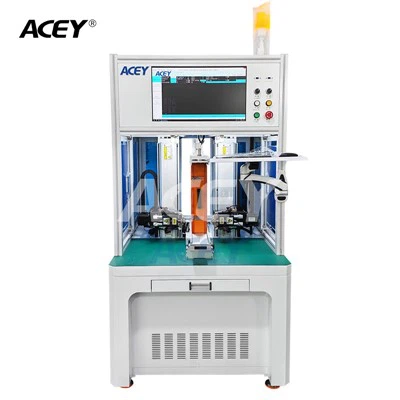
Hey there! As a supplier of Battery Testing Systems, I'm super stoked to chat about the programmability features of these nifty devices. Battery testing systems are crucial in today's world, where batteries power everything from our smartphones to electric vehicles. And the programmability features are what make these systems so versatile and useful.
First off, let's talk about custom test profiles. One of the coolest things about modern battery testing systems is that you can create your own test profiles. This means you can set up specific charge and discharge cycles, voltage limits, and current levels according to the requirements of the battery you're testing. For example, if you're testing a high - performance lithium - ion battery for an electric car, you can program a test profile that mimics real - world driving conditions. You can set different charge rates during acceleration and deceleration phases, and different discharge rates when the vehicle is cruising. This level of customization allows for accurate and relevant testing, ensuring that the battery will perform well in its intended application.
Another great programmability feature is the ability to schedule tests. You don't have to be sitting in front of the testing system all the time. You can program the system to start a test at a specific time. This is especially handy if you have a large number of batteries to test. You can set up a series of tests to run overnight or during off - peak hours, maximizing the efficiency of your testing process. For instance, you can schedule a batch of tests for the new Thermostatic Prismatic Battery Charge Discharge Tester to start at 2 am, so that by the time you come into the office in the morning, the results are ready for you to analyze.
Data logging and analysis are also key programmability features. The battery testing system can be programmed to record a wide range of data during the test, such as voltage, current, temperature, and capacity. This data can then be analyzed to evaluate the performance of the battery. You can program the system to generate reports in different formats, like CSV or PDF, which can be easily shared with your team or clients. Moreover, you can set up alerts based on certain data thresholds. For example, if the battery temperature exceeds a certain limit during the test, the system can send you an email or a text message alert. This helps you catch potential problems early and take appropriate action.
The programmability of battery testing systems also extends to communication interfaces. Most modern systems can be connected to a computer or a network, allowing for remote control and monitoring. You can program the system to communicate with other devices or software in your testing environment. For example, you can integrate the battery testing system with a laboratory management software, so that the test data is automatically imported into the software for further analysis and storage. This seamless integration streamlines your testing workflow and improves the overall efficiency of your operations.
Now, let's take a look at some specific products and how their programmability features work. The 5V 6A Battery Charge Discharge Test Equipment is a great example. It offers a user - friendly interface that allows you to easily program different test parameters. You can set the charge and discharge currents, the cut - off voltages, and the number of charge - discharge cycles. The system also has a built - in timer, so you can program the duration of each test phase. This flexibility makes it suitable for testing a variety of small - to - medium - sized batteries, such as those used in consumer electronics.
The Prismatic Battery Capacity Tester With Alligator Clips is another interesting product. It has advanced programmability features that enable accurate capacity testing of prismatic batteries. You can program the tester to perform a constant - current charge followed by a constant - voltage charge, which is a common charging method for lithium - ion batteries. The system can also be programmed to measure the battery capacity under different load conditions, giving you a comprehensive understanding of the battery's performance.
In addition to these features, many battery testing systems offer firmware updates. This means that as new testing requirements emerge or as the technology improves, you can update the system's software to add new programmability features. For example, if there are new standards for battery safety testing, the manufacturer can release a firmware update that allows you to program the system to meet these new standards.


So, why are these programmability features so important? Well, they save you time and money. By being able to customize tests, schedule them, and analyze data efficiently, you can reduce the time it takes to test a battery and ensure that you're getting accurate results. This means you can bring your products to market faster and with higher quality.
If you're in the market for a battery testing system, I encourage you to consider the programmability features. Look for a system that offers the flexibility and functionality you need for your specific testing requirements. And if you have any questions or want to learn more about our products, don't hesitate to reach out. We're here to help you find the perfect battery testing solution for your business. Whether you're a small startup or a large corporation, our battery testing systems can meet your needs. So, let's start a conversation and see how we can work together to improve your battery testing process.
References
- Battery Testing Handbook: A Guide to Testing and Evaluating Batteries, 2nd Edition
- Journal of Power Sources: Various articles on battery testing and system programmability