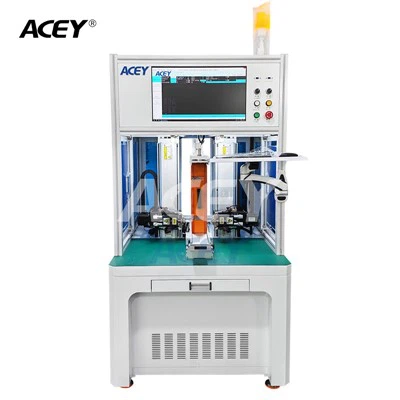
The size of a cell plays a crucial role in the testing process of a Lithium Ion Cell Tester. As a leading supplier of Lithium Ion Cell Testers, we have witnessed firsthand how different cell sizes can impact the accuracy, efficiency, and overall performance of the testing equipment. In this blog post, we will explore the various ways in which cell size affects the testing process and how our advanced testers are designed to handle these challenges.
Impact of Cell Size on Testing Accuracy
One of the primary ways in which cell size affects the testing process is through its impact on testing accuracy. Smaller cells typically have lower capacities and internal resistances, which can make it more challenging to measure their electrical parameters accurately. For example, when testing a small cell, even a slight variation in the measurement equipment or testing conditions can result in a significant error in the measured capacity or voltage.
On the other hand, larger cells have higher capacities and internal resistances, which can make them more stable and easier to measure. However, larger cells also require more power to charge and discharge, which can put additional stress on the testing equipment and increase the risk of overheating or other safety issues.
To ensure accurate testing results for cells of all sizes, our Lithium Ion Cell Testers are equipped with high-precision sensors and advanced algorithms that can compensate for the variations in cell size and electrical characteristics. Our testers also feature a wide range of testing modes and parameters that can be customized to meet the specific requirements of different cell sizes and applications.
Impact of Cell Size on Testing Efficiency
Another important factor to consider when testing Lithium Ion cells is the testing efficiency. The time required to test a cell depends on several factors, including the cell size, capacity, and the testing parameters. Smaller cells typically have lower capacities and can be tested more quickly than larger cells. However, testing multiple small cells simultaneously can be time-consuming and require more complex testing equipment.
Larger cells, on the other hand, require more time to charge and discharge, which can increase the overall testing time. However, testing larger cells can also be more efficient in terms of the number of cells that can be tested per unit of time. For example, our 5V 10A 256CHS Battery Charge Discharge Test Equipment is capable of testing up to 256 cells simultaneously, which can significantly reduce the testing time for large batches of cells.
To improve the testing efficiency for cells of all sizes, our Lithium Ion Cell Testers are designed with advanced features such as multi-channel testing, parallel charging and discharging, and automatic data logging. These features allow our testers to test multiple cells simultaneously and reduce the overall testing time without compromising on the accuracy of the testing results.
Impact of Cell Size on Testing Safety
Safety is always a top priority when testing Lithium Ion cells. The high energy density of Lithium Ion cells makes them potentially hazardous if not handled properly. The size of a cell can also impact the safety of the testing process. Smaller cells typically have lower capacities and are less likely to cause a significant safety hazard if they malfunction. However, testing multiple small cells simultaneously can increase the risk of short circuits or other safety issues.
Larger cells, on the other hand, have higher capacities and can store more energy, which can make them more dangerous if they malfunction. Testing larger cells also requires more power and can generate more heat, which can increase the risk of overheating or other safety issues.
To ensure the safety of the testing process for cells of all sizes, our Lithium Ion Cell Testers are equipped with a range of safety features such as overcharge protection, over-discharge protection, short circuit protection, and temperature monitoring. Our testers also feature a robust design and high-quality components that can withstand the high currents and voltages required for testing larger cells.
Our Advanced Lithium Ion Cell Testers
At our company, we understand the importance of providing high-quality Lithium Ion Cell Testers that can handle cells of all sizes and meet the specific requirements of different applications. That's why we have developed a range of advanced testers that are designed to provide accurate, efficient, and safe testing for Lithium Ion cells.
Our 5V 40A Polymer Battery Charge Discharge Capacity Tester is specifically designed for testing polymer Lithium Ion batteries. This tester features a high-precision sensor and advanced algorithms that can accurately measure the capacity, voltage, and internal resistance of polymer batteries. The tester also features a wide range of testing modes and parameters that can be customized to meet the specific requirements of different polymer battery applications.
Our 5V 60A Prismatic Li Ion Battery Capacity Tester is designed for testing prismatic Lithium Ion batteries. This tester features a high-power output and advanced safety features that can handle the high currents and voltages required for testing prismatic batteries. The tester also features a user-friendly interface and a range of testing modes and parameters that can be easily customized to meet the specific requirements of different prismatic battery applications.
Conclusion
In conclusion, the size of a cell has a significant impact on the testing process of a Lithium Ion Cell Tester. Smaller cells require more precise measurement equipment and testing conditions to ensure accurate results, while larger cells require more power and safety features to handle the high currents and voltages. At our company, we have developed a range of advanced Lithium Ion Cell Testers that are designed to handle cells of all sizes and meet the specific requirements of different applications.
If you are looking for a reliable and high-quality Lithium Ion Cell Tester, please contact us to discuss your specific requirements. Our team of experts will be happy to help you choose the right tester for your needs and provide you with the support and service you need to ensure the success of your testing process.


References
- Arora, P., Zhang, Z., & White, R. E. (1999). Comparison of modeling predictions with experimental data from plastic lithium-ion batteries. Journal of the Electrochemical Society, 146(1), 35-42.
- Tarascon, J. M., & Armand, M. (2001). Issues and challenges facing rechargeable lithium batteries. Nature, 414(6861), 359-367.
- Yoshio, M., Brodd, R. J., & Kozawa, A. (Eds.). (2009). Lithium-Ion Batteries: Science and Technologies. Springer Science & Business Media.