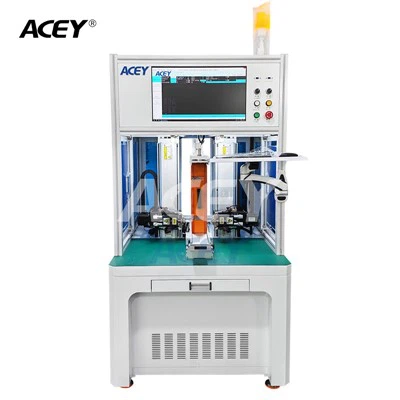
Hey there! As a supplier of Battery Pack Spot Welders, I often get asked about the power requirements for these nifty machines. So, let's dig into it and break it down in a way that's easy to understand.
First off, what exactly is a battery pack spot welder? Well, it's a device used to weld battery cells together to form a battery pack. Whether you're making a small battery pack for a DIY project or a large one for industrial use, the spot welder plays a crucial role. It creates a strong and reliable connection between the battery cells, ensuring the overall performance and safety of the battery pack.
Now, onto the power requirements. The power needed for a battery pack spot welder depends on several factors. One of the most important factors is the type and size of the battery cells you're working with. Different battery cells have different resistance levels, and the spot welder needs to provide enough power to overcome this resistance and create a proper weld.
For example, if you're working with small 18650 lithium-ion battery cells, the power requirements might be different compared to larger battery cells. The 18650 cells have a relatively low internal resistance, and a spot welder with a moderate power output can usually do the job. Our Automatic 18650 Battery Pack Spot Welder is specifically designed for these types of cells. It provides just the right amount of power to create strong and consistent welds without overheating the cells.
On the other hand, if you're dealing with larger lithium battery cells, such as those used in high-capacity energy storage systems or industrial equipment, you'll likely need a more powerful spot welder. The 8000A Lithium Battery Spot Welder Welding Equipment is a great option for these applications. With its high current output of 8000A, it can easily handle the higher resistance of larger battery cells and create reliable welds.
Another factor that affects the power requirement is the thickness of the tabs or connectors you're using to weld the battery cells. Thicker tabs require more power to heat up and create a proper weld. If you're using thin tabs, a lower-power spot welder might be sufficient. But if you're working with thick copper or nickel tabs, you'll need a more powerful machine to ensure a good weld.
The welding speed also plays a role in determining the power requirements. If you need to weld a large number of battery cells quickly, you'll need a spot welder with a higher power output. This is because the welder needs to deliver enough energy in a short period of time to create a strong weld. Our Lithium Ion Battery Spot Welding Machine is designed to offer a high welding speed while maintaining the quality of the welds.
In addition to the power output, the power source of the spot welder is also important. Most battery pack spot welders can be powered by either a battery or an AC power supply. Battery-powered spot welders are more portable and can be used in remote locations where there's no access to an AC outlet. However, they usually have a limited power capacity and need to be recharged regularly. AC-powered spot welders, on the other hand, can provide a continuous and stable power supply, making them suitable for long-term and high-volume welding jobs.
When choosing a battery pack spot welder, it's important to consider your specific needs and requirements. If you're just starting out with small DIY battery pack projects, a lower-power and more affordable spot welder might be a good choice. But if you're running a professional battery pack manufacturing business, you'll likely need a high-power and reliable spot welder.
We offer a wide range of battery pack spot welders to meet different needs and budgets. Whether you're looking for a simple and easy-to-use machine for home projects or a high-performance industrial-grade spot welder, we've got you covered. Our spot welders are designed with the latest technology and high-quality components to ensure reliable performance and long service life.
If you're interested in learning more about our battery pack spot welders or have any questions about the power requirements, feel free to reach out to us. We're always happy to help you find the right spot welder for your needs. Just drop us a message and our team of experts will get back to you as soon as possible.
In conclusion, the power requirement for a battery pack spot welder depends on various factors such as the type and size of the battery cells, the thickness of the tabs, the welding speed, and the power source. By understanding these factors, you can choose the right spot welder that provides the optimal power for your specific welding needs.


References
- Battery Technology Handbook
- Welding Principles and Applications