Despite the booming industry, lithium battery pack production faces numerous significant challenges. Among them, high defective rates have become a key obstacle hindering both business development and industry progress. The production process is plagued by a complex interplay of factors, making the defective rate a particularly prominent issue. From variations in battery cell quality to the stability of the production process, equipment precision, and operator compliance, every link can contribute to the generation of defective products.
A high defective rate primarily leads to a significant increase in production costs. Defective products require rework, repair, or even scrapping, which inevitably results in a significant waste of raw materials, labor, and time. Raw material costs are relatively high, as the battery cells, electrolytes, separators, and various electronic components required for the lithium battery pack assembly line are relatively expensive. Once defective products occur, the cost of these raw materials translates directly into losses. Labor costs are also significant, as rework and repairs require additional man-hours, increasing labor costs. Furthermore, defective products extend production cycles, impacting equipment utilization and further increasing production costs.
An excessively high defective product rate can also severely impact a company's market competitiveness. In today's fiercely competitive market, where consumers demand extremely high quality, product quality is the lifeline of any company. A high defective product rate means that product reliability and stability cannot be guaranteed. This not only damages a company's brand image and reputation, but also leads to decreased customer satisfaction and an increased risk of customer churn. Once consumers question a company's product quality, the company becomes passive in the market and its market share gradually erodes.
Analysis of the Causes of High Defective Rates
To address the high defective rate of lithium battery packs, we must thoroughly analyze the underlying causes. This is a complex systemic issue involving multiple key factors, including raw materials, production processes, equipment, and personnel, each of which plays a significant role in the generation of defective products.
(I) Raw Material Issues
As the core component of lithium batteries, the quality of battery cells directly determines their performance and safety. Cells produced by different manufacturers can vary significantly in key parameters such as capacity, internal resistance, and cycle life. Even different batches of cells from the same manufacturer can exhibit inconsistent parameters due to subtle variations in the production process. This inconsistency can reduce the compatibility between cells during the lithium battery module pack production process, affecting the performance stability of the entire battery module and increasing the probability of defective products.
The quality of the protection board is also crucial. It is responsible for protecting the battery cells from overcharge, over-discharge, and overcurrent, and is a critical line of defense for the safe and stable operation of lithium batteries. If the protection board's circuit design is inappropriate and the electronic components are of substandard quality, it may not provide the necessary protection at critical moments. In the event of overcharging, the protective board cannot promptly shut off the charging circuit. The battery cells may suffer serious problems such as bulging, fire, or even explosion due to overcharging. These products are naturally considered defective.
As the physical protective layer of lithium batteries, the outer casing must possess excellent mechanical strength, corrosion resistance, and insulation. If the outer casing material does not meet the required quality requirements, it is prone to cracking or deformation during production, transportation, or use, exposing the internal battery cells to the external environment. This can lead to battery performance degradation or failure, resulting in defective products.
(II) Production Process Defects
Welding is a key process in the lithium ion battery pack assembly line, primarily used to connect battery cells, protective boards, and other electronic components. Improper welding process parameters, such as excessively high or low welding temperatures or excessively long or short welding times, can result in poor weld quality. Excessively high welding temperatures can overheat the surrounding materials, leading to brittle solder joints, cold joints, or even short circuits. Excessively low welding temperatures can result in a weak weld, increased contact resistance, and compromised conductivity and stability of the battery module, ultimately resulting in defective products. During the assembly process, the position, sequence, and force of each component must be strictly controlled. Improper operation can lead to poor fit between components, compromising the overall structural stability of the battery module. Improper alignment of the battery cells during assembly can result in uneven pressure distribution between the cells. This leads to inconsistent expansion and contraction during charging and discharging, accelerating cell aging, reducing the performance and lifespan of the battery module, and resulting in defective products.
Testing is a crucial step in ensuring the quality of lithium-ion battery packs. By examining key parameters such as battery module voltage, current, capacity, and internal resistance, quality issues can be detected promptly. However, if the testing equipment is not precise enough or the testing methods are inaccurate, potential defects may not be accurately detected, resulting in some defective products being passed on to the next process or the final market.
(III) Hidden Dangers of Equipment Failure
As production equipment ages, its components gradually wear and age, and its performance and accuracy decline. In battery cell sorting equipment, reduced sensor accuracy can lead to inaccurate detection of cell parameters, causing some cells that don't meet the required parameters to be selected for production, impacting battery module quality and increasing the likelihood of defective products.
Equipment accuracy is crucial for lithium battery pack production, directly impacting product consistency and performance stability. Reduced welding equipment accuracy can lead to problems such as misaligned solder joints and uneven weld strength, making the battery module's electrical connections unreliable and prone to faults like cold solder joints and short circuits, resulting in defective products.
If equipment is not maintained promptly, potential faults can go undetected and eliminated, making the equipment prone to sudden failures during operation. Sudden equipment downtime not only interrupts the production process but can also damage products being processed, increasing the number of defective products. Furthermore, equipment failure can reduce production efficiency. To meet production targets, companies may continue production without fully repairing their equipment, further increasing the risk of defective products.
(IV) Human Resources Shortcomings
Lithium battery pack production involves multiple complex processes and operational procedures, requiring employees to possess high-level professional skills and extensive experience. Inadequate operational skills and lack of familiarity with equipment can easily lead to operational errors. During the welding process, employees failing to properly master the operation of welding equipment can lead to inconsistent welding quality, resulting in problems such as cold joints and short circuits, resulting in defective products. Furthermore, new employees, lacking sufficient training and practical experience, may not fully understand the production process requirements and standards, and may not strictly adhere to them during operation, further increasing the probability of defective products.

Some employees may lack an understanding of the importance of product quality, taking chances during production and failing to strictly adhere to quality standards and operating procedures. During the cell assembly process, in the pursuit of speed, employees may neglect to inspect the cell's appearance, potentially integrating scratched or damaged cells into battery modules, compromising product quality and safety and resulting in defective products. Furthermore, during the quality inspection process, if employees are irresponsible and perfunctory, they may miss some products with quality issues, allowing them to enter the market. Employees' work attitude and sense of responsibility have a direct impact on product quality. If employees lack enthusiasm and initiative and are perfunctory in their work, it's difficult to ensure product quality. During the production process, if employees fail to carefully check the specifications and types of raw materials, they may use the wrong materials, leading to product quality issues and defective products. Furthermore, if employees fail to promptly report production anomalies to their superiors and implement effective solutions, the problem can escalate, increasing the number of defective products.
Practical Strategies for Reducing Defective Product Rates
Faced with the severe challenge of excessively high defective product rates in lithium battery pack production, we must actively explore effective solutions. We must build a comprehensive, multi-layered quality control system encompassing multiple dimensions, including raw material control, production process optimization, equipment maintenance and upgrades, personnel training, and the introduction of quality management systems. This will significantly reduce defective product rates and enhance production efficiency and market competitiveness.
(I) Strictly Control Raw Material Quality
High-quality raw materials are the cornerstone of high-quality lithium battery pack products. When selecting a battery cell supplier, companies should conduct a comprehensive and in-depth investigation of their production processes, quality control systems, and product reputation. They can consult authoritative industry reports, the experience of other companies, and conduct on-site inspections of suppliers to ensure they possess stable production capacity and reliable product quality. For example, renowned battery cell suppliers like CATL have established a strong market reputation for their advanced production technology and strict quality control, making them the preferred choice of many lithium battery pack companies.
Each batch of raw materials undergoes rigorous and meticulous inspection. Inspection items should cover key parameters such as the battery cell's capacity, internal resistance, and cycle life; the overcharge protection voltage, over-discharge protection voltage, and overcurrent protection value of the protection board; and the casing's dimensional accuracy, mechanical strength, and insulation performance. Professional testing equipment, such as high-precision internal resistance testers, capacity testers, and insulation resistance testers, can be used to ensure the accuracy of test data. Detailed inspection records should be established and archived for each batch of raw materials to ensure rapid tracing back to the raw materials if problems arise during subsequent production.
Companies should also establish a scientific and rational inventory management system and strictly control the storage environment of raw materials. Environmental factors such as temperature, humidity, and ventilation have a significant impact on the performance of raw materials such as battery cells. Generally, battery cells should be stored at a temperature between 5°C and 35°C, and a relative humidity between 20% and 70%. The first-in-first-out principle should be followed, prioritizing the use of older raw materials to avoid performance degradation due to prolonged storage. Regular spot checks of inventory raw materials should also be conducted to promptly identify and address potential quality issues.
(II) Optimizing Production Processes
Optimizing the welding process is a key step in improving the production quality of lithium battery packs. Welding parameters must be precisely adjusted based on the specific welding materials and welding requirements. For laser welding, parameters such as laser power, welding speed, and pulse width must be strictly controlled. When welding battery cell tabs, appropriate laser power ensures a good weld between the tab and the busbar while avoiding tab burnout due to excessive power or a weak weld due to insufficient power. Real-time monitoring of the welding process is also crucial. Visual inspection systems can be used to monitor the solder joint morphology and quality during the welding process, allowing for the timely detection and correction of welding defects.
Acey-LWG-Z laser welding machine continuous galvanometer fiber laser welding machine combined with gantry machine tool uses the most advanced fiber laser in the world as the laser light source, and is specially designed for high-reflection materials (aluminum).

During the assembly process, detailed and standardized operating procedures should be established, and employee training should be strengthened to ensure that every employee strictly adheres to these procedures. During the cell stacking process, the cells must be aligned and spaced evenly to avoid uneven stress distribution within the battery module due to improper cell alignment, which could affect battery performance. Quality inspections during the assembly process should also be emphasized, with multiple inspection points established to inspect semi-finished products after each assembly step to promptly identify and resolve any problems that arise.
Testing is the last line of defense in ensuring the quality of lithium battery packs, and continuous improvement of testing processes and methods is essential. In addition to conventional voltage, current, capacity, and internal resistance tests, additional testing should be conducted to assess battery module safety, reliability, and environmental adaptability. Tests for overcharge, over-discharge, short circuit, thermal shock, vibration, and drop should be conducted to comprehensively assess battery module performance. The accuracy and reliability of testing equipment should be improved, and regular calibration and maintenance should be performed to ensure the accuracy of test data. At the same time, it is necessary to establish a complete test data management system to analyze and mine the test data, and through data analysis, timely discover potential problems in the production process to provide a basis for improving the production process.
(III) Equipment Maintenance and Upgrades
Regular and comprehensive maintenance of production equipment is crucial for ensuring proper operation and extending its lifespan. A detailed equipment maintenance plan should be developed, clearly defining maintenance intervals, content, and standards. Equipment should be cleaned and inspected daily, with a weekly deep maintenance and monthly overhaul. When cleaning equipment, be sure to remove dust, oil, and other impurities from the surface to prevent them from entering the interior and affecting performance. When inspecting equipment, focus on key components such as transmissions, electrical components, and sensors, promptly identifying and replacing worn and aging parts. Equipment should also undergo regular lubrication, calibration, and other maintenance to ensure operational accuracy and stability.
With the continuous advancement of technology, production equipment is constantly being upgraded. If companies continue to use aging and outdated equipment, not only will production efficiency decline, but the probability of defective products will also increase. Therefore, companies should closely monitor industry equipment technology developments and promptly phase out severely outdated, underperforming, and costly equipment, while introducing advanced production equipment. Advanced equipment often features a higher degree of automation, more precise control capabilities, and improved stability, effectively improving production efficiency and product quality. For example, some new battery pack assembly line utilize automated cell sorting, assembly, and welding equipment, as well as intelligent quality inspection systems, significantly improving the accuracy and consistency of the production process and reducing defective product rates.
The introduction of advanced intelligent equipment, such as automated production lines, robots, and intelligent testing equipment, can significantly enhance the intelligence and efficiency of the production process. Automated production lines enable fully automated production from raw materials to finished product, reducing manual intervention and minimizing the impact of human factors on product quality. Robots offer high precision, high speed, and high stability in handling and assembly tasks, improving production efficiency and product quality consistency. Intelligent testing equipment leverages technologies such as artificial intelligence and big data to conduct faster and more accurate product inspections, promptly identifying and eliminating defective products. In the cell sorting process, intelligent testing equipment can rapidly and accurately detect cell parameters, enabling efficient cell sorting and improving the accuracy of cell assembly, thereby enhancing the performance and stability of battery modules.
(IV) Strengthening Personnel Training and Management
Comprehensive and systematic skills training is a key approach to improving employee operational proficiency and professionalism. Training should cover the fundamentals of lithium battery pack production, including production processes, equipment operation, and quality control. New employees should undergo on-the-job training to familiarize them with the work environment and workflow. Experienced employees should receive regular skills enhancement training to help them master new production techniques and process requirements. Training can be conducted through a combination of theoretical lectures, on-site demonstrations, and hands-on practice to enhance training effectiveness. For example, industry experts can be invited to provide theoretical lectures, employee visits to leading enterprises, and internal skills competitions can be held to stimulate employee learning enthusiasm and initiative, thereby enhancing their operational skills.
Through training and publicity, employees should continuously enhance their quality awareness and deepen their understanding of the importance of product quality to corporate development. Employees can be organized to study quality management system standards and quality incident cases to understand quality standards and requirements, as well as the potential serious consequences of quality issues. Quality bulletin boards can be set up at production sites to showcase excellent quality cases and warnings about quality issues, fostering a positive quality culture. We must also establish a quality incentive mechanism to commend and reward employees with outstanding quality performance and criticize and punish those who cause quality problems. This will encourage employees to actively participate in quality management and strictly adhere to quality standards and operating procedures.
We must improve the performance appraisal system, incorporating product quality indicators into the employee performance appraisal system and directly linking them to employee compensation, promotions, and bonuses. We must establish clear quality appraisal standards and quantitatively assess employee quality performance during the production process. During the welding process, employees will be assessed on indicators such as welding quality pass rate and solder joint defect rate; during the assembly process, employees will be assessed on indicators such as assembly accuracy and assembly efficiency. Through strict performance appraisals, we will incentivize employees to improve work quality and efficiency and reduce the number of defective products. We must also establish a quality problem traceability mechanism so that when quality problems occur, the responsible individuals can be quickly traced back and appropriate penalties will be imposed. At the same time, the problems will be analyzed and rectified to prevent recurrence.
(V) Introducing Advanced Quality Management Systems
Manufacturing Execution Systems (MES) enable real-time monitoring and management of the production process, enabling real-time collection, analysis, and feedback of production data. Through an MES system, companies can gain real-time visibility into the operating status of each piece of equipment on the production line, production progress, and product quality, enabling them to promptly identify and resolve production issues. During lithium battery pack production, the MES system collects and analyzes data from various processes, including cell sorting, welding, assembly, and testing. When an anomaly is detected in any process, the system issues an alert, prompting staff to make adjustments and address the issue. The MES system also generates various reports and analytical charts based on production data, providing decision support for company management and helping them optimize production processes, improve efficiency, and enhance product quality.
Statistical process control (SPC) systems analyze key quality data during production to determine whether the production process is stable, enabling them to promptly identify and prevent quality issues. In lithium battery pack production, the SPC system monitors and analyzes key parameters such as cell voltage, internal resistance, and capacity, as well as process parameters such as welding temperature, welding time, and assembly dimensions, in real time. By creating control charts, data distribution is visualized. When data falls outside the control range, the system issues a warning signal, prompting staff to adjust and optimize the production process, effectively reducing the probability of defective products. The SPC system can also analyze historical data to identify patterns and causes of quality fluctuations, providing a basis for continuous improvement of production processes and quality management.
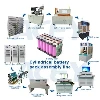
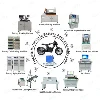
Acey New Energy specializes in providing one-stop solutions for semi-automatic/fully-automatic assembly lines of lithium battery packs used in ESS, UAV, E-Bike, E-Scooter, Power Tools, Two/Three Wheelers, Etc. In Addition, we provide a complete set of battery pack assembly equipment, such as Cell Grading Machine, Battery Sorting Machine, Insulation Paper Sticking Machine, CCD tester, Manual/Automatic Spot Welding Machine, BMS Tester, Battery Comprehensive Tester and Battery Pack Test System, etc.