What is Blue Film?
First, we need to understand what exactly this battery cell blue film is. It's not just a decorative film applied to a battery cell; it's an invisible guardian of the battery cell. Functionally, it serves two key functions.
On the one hand, there is physical protection. During the production, transportation, and subsequent assembly into modules of the battery cells, collisions and friction are inevitable. This blue film is like giving the battery cells a "protective suit", which can effectively prevent dust and impurities from entering the interior of the battery cells, and also avoid scratches and wear on the surface of the battery cells, protecting the structural integrity of the battery cells.
On the other hand, what is even more important is electrical insulation. The battery module is composed of multiple cells, and there is a certain voltage difference between the cells. The blue film has excellent insulation properties, which can prevent electrical contact between the cells and between the cells and other metal components of the module, avoiding short circuits. You should know that a short circuit is a very dangerous situation in the battery system. Even if it is minor, it can cause the module to be damaged; if it is serious, it may lead to serious safety accidents such as fires and explosions. Therefore, the integrity of the blue film directly relates to the safety and stability of the module, and must not be ignored.
Blue Film Damage: A Module Health Crisis
Given the importance of the blue film, damage can have disastrous consequences, effectively a module health crisis. The most immediate problem is failure to pass the insulation test. After module production is complete, rigorous insulation testing is performed, a critical step in ensuring safe module delivery. If the blue film of a battery cell is damaged, the metal casing of the cell may come into contact with other module components, resulting in a decrease in insulation resistance and failure to pass the insulation test. This means the module cannot be shipped normally, hindering production schedules and increasing production costs. Even more serious is the increased risk of leakage current. A damaged blue film allows the electrodes inside the cell to form a weak current path with the outside world, generating leakage current. This leakage current not only depletes battery power and affects the module's endurance, but can also cause the cell to overheat over time. When heat accumulates to a certain level, it can trigger thermal runaway, which can then spread throughout the entire module, leading to a safety incident.
Module Remediation
If you discover a damaged blue film on a battery cell, don't panic. Taking the right remedial measures can minimize losses. However, remediation efforts shouldn't be carried out blindly; they must be carefully planned and follow a specific process.

Preliminary Inspection and Assessment
The first step is to conduct a preliminary inspection and assessment of the battery cell module with a damaged blue film. This step is crucial, as it directly determines the appropriate remedial measures. During inspection, you can use specialized tools, such as a magnifying glass, to carefully observe the location, extent, and extent of the damage. You can also use an insulation tester to test the module's insulation performance to determine whether the damage has compromised its insulation performance.
During the assessment process, focus on the following aspects: First, the location of the damage. If the damage is in a critical area of the cell, such as near an electrode, the risk is relatively high. Second, the area of the damage. The larger the damage, the greater the impact on the cell's protective function, and the more difficult subsequent remediation efforts will be. Third, the depth of the damage. This will determine whether the blue film is merely scratched or completely destroyed, exposing the cell's internal metal structure. Only through comprehensive and meticulous testing and evaluation can a scientific and reasonable remediation plan be developed.
Minor Damage: Small Repairs, Big Impact
If, after inspection and evaluation, the cell's blue film is found to have only minor damage, such as a small scratch on the surface that does not expose the cell's metal casing and does not affect the module's insulation performance, a "minor repair" approach can be implemented.
The specific steps are as follows: Step 1: Clean the cell surface. Using a clean, dust-free cloth dampened with an appropriate amount of alcohol, gently wipe the damaged blue film and the surrounding area to remove dust, oil, and other impurities. Ensure the repair area is clean and dry. Step 2: Select an appropriate repair material. It is generally recommended to use specialized battery cell blue film repair glue or patch material. This material has excellent insulation and adhesion, and bonds well with the original blue film. Step 3: Repair. If using repair glue, apply it evenly to the damaged area, being careful not to apply too much glue to prevent overflow. If using patch material, cut the patch material to an appropriate size, place it over the damaged area, and gently press it with your fingers to ensure a tight fit with the original blue film, free of bubbles. Step 4: Curing. According to the instructions for the repair material, allow the repaired area to cure under appropriate temperature and humidity conditions. This typically requires a period of time to allow the glue or patch material to completely dry and cure.
When repairing minor damage, there are several important considerations to keep in mind. First, the choice of repair material is crucial. Be sure to choose products that meet industry standards and are reliable in quality. Avoid using inferior repair materials, as this can compromise the repair's effectiveness and even cause secondary damage to the battery cell. Second, maintain a clean environment during repair to prevent dust and impurities from entering the repair area, which could affect the quality of the repair. Third, after the repair is completed, the repaired area should be re-inspected to ensure the repair is secure and the insulation performance is normal.
Moderate Damage: Partial Replacement Strategy
When a cell's blue film exhibits moderate damage, such as a large area that partially exposes the cell's metal casing, but the cell's internal structure remains intact and the module's insulation performance is somewhat affected but not completely ineffective, a "partial replacement" strategy is necessary to remedy the situation.
The partial replacement process is relatively complex and is as follows: Step 1: Disassemble the module. First, remove the module containing the damaged blue film cell from the battery system. During disassembly, follow correct operating procedures to avoid damaging other module components. Also, take safety precautions, such as wearing insulating gloves and goggles, to prevent electric shock. Step 2: Remove the damaged cell. After disassembling the module, locate the cell with the damaged blue film and carefully remove it from the module. Avoid applying excessive force when removing the cell to avoid damaging the cell's electrodes or other components. Step 3: Remove the damaged blue film. Use a dedicated tool, such as a blade (be careful not to scratch the battery cell), to gently remove the damaged blue film from the battery cell surface. Be careful to control the force during removal, removing only the damaged area and leaving the film intact as much as possible to minimize impact on the battery cell. Step 4: Clean the battery cell surface. Use a dust-free cloth dampened with alcohol to thoroughly clean the battery cell surface, removing any remaining blue film fragments and impurities, ensuring a clean and smooth surface. Step 5: Apply a new blue film. Select a new blue film with the same specifications and material as the original one. Cut the new film to the appropriate size and shape based on the battery cell's size and shape, and carefully apply it to the area on the battery cell where the damaged film was removed. Ensure proper alignment during application, ensuring the new film adheres tightly to the battery cell surface without bubbles or wrinkles. Step 6: Reassemble the module. Place the battery cell with the new blue film back into the module and reassemble it according to the module assembly process. During assembly, carefully check that the connections between the battery cells are secure and that the overall module structure is intact.
When performing a partial replacement, there are several key points to note. First, when selecting the new blue film, ensure that its specifications and material match those of the original film. This ensures that its insulation and physical properties match those of the original film and do not affect the overall performance of the module. Second, when removing the damaged blue film and applying the new film, extreme care must be taken to avoid scratching or otherwise damaging the cell surface. Third, after reassembling the module, a comprehensive inspection, including insulation, voltage, and capacity tests, must be performed to ensure that module performance has returned to normal.
Severe Damage: Complete Disassembly and Reconstruction
If the cell's blue film is severely damaged, such as if the film is largely or completely torn, the cell's internal structure is damaged, or the module's insulation has completely failed, posing a serious safety hazard, then a "complete disassembly and reconstruction" of the module is necessary.
The steps for a complete disassembly and reconstruction are as follows: Step 1: Safely disassemble the module. Before disassembly, discharge the module to ensure it is de-energized to avoid electric shock during disassembly. Then, following the module disassembly process, gradually remove the module casing, connecting cables, and fixings, removing all battery cells. During the disassembly process, the cells must be carefully sorted and labeled, and the location and status of each cell must be recorded. The second step is cell screening. All removed cells undergo a comprehensive inspection, including visual inspection, voltage testing, capacity testing, and internal resistance testing. Cells with intact blue films and normal performance are screened. Cells with severe blue film damage, performance failure, or safety hazards should be stored and handled separately to prevent reuse. The third step is blue film replacement. For cells with normal performance but minor blue film damage (if such cells are present in the fully damaged module), the blue film should be repaired or replaced using the previously described methods for minor damage repair or partial replacement of moderate damage. For cells with completely damaged blue films, if the cell's performance still meets requirements and a suitable new blue film is available, the blue film can be completely replaced. When replacing the blue film, ensure that the new film is of the same specifications and material as the original and is adhered securely and evenly. The fourth step is module reassembly. Arrange the treated cells according to the original module design, install the connecting cables and fixings, and then assemble the module casing. During the assembly process, strictly follow the module's production process requirements to ensure secure connections and reliable insulation between the cells, and that the overall module structure meets design standards. The fifth step is module testing. After assembly, the module undergoes comprehensive performance and safety testing, including insulation testing, voltage balance testing, capacity testing, rate discharge testing, high and low temperature cycling testing, and vibration testing. Only by passing all test items can the rebuilt module meet performance and safety requirements.
There are several important considerations during a complete disassembly and reconstruction. First, compatibility between the new cells and the original module. If some cells need to be replaced, be sure to select cells with the same specifications, model, and performance parameters as the original cells. This ensures that the new cells are compatible with the other cells in the original module. This prevents inconsistent cell performance that could lead to overall module performance degradation or safety issues. Second, during the disassembly and reconstruction process, strict adherence to safety procedures and effective safety precautions must be implemented to prevent accidents such as electric shock and fire. Third, the entire process must be recorded, including disassembly steps, cell inspection data, blue film replacement, assembly process, and test results, for subsequent traceability and analysis.
Post-Remediation "Acceptance Checkpoint"
Regardless of the remediation method employed, after completion, the module must undergo a rigorous "acceptance checkpoint" for comprehensive testing to ensure that its performance and safety have been restored to normal before it can be put into service.
Insulation Testing
Insulation testing is a key component of post-remediation acceptance. Using an insulation tester, the insulation resistance between module cells and between the cells and the module casing is measured. According to relevant industry standards and module design requirements, insulation resistance must meet certain standards, typically requiring a minimum of a specified value (e.g., 100MΩ). If the insulation test fails, it indicates that insulation risks still exist in the module. The remediation process must be reviewed to identify the issue and address it again until the insulation test passes.
Capacity Test
The capacity test primarily verifies whether the module's actual capacity meets the design requirements. After fully charging the module, discharge it at the specified discharge rate and record the module's discharge capacity. Comparing the actual discharge capacity with the design capacity determines whether the module's capacity has returned to normal. If the capacity test results show that the module capacity is significantly lower than the design capacity, it may be due to damage to the battery cell during the blue film damage process or damage to the cell during the repair process. Further inspection of the battery cell's performance is necessary, and replacement is recommended if necessary.
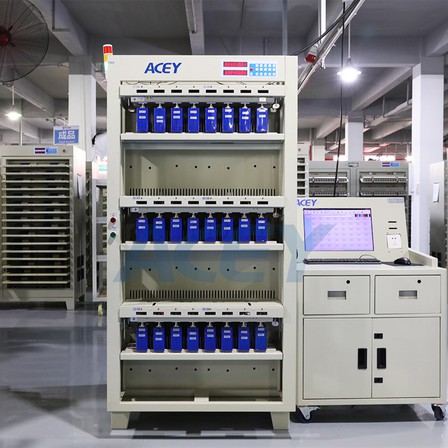
ACEY-BCT5100-48 lithium battery capacity tester uses modern electronic monitoring and control devices instead of manual work to monitor the real-time voltage, current, capacity, energy, formation state and other parameters of distributed battery formation in real time, diagnose and handle faults, record and analyze relevant data, so as to realize unattended and batch processing in the formation process, Computer control software for centralized monitoring and maintenance of equipment. It is a comprehensive application of data acquisition, network transmission, computer software, hardware equipment and other technologies.
Other Tests
In addition to insulation and capacity tests, other tests may be required depending on the module's actual conditions and usage requirements, such as voltage balance testing, internal resistance testing, rate discharge testing, high and low temperature cycling testing, and vibration testing. The voltage balance test primarily checks whether the voltages of all battery cells within the module are consistent, preventing individual cell voltages from being too high or too low, which could affect the module's lifespan and safety. The internal resistance test reveals variations in the cell's internal resistance. Cells with excessive internal resistance will experience reduced performance and may need replacement. The rate discharge test primarily checks the module's performance at different discharge rates to ensure it can meet the requirements of various operating conditions. The high- and low-temperature cycling and vibration tests simulate the harsh environmental conditions the module may encounter in actual use, verifying its environmental adaptability and reliability.
Only after all acceptance test items pass can the module's remedial work be considered successful and its return to service. Any issues discovered during the acceptance process must be promptly investigated and addressed until they are resolved and the test results pass.
About us
Acey Intelligent is specialized in researching and manufacturing of high-end equipment for lithium-ion batteries. We can not only provide one-stop solution for lithium ion battery production line for cylindrical battery, coin cell, pouch cell, but also provide one-stop solution for lithium battery pack assembly line, if you are new in lithium ion battery industry, and want to build your own lithium ion battery production line or lithium ion battery pack assembly line, we can provide you professional technical support and guidance, please feel free to contact us!