With the expanding applications of lithium batteries, their production volume is also increasing year by year. The production process of lithium batteries involves multiple complex stages, and any safety issue in any stage can lead to serious consequences, such as cell fires or explosions. These accidents not only cause huge economic losses but also threaten human lives. Therefore, it is particularly important to ensure the safety of lithium battery production lines; it is the cornerstone of the healthy and sustainable development of the entire lithium battery industry.

A Deep Dive into Production Line Safety Hazards
While the lithium battery production process is sophisticated and complex, it harbors numerous safety hazards. A slight oversight can lead to serious accidents. Let's delve into the main safety hazards present in lithium battery production lines.
(I) The "Danger Zone" of Chemical Management
Lithium battery production involves numerous chemicals, such as lithium, cobalt, nickel, and their compounds, as well as various organic solvents. These chemicals often possess a certain degree of toxicity and corrosiveness. Improper management is like planting "time bombs" in the production line, potentially causing leaks, explosions, or poisoning incidents at any time. For example, lithium hexafluorophosphate is a key component of lithium battery electrolytes. It decomposes rapidly upon contact with water, producing highly corrosive hydrogen fluoride gas. A leak not only severely corrodes production equipment but also threatens the health and lives of personnel on site. Inhalation of hydrogen fluoride gas can cause irreversible damage to the respiratory tract and lungs. Furthermore, many manufacturers lack strict regulations regarding the storage and use of chemicals and fail to update safety data sheets in a timely manner, leading to insufficient awareness among employees of the potential hazards of chemicals and increasing the risk of accidents due to negligence during operation.
(II) Equipment Hazards: The Crisis of Aging and Misoperation
Production equipment is the core of lithium battery production lines, and its safety directly affects the stability and safety of the entire production process. However, problems such as equipment aging, poor maintenance, or improper operation are like hidden "killers," potentially causing serious accidents such as fires and explosions at any time. Some companies, in order to reduce costs, use aging equipment for extended periods, ignoring the safety risks brought about by declining equipment performance. Wear and tear on equipment components and aging circuits can all lead to equipment malfunctions during operation. For example, a fire broke out in the coating equipment of a lithium battery manufacturer due to a long period of neglect in maintenance, causing a short circuit in the internal wiring and resulting in significant economic losses. Furthermore, operator error is also a major cause of accidents. If operators are not professionally trained and unfamiliar with the operating procedures, they may misoperate, leading to equipment malfunctions and ultimately safety accidents.
(III) Dust Explosions: An Invisible Threat
The lithium battery production process generates metallic and chemical dusts, which are explosive under certain conditions, posing an invisible threat to the production line. When combustible dust is suspended in the air at an appropriate concentration, forming an explosive mixture, it will explode upon encountering sufficient ignition energy. Metallic dusts used in lithium battery production, such as aluminum and magnesium powders, as well as some chemical dusts, are all combustible dusts. If the ventilation and dust removal facilities in the production workshop are inadequate, dust will accumulate, and once it reaches an explosive concentration, it may explode upon encountering an open flame, static electricity, or other ignition source. Dust explosions not only severely damage production equipment but also generate powerful shock waves and high temperatures, posing a significant threat to the lives of on-site personnel. Furthermore, dust explosions can trigger secondary explosions, causing even greater harm.

(IV) Electrical Safety: The Invisible Trap
The production and testing of lithium batteries rely heavily on electrical equipment. However, inadequate insulation and grounding measures can create invisible traps, leading to accidents such as electric shock and short circuits. During long-term operation, the insulation materials of electrical equipment may age and deteriorate, causing leakage. If operators accidentally come into contact with leaking equipment, electric shock can occur. Aging, overload, and short circuits in electrical wiring can also cause fires. For example, in the testing workshop of a lithium battery factory, aging electrical wiring and damaged insulation caused a short circuit during equipment operation, resulting in a fire, causing casualties and property damage. Some companies have oversights in electrical safety management, failing to regularly inspect the safety of electrical equipment and neglecting to provide professional electrical safety training to operators, all of which increase the risk of electrical accidents.
(V) Weaknesses in Staff Awareness: A Critical Link in Safety
Employees are direct participants in the production process, and their safety awareness and adherence to operational procedures directly impact production safety. However, many companies invest insufficiently in safety training, resulting in weak safety awareness among employees and inadequate understanding and implementation of safe operating procedures. This has become a critical weakness in lithium battery production line safety. Some employees, in pursuit of efficiency, disregard safety regulations and violate operating procedures. For example, smoking in flammable and explosive areas or failing to wear personal protective equipment as required. These seemingly minor violations can lead to serious safety accidents. For instance, an employee at a lithium battery factory illegally used non-explosion-proof tools in the cell assembly workshop, causing sparks that ignited surrounding flammable and explosive gases, resulting in an explosion and multiple injuries and deaths. Therefore, improving employee safety awareness and strengthening safety training are crucial for ensuring the safety of lithium battery production lines.
Comprehensive Safety Assurance Strategy
Faced with the numerous potential safety hazards in the lithium battery production process, we must adopt a comprehensive, multi-layered safety assurance strategy to build a robust safety defense line and ensure the safety and stability of the production process. Next, let's delve into these effective safety measures.
(I) Chemical Management: Strictly Adhering to Safety Red Lines
Establishing a sound chemical management system is the primary task in ensuring the safety of lithium battery production. Enterprises should specify detailed operational procedures for each stage of chemical procurement, storage, use, and disposal, ensuring that every step is regulated. All chemicals should be classified and managed, with dedicated chemical warehouses and clearly visible labeling so that employees can readily understand the properties and potential hazards of the chemicals. Each chemical should be equipped with an up-to-date Safety Data Sheet (SDS). This sheet details the chemical's physicochemical properties, hazards, first aid measures, and spill response methods. Employees must carefully read this sheet before use to understand its hazards and emergency response measures, thus handling chemicals more cautiously and avoiding accidents caused by ignorance.

(II) Equipment Maintenance
Giving the Production Line a "Checkup" Regular safety inspections and maintenance of production equipment are like giving the production line a comprehensive "checkup," enabling timely detection and resolution of equipment problems and ensuring that the equipment is always in good operating condition. Enterprises should develop detailed equipment maintenance plans, clearly defining the tasks related to daily maintenance, periodic upkeep, and troubleshooting. Daily maintenance includes cleaning, lubrication, and tightening to ensure normal operation. Periodic upkeep involves comprehensive inspection and maintenance based on equipment usage and manufacturer recommendations, replacing vulnerable parts, calibrating equipment parameters, and ensuring stable performance. In case of equipment failure, a troubleshooting mechanism should be activated immediately to record and address the fault promptly, ensuring rapid response and resolution, minimizing downtime, and avoiding production disruptions. Introducing advanced equipment monitoring technologies, such as vibration monitoring, temperature monitoring, and oil analysis, can monitor equipment operating status in real time, identify potential faults early, and provide a scientific basis for equipment maintenance and repair. Through these technologies, enterprises can achieve preventative maintenance, reduce equipment failure rates, and improve production efficiency.
(III) Dust Control
Eliminating Explosion Hazards. Establishing an effective dust control system is crucial for preventing dust explosions. Enterprises should install good ventilation facilities in production workshops to ensure air circulation and timely removal of generated dust, reducing dust concentration. High-efficiency dust removal equipment, such as bag filters and cyclone dust collectors, should be used to collect and treat dust generated during the production process to prevent dust accumulation in the workshop. For areas where dust explosions may occur, explosion-proof measures should be taken, such as installing explosion-proof electrical equipment and setting up explosion-proof walls, to avoid chain reactions caused by dust explosions and resulting in greater harm. Strengthen dust protection training for employees, enabling them to understand the hazards of dust and protective methods, and to correctly wear personal protective equipment, such as dust masks and protective goggles, to reduce the harm of dust to employees' bodies.
(IV) Electrical Safety Management
Strengthening the Electrical Safety Line. Establishing a sound electrical safety management system is a crucial link in ensuring the safety of lithium battery production. Enterprises should regularly check the insulation performance and grounding of electrical equipment to ensure its safety. Regular inspection and maintenance of electrical circuits should be carried out, and aging or damaged circuits should be replaced promptly to prevent fire accidents caused by short circuits or overloads. Strengthen electrical safety training for employees, ensuring they understand electrical safety knowledge and operating procedures, improving their electrical safety awareness, and preventing electrical accidents caused by employee violations. Introduce advanced electrical safety technologies, such as leakage current protection devices and overvoltage protection devices, to promptly cut off power in case of equipment failure, protecting personnel and equipment safety.
(V) Personnel Training
Enhancing Safety "Soft Power" Strengthening employee safety training is key to enhancing the company's safety "soft power." Companies should regularly organize employees to participate in safe operating procedure training, ensuring they are familiar with safe operating procedures and precautions during production, strictly adhering to operating procedures, and avoiding safety accidents caused by violations. Conduct emergency response training, enabling employees to master emergency response methods for sudden events such as fires, explosions, and chemical leaks, improving their emergency response capabilities. Through simulation drills and other methods, allow employees to practice emergency response skills, ensuring that in the event of an emergency, employees can take rapid and effective measures to reduce accident losses.
summary
Safety is the lifeline of lithium battery production lines. Ensuring safety in a lithium battery production line is a systematic project that requires a multi-faceted approach, including chemical management, equipment maintenance, dust control, electrical safety management, and personnel training. At the same time, developing a scientifically sound and effective emergency response plan for cell fires is also crucial; it serves as our last line of defense in the event of a sudden fire.
about US
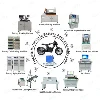
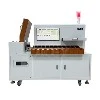
Acey Intelligent specializes in providing one-stop solutions for semi-automatic/fully-automatic assembly lines of lithium battery packs used in ESS, UAV, E-Bike, E-Scooter, Power Tools, Two/Three Wheelers, Etc. In Addition, we provide a complete set of battery pack assembly equipment, such as Cell Grading Machine, Battery Sorting Machine, Insulation Paper Sticking Machine, CCD tester, Manual/Automatic Spot Welding Machine, BMS Tester, Battery Comprehensive Tester and Battery Pack Test System, etc.