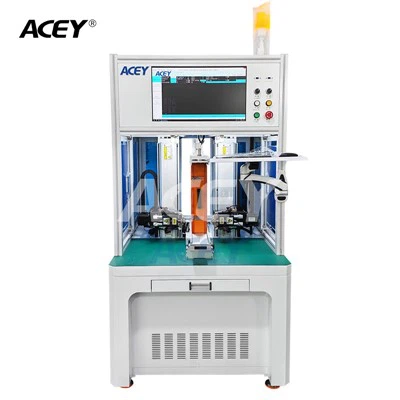
Hey there! As a supplier of Battery Cycler Testers, I often get asked this question: Can a Battery Cycler Tester test batteries with different charge rates? Well, let's dive right into it and find out.
First off, let's understand what a Battery Cycler Tester is. In simple terms, it's a device that helps us test the performance of batteries. It can charge and discharge batteries under controlled conditions, allowing us to measure things like capacity, efficiency, and cycle life. These testers are super important in the battery industry, whether you're making small lithium cells for your smartphone or big prismatic batteries for electric vehicles.
Now, the big question: Can it handle different charge rates? The short answer is yes, most modern Battery Cycler Testers are designed to test batteries with a wide range of charge rates. Here's why that's so crucial.
In the real world, batteries are used in all sorts of applications, and each application might require a different charge rate. For example, a laptop battery might be charged at a relatively slow rate to ensure its longevity and safety. On the other hand, an electric vehicle battery might need a fast - charge option to reduce the charging time and make it more convenient for the user.
Let's take a closer look at how a Battery Cycler Tester can manage these different charge rates. These testers are equipped with advanced control systems. They can be programmed to adjust the charge current according to the specific requirements of the battery being tested. So, whether you're testing a battery that needs a low - current, slow charge or one that can handle a high - current, fast charge, the tester can be set up accordingly.


For instance, our Prismatic Battery Charge Discharge Tester is specifically designed to handle prismatic batteries. These batteries are commonly used in electric vehicles and energy storage systems. They often require different charge rates depending on their size, capacity, and the application they're used in. Our tester can be configured to test these batteries at various charge rates, ensuring that they meet the required performance standards.
Another example is our Lithium Cell Tester. Lithium cells are used in a wide range of consumer electronics, from smartphones to tablets. Different lithium cells might have different optimal charge rates. Some might be designed for fast charging to keep up with our busy lifestyles, while others might prioritize long - term stability and be charged more slowly. Our Lithium Cell Tester can accurately test these cells at different charge rates, helping manufacturers ensure the quality and performance of their products.
Now, let's talk about the technical aspects. When testing batteries at different charge rates, the Battery Cycler Tester needs to monitor several parameters closely. One of the most important parameters is the battery voltage. As the battery charges or discharges, its voltage changes. The tester needs to ensure that the voltage stays within the safe operating range for the battery. If the voltage goes too high during charging, it can cause overcharging, which can damage the battery and even pose a safety risk. Similarly, if the voltage drops too low during discharging, it can lead to under - discharging, which can also affect the battery's performance and lifespan.
The tester also needs to monitor the temperature of the battery. Charging and discharging a battery generate heat, and different charge rates can produce different amounts of heat. High - charge rates generally generate more heat, which can be a concern if not managed properly. Our Battery Cycler Testers are equipped with temperature sensors to monitor the battery temperature during testing. If the temperature exceeds a certain limit, the tester can adjust the charge rate or take other measures to prevent overheating.
In addition to voltage and temperature, the tester also measures the charge and discharge currents accurately. This is essential for calculating the battery's capacity and efficiency. By accurately measuring the current at different charge rates, we can get a clear picture of how the battery performs under various conditions.
Let's not forget about the 5V 20A Lithium Battery Capacity Testing Equipment. This equipment is great for testing small - to - medium - sized lithium batteries. It can test these batteries at different charge rates, allowing us to determine their actual capacity and how it changes with different charging speeds. This information is valuable for both battery manufacturers and consumers.
So, to sum it up, a good Battery Cycler Tester can definitely test batteries with different charge rates. It offers flexibility, accuracy, and safety, which are all essential in the battery testing process.
If you're in the business of battery manufacturing, research, or even just interested in testing batteries for personal use, having a reliable Battery Cycler Tester is a must. Our range of testers, including the ones I've mentioned above, are designed to meet the diverse needs of the battery industry.
If you're looking for a high - quality Battery Cycler Tester that can handle different charge rates, we'd love to have a chat with you. Whether you have specific requirements for your battery testing or just want to learn more about our products, don't hesitate to reach out. We're here to help you find the best solution for your battery testing needs.
References
- Battery Testing Handbook, [Publisher], [Year]
- Journal of Power Sources, various issues related to battery testing and charge rates.