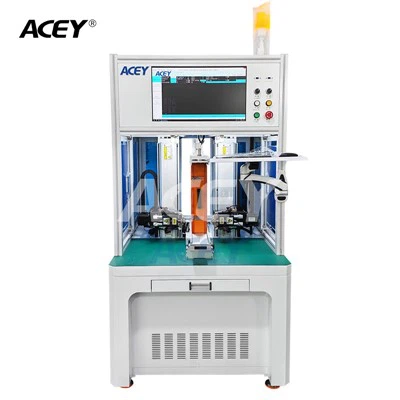
Hey there! As a supplier of Battery Sorting Machines, I often get asked a bunch of questions about what these nifty gadgets can and can't do. One question that pops up quite a bit is, "Can a battery sorting machine sort damaged batteries?" Well, let's dive right into it and find out.
First off, let's understand what a Battery Sorting Machine is all about. These machines are designed to classify batteries based on various parameters such as voltage, capacity, internal resistance, and sometimes even physical characteristics. They play a crucial role in the battery industry, whether it's in the production line, recycling process, or quality control.
When it comes to damaged batteries, it's not as straightforward as you might think. There are different types of damage a battery can suffer. For example, there could be physical damage like a cracked casing, which is relatively easy for a sorting machine to detect. Most modern sorting machines are equipped with cameras and sensors that can pick up on obvious visual irregularities. If a battery has a visible crack or a deformed shape, the machine can quickly identify it and sort it out from the good ones.
But what about internal damage? This is where things get a bit trickier. Internal damage, such as a short - circuited cell or a degraded electrode, might not be immediately visible. However, many advanced Battery Cell Sorting Machines are capable of detecting these issues through electrical measurements.
Let's talk about voltage for a sec. A damaged battery often has an abnormal voltage reading. A healthy battery will maintain a relatively stable voltage within a certain range, depending on its type and state of charge. But a damaged battery might have a voltage that's either too high or too low. The sorting machine can measure the voltage of each battery as it passes through the system. If the voltage is outside the acceptable range, the machine can flag it as potentially damaged and sort it accordingly.
Internal resistance is another important parameter. A damaged battery usually has a higher internal resistance compared to a healthy one. The sorting machine can measure the internal resistance of each battery using specialized techniques. By comparing the measured internal resistance with a pre - set threshold, the machine can determine if a battery is damaged.
Now, let's consider the different types of batteries. For example, prismatic batteries have their own unique challenges when it comes to sorting damaged ones. Prismatic batteries are rectangular in shape and are commonly used in many applications, including electric vehicles. A Prismatic Battery Sorting Machine needs to be specifically designed to handle these batteries.
Prismatic batteries can have internal damage that's difficult to detect, especially if it's located deep within the battery pack. However, these sorting machines use a combination of electrical and mechanical sensors to ensure accurate sorting. They can also perform multiple tests on each battery to increase the chances of detecting hidden damage.
One of the key advantages of using a battery sorting machine to sort damaged batteries is efficiency. Manual sorting is time - consuming and prone to human error. A sorting machine can process a large number of batteries in a short period of time, ensuring that damaged batteries are quickly removed from the production line or the recycling stream.
In the production process, sorting out damaged batteries is crucial for maintaining product quality. No one wants a damaged battery to end up in a consumer product, as it can lead to safety issues and product failures. By using a sorting machine, manufacturers can ensure that only high - quality batteries are used in their products.


In the recycling industry, sorting damaged batteries is equally important. Damaged batteries can pose a risk during the recycling process, as they might be more likely to explode or release harmful chemicals. A sorting machine can separate the damaged batteries from the good ones, allowing for a safer and more efficient recycling process.
However, it's important to note that no sorting machine is 100% perfect. There's always a small chance that a damaged battery might slip through the cracks. That's why it's often a good idea to combine the use of a sorting machine with other quality control measures, such as manual inspections and additional testing.
So, to answer the question, yes, a battery sorting machine can sort damaged batteries. But it depends on the type of damage, the capabilities of the machine, and the accuracy of the sorting parameters. As a supplier, we're constantly working on improving our machines to make them more effective at detecting all types of battery damage.
If you're in the battery production or recycling business, and you're looking for a reliable way to sort your batteries, including damaged ones, then our Battery Sorting Machines could be the solution you need. We've got a wide range of machines to suit different needs and budgets. Whether you're dealing with small - scale battery production or large - scale recycling operations, we've got you covered.
If you're interested in learning more about our products or want to discuss your specific requirements, don't hesitate to reach out. We're always happy to have a chat and help you find the best sorting solution for your business.
References
- Battery Technology Handbook
- Research papers on battery sorting and quality control