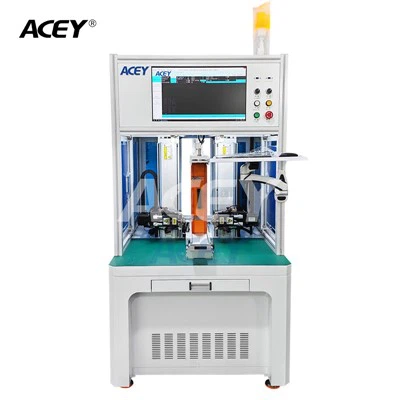
Hey there! As a supplier of Battery Pack Spot Welders, I've seen firsthand how different factors can affect the performance of these machines. One factor that doesn't get as much attention as it should is the welding environment temperature. In this blog, I'll break down how temperature can impact the performance of a battery pack spot welder and why it's something you need to keep in mind.


Let's start by understanding what a battery pack spot welder does. These machines are used to join two or more pieces of metal together at specific points, creating a strong and reliable connection. They're crucial in the production of battery packs, where a solid weld can mean the difference between a high - performing battery and one that fails prematurely.
How Temperature Affects the Welding Process
Low Temperatures
When the welding environment temperature is low, say below 10°C (50°F), a few things start to happen. First off, the metal being welded becomes more brittle. Metals contract as the temperature drops, and this contraction can lead to internal stresses within the material. When you try to weld at low temperatures, these stresses can cause the metal to crack during the welding process or even after the weld has cooled.
The electrical conductivity of the metal also changes at low temperatures. Most metals have a lower electrical conductivity when cold. Since spot welding relies on passing an electrical current through the metal to generate heat for welding, a lower conductivity means you need to increase the current to achieve the same amount of heat. This can put additional strain on the welder and may lead to overheating of the machine's components.
Moreover, the cooling rate of the weld is faster in a cold environment. Rapid cooling can result in a hard and brittle weld, which is more prone to cracking and has lower mechanical strength. This can significantly reduce the quality of the battery pack, as the welds need to be able to withstand the vibrations and stresses that a battery experiences during its use.
High Temperatures
On the other end of the spectrum, high temperatures, above 40°C (104°F), also pose problems. At high temperatures, the metal expands. This expansion can make it difficult to maintain the correct alignment during the welding process. If the metal pieces move slightly due to expansion, the weld may not be as precise as required, leading to weak joints.
The welder itself can also be affected by high temperatures. The internal components of the spot welder, such as the transformers and capacitors, are designed to operate within a certain temperature range. When the ambient temperature is too high, these components can overheat, which can lead to reduced efficiency and even permanent damage. Overheating can cause the insulation on the electrical wires to break down, increasing the risk of short - circuits and electrical fires.
Another issue with high - temperature welding is the oxidation of the metal surface. Metals oxidize more rapidly at higher temperatures, and this oxide layer can prevent a proper weld from forming. The oxide acts as a barrier between the two metal surfaces, reducing the electrical conductivity and making it harder for the current to pass through and create a weld.
Impact on Battery Pack Quality
The quality of the welds in a battery pack is directly related to the performance and safety of the battery. If the welds are weak due to temperature - related issues, the battery may experience electrical resistance at the weld points. This increased resistance can lead to heat generation within the battery pack, which can cause the battery to overheat and potentially fail.
In a lithium - ion battery pack, for example, a poor weld can also lead to a loss of contact between the battery cells and the electrical connectors. This can result in reduced battery capacity and a shorter lifespan. A battery pack with faulty welds may also be more prone to short - circuits, which can be extremely dangerous, especially in applications where the battery is used in close proximity to people, such as in electric vehicles or portable electronics.
Adapting to Different Temperatures
As a supplier, I often get asked how to deal with temperature variations when using our Battery Pack Welding Machine. Here are some tips:
For Low Temperatures
- Pre - heat the metal: You can use a heating blanket or a torch to warm the metal pieces before welding. This helps to reduce the internal stresses and improve the electrical conductivity.
- Adjust the welding parameters: Increase the current and the welding time slightly to compensate for the lower conductivity of the cold metal. However, be careful not to overdo it, as this can also cause other problems.
- Use a pre - heating chamber: If possible, set up a pre - heating chamber where the metal pieces can be kept at a stable temperature before welding.
For High Temperatures
- Provide proper ventilation: Make sure the welding area is well - ventilated to help dissipate the heat. You can use fans or air - conditioning to keep the ambient temperature within a safe range.
- Monitor the welder's temperature: Use temperature sensors to keep an eye on the internal temperature of the welder. If the temperature starts to rise too high, stop the welding process and let the machine cool down.
- Clean the metal surfaces: Before welding, clean the metal surfaces thoroughly to remove any oxide layers that may have formed due to the high temperature.
Conclusion
The welding environment temperature has a significant impact on the performance of a battery pack spot welder and the quality of the battery packs produced. Whether it's low or high temperatures, both can cause problems that affect the weld quality, the welder's efficiency, and the overall performance and safety of the battery.
As a supplier of Manual Spot Welding Machine and Lithium Ion Spot Welding Machine, I understand the importance of providing machines that can perform well in different environments. But it's also crucial for our customers to be aware of the temperature effects and take the necessary precautions.
If you're in the market for a high - quality battery pack spot welder or have any questions about how temperature can affect your welding process, don't hesitate to reach out. We're here to help you make the best decisions for your battery production needs. Let's work together to ensure that your battery packs are of the highest quality and meet the most demanding standards.
References
- "Welding Metallurgy" by John C. Lippold and David K. Miller
- "Battery Technology Handbook" by Thomas J. Garver
- Industry research reports on battery pack manufacturing and welding processes