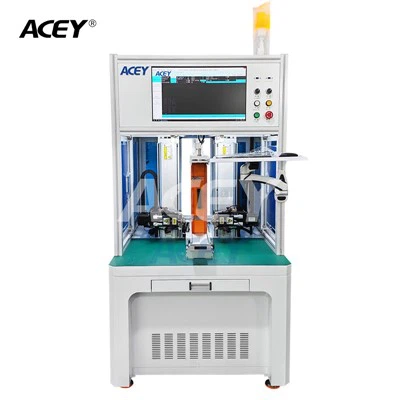
A battery sorting machine is a game - changer in the battery industry. As a battery sorting machine supplier, I've seen firsthand how these nifty devices can have a huge impact on the quality of sorted batteries. Let's dig into how exactly they do this.
1. Precision and Consistency
One of the most significant ways a battery sorting machine affects battery quality is through precision and consistency. Manual sorting can be prone to human error. People get tired, their attention wavers, and they might not always make the most accurate judgments. But a battery sorting machine doesn't have these issues.
These machines are equipped with advanced sensors and algorithms. For instance, they can precisely measure a battery's voltage, capacity, and internal resistance. When it comes to voltage, a slight difference can mean a lot in terms of battery performance. A battery sorting machine can detect voltage variations down to very fine margins. This means that batteries can be sorted into groups with almost identical voltage levels.
Consistency is key in many battery applications. For example, in an electric vehicle battery pack, all the individual batteries need to work in harmony. If the batteries have inconsistent voltage or capacity, it can lead to uneven charging and discharging, ultimately reducing the overall lifespan and performance of the battery pack. A battery sorting machine ensures that each group of sorted batteries meets specific criteria, providing a high - level of consistency.
Let me give you an example. The Li Ion Battery Sorting Machine we offer is designed to sort lithium - ion batteries with incredible precision. It can quickly analyze the characteristics of each battery and place them into the appropriate category, whether it's based on voltage, capacity, or other factors. This precision ensures that the sorted lithium - ion batteries are of the highest quality and are suitable for various applications, from consumer electronics to large - scale energy storage systems.
2. Efficiency
Efficiency plays a crucial role in determining the quality of sorted batteries. In a large - scale battery production or recycling facility, time is money. Manual sorting can be extremely slow, and it might not be able to keep up with the high volume of batteries that need to be sorted.
A battery sorting machine can process a large number of batteries in a short period. It can operate 24/7, taking breaks only for maintenance. This high - speed operation means that more batteries can be sorted in less time, reducing the overall production or recycling cycle.
Moreover, the efficiency of a battery sorting machine also helps in maintaining the quality of the batteries. When batteries are sorted quickly, they are less likely to be exposed to unfavorable conditions for an extended period. For example, in a recycling process, if batteries are left sitting around for too long, they might start to degrade further. By sorting them quickly, the machine can separate the good - quality batteries from the ones that need further treatment, ensuring that the overall quality of the sorted batch is maintained.
Our 2 in 1 Insulation Paper Sticker and Sorting Machine is a great example of an efficient machine. It not only sorts batteries but also attaches insulation paper stickers at the same time. This dual - function design saves a lot of time and labor, making the sorting process much more efficient and ultimately improving the quality of the sorted batteries.
3. Quality Control
Battery sorting machines serve as an integral part of the quality control process. They can identify defective or damaged batteries that might otherwise slip through the cracks during manual inspections.
The sensors in these machines can detect physical defects such as cracks on the battery casing, which can lead to leakage of electrolytes. Leakage can not only cause damage to the battery itself but also pose a safety risk in applications. The machines can also check for electrical defects, like short - circuits or abnormal internal resistance.
By removing these defective batteries from the sorted batches, the overall quality of the remaining batteries is significantly improved. This is especially important in industries where safety and reliability are paramount, such as the aerospace and medical device industries.
The 3 Channels Prismatic Battery Cell Sorting Machine is a powerful tool for quality control. With its three - channel design, it can sort prismatic battery cells in a more efficient and accurate way. It can quickly identify any battery cells that do not meet the quality standards and separate them from the good ones, guaranteeing a high - quality output.
4. Customization
Another aspect where battery sorting machines impact the quality of sorted batteries is through customization. Different applications require batteries with different characteristics. For example, a high - power application like a power tool might need batteries with a high discharge rate, while a low - power application like a remote - control device might need batteries with long - term stability.
A modern battery sorting machine can be programmed to sort batteries according to specific criteria set by the user. This means that manufacturers or recyclers can get sorted batteries that are tailored to their exact needs. Whether it's sorting based on voltage, capacity, temperature resistance, or any other parameter, the machine can do it.
This customization allows for better - suited batteries to be used in different applications, which in turn improves the overall performance and quality of the products that use these batteries. For instance, if a company is producing high - end smartphones, they can use a battery sorting machine to get batteries with very consistent capacity and voltage, ensuring that the phones have a long battery life and stable performance.
5. Data Collection and Analysis
Battery sorting machines are not just about physically sorting batteries; they also collect a wealth of data about each battery. This data can be invaluable in improving the quality of future battery production or recycling processes.
The machine can record information such as the battery's initial voltage, capacity, internal resistance, and the time it took to sort. By analyzing this data, manufacturers can identify trends and patterns. For example, if they notice that a certain batch of batteries has a higher than normal internal resistance, they can investigate the production process to find out what went wrong.


Recyclers can also use this data to optimize their sorting processes. By understanding the characteristics of the incoming batteries, they can adjust the sorting parameters to get better - quality sorted batteries. This continuous improvement based on data analysis helps in raising the overall quality of the sorted batteries over time.
In conclusion, a battery sorting machine has a profound impact on the quality of sorted batteries. From providing precision and consistency to improving efficiency, acting as a quality control measure, enabling customization, and facilitating data - driven improvement, these machines are essential in the battery industry.
If you're in the market for a battery sorting machine, whether for battery production, recycling, or any other related application, don't hesitate to reach out for a purchase negotiation. We're here to help you find the perfect machine to meet your exact needs and ensure the highest quality of your sorted batteries.
References
- Battery Technology Handbook, 3rd Edition.
- Journal of Battery Research and Development, various issues.
- Industry reports on Battery Manufacturing and Recycling.