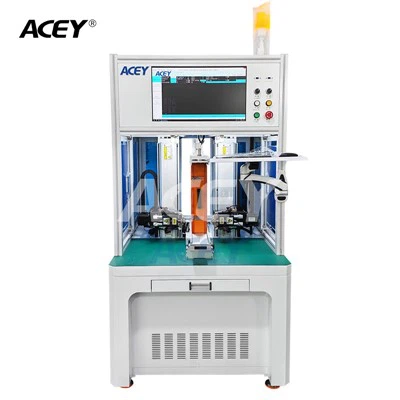
Improving the welding strength of a battery pack spot welder is crucial for ensuring the reliability and performance of battery packs. As a leading supplier of Spot Welding Machine for Battery, we understand the significance of this aspect and have extensive experience in providing solutions to enhance welding strength. In this blog, we will explore various factors that affect welding strength and offer practical tips on how to improve it.
Understanding the Basics of Spot Welding
Spot welding is a process in which two or more metal sheets are joined together by applying pressure and heat at specific points. In the context of battery packs, spot welding is used to connect battery cells, tabs, and other components. The quality of the weld joint directly impacts the electrical conductivity, mechanical integrity, and overall performance of the battery pack.
The key factors in spot welding include the welding current, welding time, electrode force, and electrode material. These factors interact with each other and need to be carefully controlled to achieve optimal welding results.
Factors Affecting Welding Strength
1. Welding Current
The welding current is one of the most critical factors affecting welding strength. A sufficient current is required to generate enough heat to melt the metal and form a strong weld joint. However, excessive current can lead to overheating, which may cause damage to the battery cells or result in poor weld quality.
To determine the appropriate welding current, you need to consider the thickness and type of the materials being welded, as well as the size and shape of the electrodes. Generally, thicker materials require higher welding currents. It is recommended to conduct tests with different current settings to find the optimal value for your specific application.
2. Welding Time
The welding time refers to the duration during which the current is applied to the weld area. Similar to the welding current, the welding time needs to be carefully controlled. If the welding time is too short, the metal may not melt sufficiently, resulting in a weak weld joint. On the other hand, if the welding time is too long, it can cause excessive heat generation and damage to the battery cells.
The optimal welding time depends on various factors, such as the welding current, electrode force, and material properties. It is advisable to start with a conservative welding time and gradually increase it while monitoring the weld quality.
3. Electrode Force
The electrode force plays a crucial role in ensuring good contact between the electrodes and the workpiece. A proper electrode force helps to maintain a stable electrical connection and distribute the heat evenly during the welding process. Insufficient electrode force can lead to poor contact, which may result in inconsistent weld quality and reduced welding strength.
The electrode force should be adjusted according to the thickness and type of the materials being welded. Generally, thicker materials require higher electrode forces. It is important to ensure that the electrode force is evenly distributed across the weld area to avoid uneven welding.
4. Electrode Material and Condition
The choice of electrode material and its condition can significantly affect the welding strength. Electrodes are typically made of copper or copper alloys due to their high electrical conductivity and thermal conductivity. However, over time, the electrodes may wear out or become contaminated, which can reduce their performance.
Regular maintenance of the electrodes is essential to ensure consistent welding quality. This includes cleaning the electrodes to remove any debris or oxidation, and replacing them when they are worn beyond a certain limit.
5. Material Surface Condition
The surface condition of the materials being welded also has an impact on the welding strength. Dirty, oily, or oxidized surfaces can prevent good electrical contact and reduce the heat transfer efficiency, resulting in weak weld joints.
Before welding, it is necessary to clean the surfaces of the materials to remove any contaminants. This can be done using solvents, abrasive materials, or other cleaning methods. Additionally, ensuring that the materials are properly aligned and clamped during the welding process can also improve the welding strength.
Tips to Improve Welding Strength
1. Optimize Welding Parameters
As mentioned earlier, the welding current, welding time, electrode force, and other parameters need to be carefully optimized. Conducting tests with different parameter settings and analyzing the weld quality can help you find the optimal combination for your specific application. It is also recommended to use a welding controller that allows for precise adjustment of these parameters.
2. Use High - Quality Electrodes
Investing in high - quality electrodes made of suitable materials can significantly improve the welding strength. High - quality electrodes have better electrical and thermal conductivity, and they are more resistant to wear and contamination. Regularly inspect and maintain the electrodes to ensure their optimal performance.
3. Improve Material Preparation
Proper material preparation is crucial for achieving strong weld joints. Clean the surfaces of the materials thoroughly before welding to remove any contaminants. Additionally, ensure that the materials are properly aligned and clamped to minimize movement during the welding process.
4. Implement Quality Control Measures
Establishing a quality control system is essential to ensure consistent welding strength. This can include visual inspection of the weld joints, non - destructive testing methods such as ultrasonic testing or X - ray inspection, and mechanical testing to measure the strength of the weld joints. By regularly monitoring the weld quality, you can identify any issues early and take corrective actions.
5. Train Operators
Well - trained operators are key to achieving high - quality welds. Provide comprehensive training to your operators on the operation of the Automatic 18650 Battery Pack Spot Welder or Manual Spot Welding Machine, including the proper adjustment of welding parameters, electrode maintenance, and material preparation. Operators should also be trained to recognize and troubleshoot common welding problems.
Conclusion
Improving the welding strength of a battery pack spot welder requires a comprehensive understanding of the welding process and the factors that affect it. By carefully controlling the welding parameters, using high - quality electrodes, improving material preparation, implementing quality control measures, and training operators, you can achieve strong and reliable weld joints in battery packs.


As a professional supplier of battery pack spot welders, we are committed to providing our customers with high - quality products and technical support. If you are looking for a reliable spot welding solution for your battery pack manufacturing, we invite you to contact us for further discussion and procurement. Our team of experts will be happy to assist you in finding the most suitable spot welder for your specific needs.
References
- "Welding Handbook", American Welding Society
- "Principles of Resistance Welding", RWMA (Resistance Welding Manufacturers Alliance)