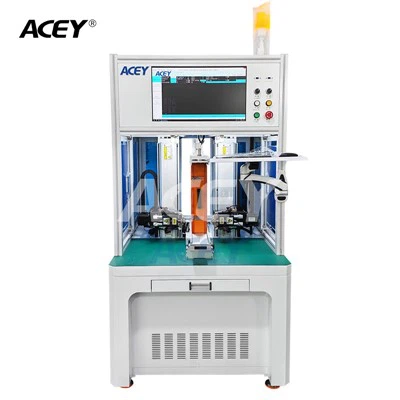
Testing the Battery Management System (BMS) in a vacuum environment is a crucial process to ensure its performance and reliability under extreme conditions. As a leading BMS Testing Machine supplier, we understand the significance of accurate testing in such environments. In this blog, we will explore the steps and considerations for testing the BMS in a vacuum environment using our advanced BMS testing machines.
Understanding the Importance of Vacuum Testing for BMS
The BMS plays a vital role in managing the charging, discharging, and overall performance of a battery pack. In some applications, such as aerospace, satellites, and high - altitude drones, the battery and its BMS are exposed to vacuum conditions. Vacuum environments can affect the electrical, thermal, and mechanical properties of the BMS components. For example, the lack of air can lead to different heat dissipation mechanisms, and the absence of atmospheric pressure may cause changes in the behavior of electronic components. Therefore, testing the BMS in a vacuum environment helps to identify potential issues and ensure that it can function properly in real - world applications.
Selecting the Right BMS Testing Machine
Before starting the vacuum testing process, it is essential to choose the appropriate BMS testing machine. Our company offers a wide range of BMS testing equipment to meet different testing requirements. For instance, the Optional 1 - 32Series 500A Charge 800A Discharge Battery Management System Test Equipment is suitable for testing larger battery packs with high - current charging and discharging capabilities. On the other hand, the 1 - 24 Series 100A Charge 150A Discharge BMS Tester is a great option for smaller battery systems. You can also explore our comprehensive Bms Testing Equipment page to find the most suitable machine for your specific needs.


Preparing the Testing Environment
- Vacuum Chamber Setup
- First, select a vacuum chamber that can reach the desired vacuum level for the test. The chamber should be large enough to accommodate the BMS testing machine and the BMS under test.
- Ensure that the chamber has proper electrical feed - throughs to connect the testing machine to the BMS. These feed - throughs should be designed to maintain the vacuum integrity while allowing electrical signals to pass through.
- Calibrate the vacuum gauge in the chamber to ensure accurate measurement of the vacuum level.
- BMS and Testing Machine Preparation
- Inspect the BMS for any visible damage or defects before placing it in the vacuum chamber.
- Connect the BMS to the testing machine according to the manufacturer's instructions. Make sure all the connections are secure to avoid any electrical issues during the test.
- Power on the testing machine and perform a self - test to ensure that it is functioning correctly.
Conducting the Vacuum Test
- Initial Vacuuming
- Start the vacuum pump to evacuate the air from the chamber. Monitor the vacuum level using the calibrated gauge. The target vacuum level depends on the specific application requirements. For aerospace applications, a very high vacuum level (e.g., 10^-6 Torr) may be required, while for some industrial applications, a moderate vacuum level (e.g., 10^-2 Torr) may be sufficient.
- Allow the chamber to reach the stable vacuum level and maintain it for a certain period (e.g., 30 minutes) to ensure that the BMS and the testing equipment have adapted to the vacuum environment.
- Testing Procedures
- Functional Testing: Use the BMS testing machine to perform a series of functional tests on the BMS. This includes testing the cell voltage monitoring, state - of - charge (SOC) estimation, over - charge and over - discharge protection, and balancing functions. Record the test results carefully.
- Thermal Testing: Since heat dissipation is different in a vacuum environment, monitor the temperature of the BMS components during the test. Use temperature sensors attached to the critical components of the BMS to measure the temperature changes. Analyze the thermal behavior of the BMS to ensure that it can operate within the safe temperature range.
- Electrical Performance Testing: Measure the electrical parameters of the BMS, such as internal resistance, charging and discharging efficiency, and current accuracy. Compare these results with the specifications of the BMS to determine if it meets the requirements.
- Monitoring and Data Collection
- Continuously monitor the test process using the testing machine's software. The software should be able to display real - time data, such as voltage, current, temperature, and vacuum level.
- Collect and store all the test data for further analysis. This data can be used to generate test reports and identify any potential issues with the BMS.
Post - Test Analysis
- Data Analysis
- Analyze the test data to evaluate the performance of the BMS in the vacuum environment. Compare the test results with the baseline data obtained from the tests in normal atmospheric conditions.
- Look for any significant differences or anomalies in the data. For example, if the SOC estimation error is much larger in the vacuum environment, it may indicate a problem with the BMS's sensor or algorithm.
- Failure Diagnosis
- If any failures or issues are detected during the test, perform a detailed failure diagnosis. Check the electrical connections, component integrity, and software programming of the BMS.
- Use the test data and the diagnostic tools provided by the BMS testing machine to identify the root cause of the problem.
- Report Generation
- Generate a comprehensive test report that includes the test setup, test procedures, test results, and analysis. The report should also provide recommendations for improving the BMS performance if necessary.
Considerations and Precautions
- Safety
- Ensure that all safety procedures are followed during the test. The vacuum chamber and the testing equipment should be properly grounded to prevent electrical hazards.
- Wear appropriate personal protective equipment (PPE) when handling the BMS and the testing equipment.
- Component Compatibility
- Some components of the BMS may not be suitable for use in a vacuum environment. For example, certain types of electrolytic capacitors may have issues with outgassing in a vacuum. Make sure to use vacuum - compatible components in the BMS design.
- Contamination Control
- Keep the vacuum chamber and the testing equipment clean to prevent contamination. Contamination can affect the test results and the performance of the BMS. Use cleanroom - grade wipes and solvents to clean the equipment before and after the test.
Conclusion
Testing the BMS in a vacuum environment is a complex but essential process to ensure its reliability and performance in extreme conditions. By following the steps outlined in this blog and using our high - quality BMS testing machines, you can accurately evaluate the BMS's capabilities in a vacuum. If you have any questions or need further assistance with BMS testing in a vacuum environment, or if you are interested in purchasing our BMS testing equipment, please feel free to contact us for a detailed discussion and procurement negotiation. We are committed to providing you with the best solutions for your BMS testing needs.
References
- Battery Management System Design and Application, John Wiley & Sons, Inc.
- Vacuum Technology Handbook, Elsevier