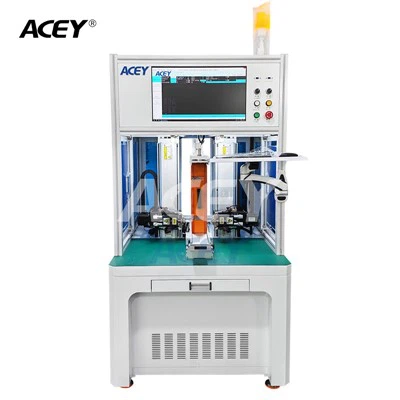
Over - charging is a critical issue in the field of lithium - ion batteries, which can significantly impact battery performance, safety, and lifespan. As a leading supplier of Lithium Ion Cell Testers, we have conducted extensive testing on over - charged cells to understand the implications better. In this blog, we will delve into the testing results obtained using our advanced testers and discuss their significance.
The Basics of Over - Charging in Lithium - Ion Cells
Before we explore the testing results, it's essential to understand what over - charging means in the context of lithium - ion cells. Lithium - ion batteries are designed to operate within a specific voltage range. When a battery is over - charged, it is charged beyond its recommended maximum voltage. This can lead to a series of chemical and physical changes within the battery.
Over - charging causes the lithium ions to be forced out of the cathode at an excessive rate. As a result, the cathode structure can become unstable, leading to the formation of metal deposits on the anode. These deposits can cause internal short - circuits, which are extremely dangerous as they can lead to thermal runaway, a condition where the battery temperature rises rapidly and can result in fire or explosion.
Testing Setup
Our Lithium Ion Cell Testers are state - of the - art devices that are capable of precisely controlling the charging and discharging processes of lithium - ion cells. To test over - charged cells, we selected a batch of standard lithium - ion cells with known specifications. We divided these cells into different groups and subjected each group to different levels of over - charging.
We used our Battery Charging Discharging Tester to charge the cells. This tester allows us to set the charging current, voltage, and time accurately. For each group, we over - charged the cells by a certain percentage above the recommended maximum voltage, ranging from 5% to 20%. After over - charging, we used our 5V 20A Lithium Battery Capacity Testing Equipment to measure the remaining capacity of the cells and our Battery Cell Testing Equipment to analyze other parameters such as internal resistance and self - discharge rate.
Testing Results
Capacity Loss
One of the most significant findings from our tests was the capacity loss in over - charged cells. As the level of over - charging increased, the capacity of the cells decreased rapidly. For cells over - charged by 5%, the capacity loss was approximately 10% compared to the normal cells. When the over - charging level reached 20%, the capacity loss was as high as 40%.
This capacity loss is mainly due to the degradation of the cathode material. Over - charging causes the cathode structure to break down, reducing the number of active sites available for lithium - ion intercalation and de - intercalation. As a result, the battery can store less energy, leading to a decrease in capacity.
Increase in Internal Resistance
Another important result was the increase in internal resistance of the over - charged cells. Internal resistance is a measure of how easily current can flow through the battery. An increase in internal resistance means that more energy is wasted as heat during the charging and discharging processes.
Our tests showed that the internal resistance of over - charged cells increased linearly with the level of over - charging. For cells over - charged by 5%, the internal resistance increased by about 15% compared to normal cells. When the over - charging level was 20%, the internal resistance increased by more than 50%. This increase in internal resistance not only reduces the efficiency of the battery but also generates more heat, which further exacerbates the degradation of the battery.
Self - Discharge Rate
The self - discharge rate is the rate at which a battery loses its charge when it is not in use. Over - charging was found to significantly increase the self - discharge rate of lithium - ion cells. Normal lithium - ion cells have a relatively low self - discharge rate of about 1 - 2% per month. However, for cells over - charged by 10%, the self - discharge rate increased to about 5% per month, and for cells over - charged by 20%, it increased to more than 10% per month.
This increase in self - discharge rate is likely due to the formation of side reactions within the battery caused by over - charging. These side reactions consume the stored energy in the battery, leading to a faster loss of charge.
Safety Concerns
In addition to the performance degradation, over - charging also poses serious safety risks. During our tests, we observed that some of the cells over - charged by more than 15% showed signs of swelling. Swelling is an indication of gas generation within the battery, which is often a precursor to thermal runaway.
In extreme cases, a few cells over - charged by 20% experienced thermal runaway. These cells became extremely hot within a short period, and in one instance, a small fire occurred. This clearly demonstrates the importance of preventing over - charging in lithium - ion batteries.
Implications for the Industry
The results of our tests have significant implications for the lithium - ion battery industry. Battery manufacturers need to ensure that their batteries are protected against over - charging. This can be achieved through the use of battery management systems (BMS) that monitor the battery voltage and cut off the charging process when the maximum voltage is reached.


For end - users, it is crucial to use chargers that are specifically designed for lithium - ion batteries and to follow the charging instructions carefully. Over - charging not only reduces the battery lifespan but also poses a serious safety risk.
As a supplier of Lithium Ion Cell Testers, we play a vital role in helping the industry address these issues. Our testers can be used by battery manufacturers to test the safety and performance of their batteries during the production process. They can also be used by research institutions to conduct further studies on lithium - ion battery degradation mechanisms.
Contact Us for Procurement
If you are in the battery manufacturing industry, a research institution, or any other organization that needs to test lithium - ion cells, our Lithium Ion Cell Testers are the ideal choice. Our products are reliable, accurate, and easy to use. We offer a wide range of testers to meet different testing requirements.
If you are interested in purchasing our products or have any questions about our Lithium Ion Cell Testers, please feel free to contact us. We are committed to providing you with the best products and services.
References
- Tarascon, J - M., & Armand, M. (2001). Issues and challenges facing rechargeable lithium batteries. Nature, 414(6861), 359 - 367.
- Goodenough, J. B., & Kim, Y. (2010). Challenges for rechargeable Li batteries. Chemistry of Materials, 22(3), 587 - 603.
- Xia, Y., Zheng, G., Ji, X., & Cui, Y. (2019). The pursuit of solid - state electrolytes for lithium batteries: from comprehensive insight to emerging horizons. Chemical Reviews, 119(12), 7016 - 7069.