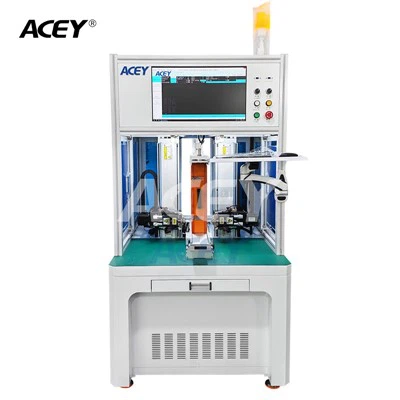
In the realm of battery management systems (BMS), the significance of accurate testing cannot be overstated. A BMS tester serves as a crucial tool in evaluating the performance, safety, and reliability of BMS units. When it comes to BMS testers, there are two main categories: simple testers and professional testers. As a BMS tester supplier, I've witnessed firsthand the distinct differences between these two types of testers and their implications for various applications.
Functionality and Features
One of the most apparent differences between a simple and a professional BMS tester lies in their functionality and features. A simple BMS tester typically offers basic testing capabilities, such as measuring voltage, current, and temperature of the battery cells. It may also include some basic protection functions, like over - voltage and under - voltage protection. These testers are designed for straightforward applications where only fundamental data collection and basic safety checks are required.
On the other hand, professional BMS testers come equipped with a wide range of advanced features. They can perform comprehensive testing on multiple parameters simultaneously, including charge and discharge rates, state of charge (SOC), state of health (SOH), and internal resistance measurement. Professional testers often support complex testing scenarios, such as dynamic load testing, which simulates real - world operating conditions. For example, they can test how a BMS responds to sudden changes in load, which is critical for applications like electric vehicles.
Our company offers a variety of professional BMS testers, such as the 1 - 45 Series Bms Tester Machine. This tester is capable of handling a wide range of battery configurations and can perform in - depth analysis of BMS performance, providing detailed reports on various parameters.
Accuracy and Precision
Accuracy is another key differentiator between simple and professional BMS testers. Simple testers usually have a relatively lower level of accuracy in measuring battery parameters. This is because they often use less sophisticated sensors and measurement circuits. For instance, the voltage measurement error of a simple tester might be in the range of a few millivolts, which can lead to significant inaccuracies when calculating the SOC of a battery.


Professional BMS testers, however, are engineered to provide high - precision measurements. They use high - quality sensors and advanced signal processing algorithms to minimize measurement errors. The voltage measurement accuracy of a professional tester can be within a few microvolts, ensuring more reliable data for battery management. This high level of accuracy is essential for applications where precise battery monitoring and control are required, such as in aerospace and high - end energy storage systems.
Testing Capacity and Scalability
When it comes to testing capacity, simple BMS testers are generally designed for small - scale applications. They can typically handle a limited number of battery cells or a low - power battery pack. For example, a simple tester might be suitable for testing a small battery pack used in a portable electronic device.
Professional BMS testers, in contrast, have a much higher testing capacity. They can handle large - scale battery packs with a large number of cells, such as those used in electric buses or grid - scale energy storage systems. Moreover, professional testers are often scalable. This means that they can be easily expanded to accommodate different battery configurations and testing requirements. Our 1 - 24 Series 100A Charge 150A Discharge BMS Tester is a great example of a scalable professional tester that can be customized according to the specific needs of our customers.
Software and Data Analysis
The software associated with BMS testers also varies significantly between simple and professional models. Simple testers usually come with basic software that provides only basic data display and simple data logging functions. The software may lack advanced analysis tools, making it difficult to gain in - depth insights from the collected data.
Professional BMS testers are accompanied by sophisticated software platforms. These platforms offer a wide range of data analysis tools, such as graphical representation of test results, trend analysis, and statistical analysis. They can also generate detailed reports that summarize the performance of the BMS under test. The software can be used to compare different BMS models, identify potential issues, and optimize the battery management strategy.
Cost and Affordability
Cost is an important factor to consider when choosing between a simple and a professional BMS tester. Simple testers are generally more affordable, making them a popular choice for small businesses, hobbyists, or applications with limited budgets. They provide a cost - effective solution for basic testing needs.
However, professional BMS testers come with a higher price tag. This is due to their advanced features, high - precision components, and sophisticated software. But for industries where the reliability and performance of the BMS are critical, the investment in a professional tester is often justified. The long - term benefits, such as improved battery life, enhanced safety, and more efficient battery management, outweigh the initial cost.
Application Suitability
The choice between a simple and a professional BMS tester depends largely on the specific application. Simple testers are well - suited for applications where the battery system is relatively simple and the testing requirements are basic. For example, they can be used in small - scale battery - powered toys, remote - controlled devices, or some consumer electronics.
Professional BMS testers are essential for applications where the battery system is complex and the performance requirements are high. Industries such as electric vehicles, aerospace, and large - scale energy storage rely on professional testers to ensure the safety and reliability of their battery systems. Our 1 - 24 Series 50A Charge 120A Discharge BMS Testing Equipment is specifically designed for such high - end applications, providing accurate and reliable testing results.
Conclusion
In conclusion, the differences between a simple and a professional BMS tester are significant in terms of functionality, accuracy, testing capacity, software, cost, and application suitability. As a BMS tester supplier, we understand the diverse needs of our customers and offer a range of testers to meet those needs. Whether you are a small business looking for a cost - effective solution for basic testing or a large - scale enterprise in need of high - precision testing equipment, we have the right BMS tester for you.
If you are interested in learning more about our BMS testers or have specific testing requirements, we invite you to contact us for a detailed discussion. Our team of experts is ready to assist you in selecting the most suitable BMS tester for your application and provide you with comprehensive technical support.
References
- Battery Management System (BMS) Handbook, XYZ Publishing
- Advanced Battery Testing Techniques, ABC Research Institute
- Industry Standards for BMS Testing, DEF Regulatory Body