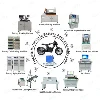
In the current booming new energy industry, lithium-ion batteries, as the core energy source, have permeated all scenarios including travel, energy storage, and people's livelihoods. Lithium-ion battery packs, as a crucial bridge from battery cells to end-user applications, have become a core midstream link in the industry chain. In 2026, the Chinese lithium-ion battery pack market exceeded 48 billion yuan, forming a three-way competition between power batteries, energy storage, and small power systems. Technologically, they are rapidly iterating towards high integration, high intelligence, and high safety. This "system assembly," which transforms scattered battery cells into a reliable power source, not only determines the range, safety, and user experience of end products but also becomes a core driver for the value upgrading of the new energy industry.
I. Understanding Packs: An Engineering Revolution from Single Cells to Power Systems
Lithium-ion battery packs are not simply a series-parallel combination of battery cells. Through precise design and integration, they transform chemical energy units into complete battery systems that can directly power devices. This is a crucial step for lithium-ion batteries from the laboratory to commercial applications. To understand packs, it is essential to first clarify the core logic of the three-level assembly architecture, which is the foundation for its functionality.
1. Three-Tier Architecture: A Hierarchical Evolution from "Soldiers" to "Army"
If we compare a single battery cell to an independent "soldier," then the PACK is an "army" with command, logistics, and discipline, while the module is the "combat unit" connecting the two.
- Battery Cell
The basic energy unit of a PACK, divided into three types: cylindrical, prismatic, and pouch. A single cell has a voltage of approximately 3.7V. Its capacity, internal resistance, and consistency directly determine the upper limit of PACK performance. A battery cell is like an individual soldier in an army; the quality of each individual soldier is the foundation of overall combat power, but scattered individual soldiers cannot form effective combat force.
- Module
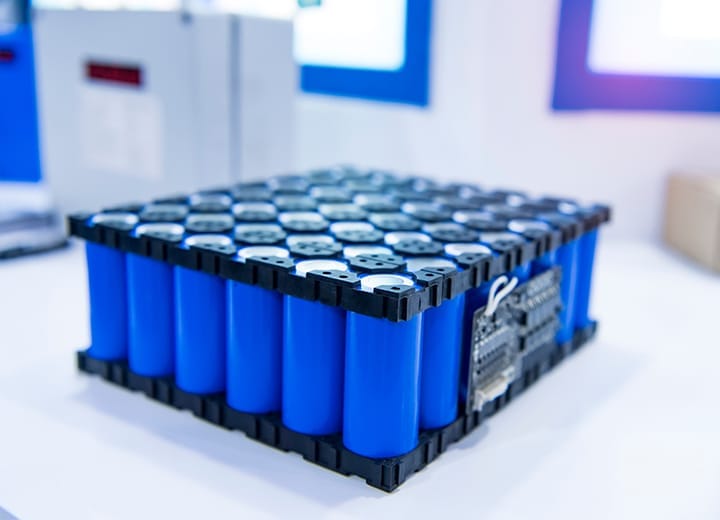
Multiple battery cells are integrated in series and parallel within a frame to form a standard intermediate unit. Equipped with sampling harnesses and a fixing structure, it achieves initial large-scale integration of battery cells, solving the problems of small-batch cell assembly and basic protection.
- PACK
Multiple modules are connected via a busbar, integrating core components such as the Battery Management System (BMS), Thermal Management System, Electrical System, and structural parts into a final product. This represents a qualitative leap from "energy storage" to "intelligent power supply," directly adaptable to end-user scenarios such as new energy vehicles, energy storage power stations, and electric equipment.
2. Four Core Subsystems: The "Internal Organs" of the PACK
The reliable operation of the PACK relies on the coordinated work of four subsystems. Each system performs its specific function, working together to ensure stable, safe, and efficient power output; none can be omitted.
• Management System (BMS)
The "intelligent brain" of the PACK, responsible for real-time collection of voltage, temperature, and current of each cell, accurately calculating State of Charge (SOC), State of Health (SOH), and State of Operation (SOP). It also implements multiple safety protections against overcharging, over-discharging, and over-temperature, and reduces inconsistencies between cells through equalization control. It is the core control center of the PACK.
• Thermal Management System:
The "circulatory blood vessels" of the battery pack. If the Joule heat and reaction heat generated during the charging and discharging of the battery cells cannot be dissipated in time, it can lead to lifespan degradation or even thermal runaway. This system uses liquid cooling plates, air ducts, and thermally conductive materials to control the cell temperature within the optimal window of 20-35℃. Mainstream solutions are divided into three categories: air cooling (low-power scenarios), liquid cooling (mainstream in new energy vehicles), and direct cooling/phase change materials (cutting-edge technology).
• Electrical System: The "power blood vessels" of the battery pack, composed of high-voltage connections, fuses, relays, and electrical insulation components. It is responsible for the efficient transmission and switching protection of electrical energy, ensuring the stability of power output and electrical safety.
• Structural System:
The "skeleton" of the battery pack, including the shell, brackets, and other components. It provides shockproof, dustproof, and waterproof protection functions, while providing fixed support for internal systems. The protection level typically needs to reach IP67 or higher to adapt to complex outdoor and automotive environments.
3. Core Value: Transforming Battery Cells from "Raw Materials" to "Productivity"
The essence of a battery pack is the engineering transformation of a battery cell from a "chemical energy unit" to a "reliable power source," ultimately guaranteeing the safety, reliability, and performance of lithium batteries. An excellent battery pack allows ordinary cells to operate stably and fully realize their energy potential; conversely, a poorly designed battery pack, even using top-tier cells, can lead to rapid performance degradation and even safety incidents due to uneven heat dissipation, cell inconsistencies, and protection failures. In short, the battery pack is a crucial link in the lithium battery industry chain, transforming the ordinary into the extraordinary, and serving as a core connection between upstream materials and downstream applications.
II. Technological Core: The Design, Manufacturing Process, and Testing of PACKs Reveal the Core Code to Quality
The performance of a lithium battery PACK depends not only on the selection of cells but also on the comprehensive control of the entire process, from design and manufacturing to testing and verification. From the core trade-offs in design to the precision manufacturing process and the rigorous testing before shipment, each step determines the quality of the final product.
1. Design Logic: Finding the Optimal Solution Among Three Core Indicators
PACK design involves an "impossible triangle"-energy density, power density, and safety/lifespan. These three cannot be maximized simultaneously. The core of design is to find the optimal balance among them based on the needs of the end application. For example, new energy passenger vehicle Packs pursue high energy density to improve range, energy storage Packs focus more on safety and long cycle life, while industrial vehicle Packs have higher requirements for power density. The design process revolves around application requirements, from cell selection (materials, shape), electrical design (series and parallel connections), to mechanical and thermal design and BMS strategy formulation. Each step must precisely match the scenario to ultimately achieve the required system energy density, power density, protection level, and cycle life.
2. Core Processes: Precision Control from Cell Sorting to Finished Product Assembly
PACK production is a highly integrated closed-loop process. Each step must meet high precision and consistency requirements. The core processes include four essential stages:
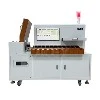
Cell Sorting: The first line of defense for consistency. Automated equipment detects cell parameters such as capacity, internal resistance, voltage, and appearance, controlling parameter differences to within 2%. This ensures cell performance matching within the same PACK, preventing charging and discharging imbalances from the source.
ACEY-AS11S battery sorting machine is used to test voltage and resistance for battery pack manufacturer. This process is crucial in industries that manufacture battery packs, as it ensures that cells with similar characteristics are grouped together, leading to improved performance, longevity, and safety of the battery packs.

Laser welding is crucial for ensuring reliable connections. High-energy-density lasers are used to precisely weld the battery cell terminals and busbars, offering advantages such as a low heat-affected zone, high weld quality, and high automation. It is a mainstream process in high-end applications such as new energy vehicles.
Potting process achieves structural fixation and efficient heat dissipation. Potting tightly bonds the battery cells to the module frame, improving structural stability and enhancing heat conduction efficiency, ensuring uniform heat dissipation.
Assembly process integrates the module, BMS, thermal management system, and electrical components, completing wiring harness connections and housing encapsulation to achieve seamless compatibility between the systems.
3. Testing and Verification: Only Through Rigorous Testing Can a PACK Reach the Market
As the power source for end-user applications, the safety and reliability of the PACK directly impact the safety of the final product. Therefore, it undergoes multi-dimensional and rigorous testing and verification before leaving the factory, forming a dual control system of "process testing + finished product testing":
- Electrical Performance Testing: Testing the Pack's capacity, internal resistance, charge/discharge characteristics, and balance to ensure power output meets design standards;
- Safety Testing: Verifying the Pack's safety protection capabilities through extreme tests such as compression, needle penetration, thermal runaway, and short circuits to ensure no fires or explosions occur in emergency situations;
- Mechanical Testing: Simulating vibration, impact, and drop scenarios to verify the stability of the structural system and adaptability to complex working conditions such as automotive and outdoor applications;
- Environmental Testing: Testing the Pack's adaptability in high and low temperatures, humidity, and salt spray environments to ensure stable operation under different climatic conditions;
- Airtightness Testing: Testing the sealing performance of the casing to ensure IP67 protection ratings and prevent dust and moisture from entering and causing malfunctions.
III. Application Overview: A Three-Way Split
In 2026, the Chinese lithium battery PACK market will form an application pattern of power batteries (50%), energy storage (30%), and small-scale power applications (20%). These three scenarios each have their own unique needs and technological focuses, collectively driving continued market growth. With the increasing penetration rate of new energy vehicles, the explosive growth of the energy storage industry, and the full coverage of small-scale power applications in daily life, the application boundaries of PACKs are constantly expanding.
1. Power Battery PACK: The "Heart" of New Energy Vehicles, the Fastest-Iterating Battlefield
Power batteries are the largest application scenario for PACKs and also the area with the fastest technological iteration. Passenger vehicles and commercial vehicles have different technological focuses, with upgrades centered around four core indicators: safety, range, lifespan, and fast charging.
Passenger Vehicles: High-Voltage Fast Charging + High Integration Become Standard
800V high-voltage platforms have become mainstream, supporting 4C-6C ultra-fast charging, achieving a 300-400km increase in range with just 5 minutes of charging; CTP/CTC deep integration technology is widely used, eliminating traditional modules, increasing volume utilization to over 80%, and system energy density exceeding 250Wh/kg; BMS active balancing technology is widespread, controlling single-cell voltage difference within 20mV, increasing range by 10%-15%, and extending cycle life by 30%.
Commercial Vehicles: Lithium Iron Phosphate Dominates + Long Cycle Life as Core
Lithium iron phosphate (LFP) batteries have become the mainstream choice for commercial vehicle PACKs due to their high safety and long lifespan, with a cycle life of ≥6000 cycles, suitable for heavy-duty scenarios such as heavy trucks, buses, and cold chain logistics. In 2026, sales of new energy heavy trucks in my country are expected to exceed 350,000 units, with mainstream battery capacities reaching 400-600kWh, becoming a significant growth driver for power battery PACKs.
2. Energy Storage PACK: The Fastest Growing Golden Segment, Growing 48% Annually, Becoming the Second Growth Curve
With the implementation of independent energy storage policies in China and the explosive growth in overseas industrial, commercial, and residential energy storage demand, energy storage PACK has become the fastest-growing segment of the lithium battery PACK market, with an annual growth rate of 48%. Core demands are concentrated on long cycle life, high safety, and intelligence.
ACEY-SA-P ESS battery pack assembly line is a production system used in the manufacturing of prismatic battery packs like ESS (Energy Storage System). Prismatic batteries are a type of rechargeable battery commonly used in various applications, including electric vehicles, consumer electronics, and renewable energy storage systems.

Stringent Performance Requirements
Cycle life requirements are 8000+ cycles, with a design life of 15 years. Active balancing BMS has become a necessity, solving the problem of inconsistent cells during long-term operation, reducing manual maintenance, and increasing system usable capacity.
Standardized Form Factors
Containerized energy storage PACKs have become mainstream, pre-installed with BMS, liquid cooling, and fire protection systems. On-site installation takes only 3 days, significantly reducing costs and increasing efficiency, adapting to multiple scenarios including grid-side, industrial, commercial, and residential applications.
Intelligent Dispatch Upgrades
Integrating AI technology to achieve intelligent dispatch, supporting primary grid frequency regulation, with a response time of <100ms, perfectly adapting to the grid connection needs of new energy sources, becoming core equipment for grid peak shaving, photovoltaic energy storage, and data center backup power.
3.Small-Power Packs: Covering All Consumer Scenarios, Combining Customization and Cost-Effectiveness
Small-power packs cover consumer scenarios such as electric two-wheelers, three-wheelers, industrial vehicles, portable energy storage, drones, and medical equipment. Market demand is steadily growing, and the core characteristics are strong customization, priority on cost-effectiveness, and strict safety and compliance.
- Electric Two-Wheelers: Lithium Iron Phosphate Replacing Lead-Acid Batteries is Becoming a Trend
Lithium iron phosphate packs are lighter, safer, and have a longer lifespan. Active balancing BMS effectively solves the problem of reduced range in winter, gradually replacing traditional lead-acid batteries.

- Industrial Vehicles: High Power + Long Range
Forklifts, AGVs, and other industrial vehicles require high-current discharge and 24-hour continuous operation, relying on efficient thermal management systems and overcurrent protection to ensure stable operation under high-intensity working conditions.
- High-End Portable Devices: Miniaturization + High Reliability
Drones, medical equipment, military applications, and other scenarios have extremely high requirements for pack miniaturization, low temperature rise, and high reliability, driving the development of packs towards miniaturization and precision.
IV. Industry Summary
The transition from a single battery cell to a complete battery pack system is a crucial step in the commercialization of lithium batteries. This seemingly simple "integration process" actually integrates multiple core technologies, including design, manufacturing processes, testing, and intelligent management.
As the "power hub" of the new energy industry, lithium battery packs not only determine the performance and user experience of end products but also become the core carrier of value transfer across the industry chain. In the industry's transformation from "price competition" to "value competition," pack companies that master core technologies, possess system capabilities, and can adapt to all scenarios will usher in greater development opportunities. With the development of new technologies such as solid-state batteries and sodium-ion batteries, packs will continue to adapt to new cell technologies, constantly pushing performance boundaries.
The wave of the new energy industry continues, and lithium battery packs, as the core bridge connecting cells and end products, will always stand at the forefront of industry value upgrading, providing reliable power for new energy vehicles, energy storage, low-altitude economy, robotics, and other new scenarios, becoming a core force driving the high-quality development of the new energy industry. In the future, with the continuous advancement of technology and the continuous expansion of application scenarios, the market space for lithium battery packs will continue to expand, and the new journey of this billion-dollar industry has just begun.