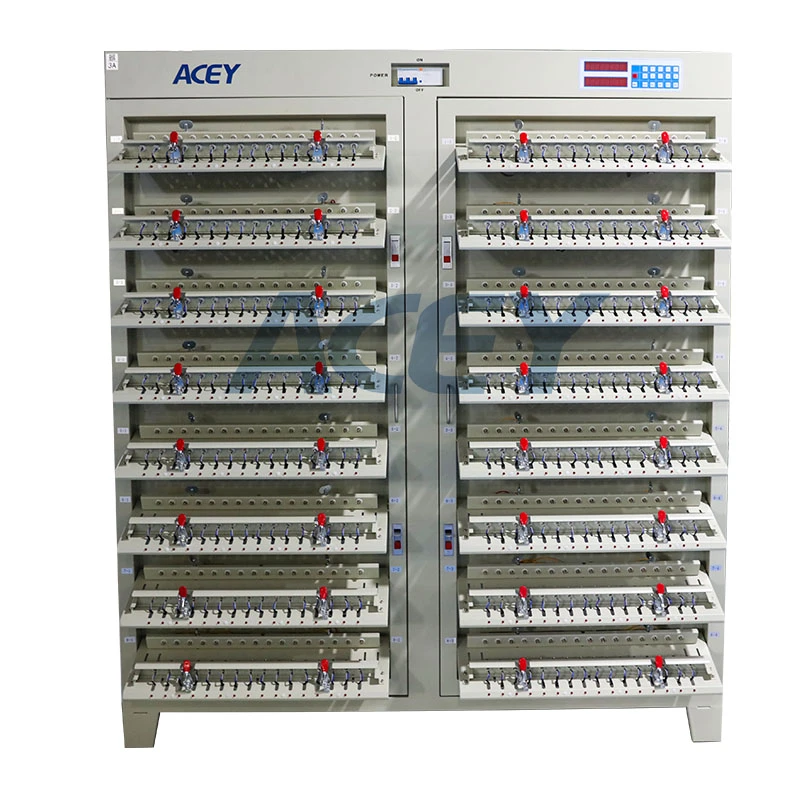
Formation is a crucial step in lithium-ion battery production. During formation, a passivation layer, the solid electrolyte interphase (SEI) film, is formed on the surface of the negative electrode. The quality of the SEI film directly affects the battery's cycle life, stability, self-discharge rate, safety, and other electrochemical performancce characteristics, meeting the "maintenance-free" requirement for sealed rechargeable batteries. Different formation processes result in different SEI films, significantly impacting battery performance.

Traditional low-current pre-charging methods facilitate stable SEI film formation; however, prolonged low-current charging increases the impedance of the formed SEI film, affecting the rate discharge performance of the lithium-ion battery. The extended process time also impacts production efficiency. Different lithium-ion battery systems require different formation processes; this article focuses on the lithium iron phosphate battery system.
The formation process for lithium iron phosphate (LFP) batteries typically follows these steps:
Charging current 0.05C~0.2C, cutoff voltage 3.6~3.7V, charging cutoff current 0.025C~0.05C, resting for a period of time (10-20 min), then discharging at 0.1~0.2C to 2.5V, followed by a resting period (20-60 min). Under different charge/discharge mechanisms, the charging current affects the formation and quality of the SEI (Sediment-Insulated Plate) layer, while the resting time and charging cutoff current affect the battery formation process time.
The formation process for LFP batteries requires selecting a suitable cutoff voltage. From a material crystal structure perspective, when the charging voltage exceeds 3.7V, it may damage the lattice structure of LFP, thus affecting the battery's cycle performance. Some internal resistance experiments and electrode SEM observations also confirm the following conclusions:
1. Appropriately reducing the formation voltage and shortening the formation time can effectively reduce lithium deposition on the negative electrode surface, resulting in a smoother negative electrode surface. This is because a high formation voltage leads to a faster internal gas generation rate, preventing timely gas expulsion and causing deposition on the separator surface, thus affecting the contact balance between the separator and the negative electrode. During lithium-ion insertion/extraction, this imbalance results in excessive lithium-ion insertion in some areas, causing an uneven negative electrode surface and ultimately impacting battery performance.

2. Internal resistance testing of the formed battery revealed that appropriately reducing the formation voltage and time can lower the battery's internal resistance. High internal resistance caused by high formation voltage is also related to the uneven negative electrode surface and the formation of white spots. These white spots are lithium compounds with poor conductivity, leading to higher internal resistance.
3. Appropriately reducing the formation voltage in the battery cell formation process design can improve the battery's initial charge/discharge capacity and cycle performance. Excessively high formation voltage easily causes lithium and its compounds to deposit on the negative electrode surface, increasing the battery's irreversible capacity and inevitably affecting its capacity. The presence of lithium and its compounds leads to increasingly faster capacity decay during charge/discharge cycles, impacting battery cycle life.
ACEY-BCT503-512H 5V 3A battery formation equipment is used to test the formation, capacity and performance parameters of lithium batteries. It is a master-slave battery integrated test system composed of computers and equipment single-chip microcomputers. It has advanced structure, reliable performance, convenient operation, high efficiency, and extremely High cost performance is an indispensable production and testing equipment for lithium battery manufacturers, sub-capacity manufacturers and scientific research units.