I. Definition and Classification of Power Battery Management Systems
There is no strict definition of a Battery Management System (BMS). We can understand it as follows: A battery management system is a device used to safely monitor and effectively manage the power battery pack, maintaining the normal operation of the power supply system and extending battery life. It is commonly known as a battery nanny or battery manager. It can monitor the battery's operating status (battery voltage, current, and temperature), predict the battery capacity (SOC) and the corresponding remaining driving range, and manage the battery to avoid over-discharge, overcharge, overheating, and serious voltage imbalance between individual cells, maximizing the utilization of battery storage capacity and cycle life.
Classification:
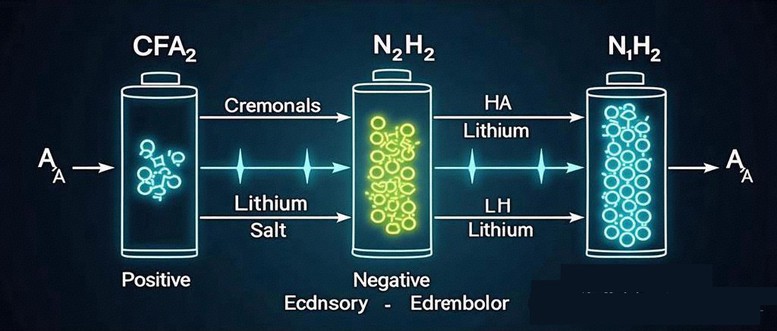
Battery management systems can be classified into distributed systems, centralized systems, and integrated systems based on their structure.
1. Distributed System
Core Definition:
A distributed BMS, also known as a modular BMS, is characterized by "decentralized functions and centralized management." It distributes battery data acquisition and some processing functions to multiple independent slave control units within the battery module or battery pack, while a master control unit is responsible for advanced algorithms and vehicle communication.
Professional Characteristics Analysis:
Advantages:
- High scalability and modularity: By adding or removing slave control units, it can easily adapt to platforms with different power and voltage levels, facilitating platform-based design.
- Simple wiring and high reliability: The sampling harness of each module is extremely short and neat, reducing the risk of interference from long-distance analog signal transmission and improving measurement accuracy and system electromagnetic compatibility.
- High safety: High-voltage sampling points are dispersed, reducing the risk of high-voltage intrusion into low-voltage systems. The master control unit can be located away from the high-voltage area.
Disadvantages:
- High system complexity: Requires the development and management of two hardware units (master and slave) and complex communication protocols.
- Relatively high cost: The total hardware cost of multiple slave control units may be higher.
- Typical Applications: Electric vehicles, large-scale energy storage systems, robots, and other scenarios requiring high modularity, scalability, safety, and accuracy.
2. Centralized System
Core Definition:
The centralized BMS adopts an "integrated acquisition, centralized processing" architecture. All functions are integrated into a single central controller, and all battery cell voltage and temperature signals are directly connected to the acquisition ports on the central controller via long wiring harnesses.
Professional Characteristics Analysis:
Advantages:
- Simple structure, low cost: Single controller, no master-slave communication protocol, relatively simple software development, and the lowest overall cost in small-capacity systems.
- Direct data processing: All data is processed within a single chip, eliminating the need for cross-node synchronization and transmission delays.
Disadvantages:
- Poor scalability: The controller's I/O ports are fixed, making it difficult to adapt to systems with different numbers of batteries.
- High reliability risk: Long-distance sampling harnesses are susceptible to interference, leading to reduced measurement accuracy; the numerous and long harnesses result in a high connector failure rate.
- Inflexible layout: The central controller must be close to the battery pack, and the wiring harness layout is fixed, which is not conducive to overall vehicle layout.
- Safety hazards: All high-voltage sampling points are concentrated in one place, posing a risk of single-point failure leading to the failure of the entire system.
Typical Applications: Low-speed electric vehicles, power tools, small-capacity energy storage cabinets, and consumer electronics with extremely stringent cost and space requirements.
3. Integrated System
Core Definition:
The integrated BMS is the product of deep integration of electrical and mechanical components, embodying "hardware and software integration, high degree of integration." It integrates the core hardware functions of the BMS (such as AFE, MCU) directly onto the control and protection board of the battery pack, and sometimes even physically integrates with other components within the battery pack (such as high-voltage disconnect devices, current sensors).
Professional Characteristics Analysis:
Advantages:
- Small size, extremely high space utilization: Very suitable for space-constrained applications.
- Cost and supply chain optimization: Reduces materials such as casings and connectors, simplifying production and assembly.
- Strong performance targeting: Optimized design for specific battery packs, achieving optimal performance.
Disadvantages:
- Almost no scalability: Deeply integrated with the battery pack, it cannot be used for battery systems of other specifications.
- Difficult maintenance and replacement: In case of failure, it usually requires replacing the entire control board or even the entire battery pack module.
- Heat dissipation and isolation challenges: High-density integration brings challenges in heat dissipation design, and higher requirements for high and low voltage circuit isolation design.
Typical applications include: consumer electronics, electric two-wheelers, compact home energy storage products, and battery packs for some PHEV/HEV vehicles that prioritize maximum space utilization.
II. Basic Structure of the Power Battery Management System
The battery management system mainly consists of the following parts: a central processing unit (also called the main control module or ECU), a data acquisition unit (acquisition module BMU), a balancing unit, a display unit, control components (relays, fuses), and detection components (leakage detection, current sensors, temperature sensors, etc.).
The central processing unit consists of a main control board and a high-voltage control circuit; the data acquisition unit consists of a temperature acquisition module and a voltage acquisition module. In most applications, the balancing module and the detection module are integrated together; the display unit consists of a display board, an LCD screen, a keyboard, and a host computer. CAN fieldbus technology is generally used to realize information communication between these components and with the vehicle's multi-energy system.
In the battery management system of a lithium-ion battery from a new energy vehicle manufacturer, the system adopts a master-slave structure. One BMS main control module can control up to 256 acquisition modules, and each acquisition module can collect and process up to 16 voltage channels and 8 temperature channels. It can perform real-time monitoring of battery charge and discharge status, data processing, SOC estimation, driving range estimation, charge and discharge control, and other functions.

III. Working Principle of the Power Battery Management System
The main working principle of the BMS can be simply summarized as follows: After the data acquisition circuit collects battery status information, the electronic control unit processes and analyzes the data, and then issues control commands to the relevant functional modules within the system based on the analysis results, and transmits information to the outside world.
ACEY-BP24-300A400A bms tester machine, high degree of automation, fast testing speed and high testing accuracy. With test function of overcharge protection, overcharge recovery, overdischarge protection, overdischarge recovery, overcurrent protection (overcharge current and overdischarge current), internal resistance, self-consumption, short circuit protection, overcharge protection time, overcurrent protection time, overdischarge protection Time, balance current, balance voltage etc.

IV. BMS Requirements for Batteries
The use of batteries in automotive power systems is a complex process. Batteries must improve safety, power density, and energy density, and reduce self-discharge rate and cost. In addition, many special issues related to their use in vehicles need to be considered, such as battery consistency, inter-battery connections, leakage protection and high-voltage safety, ventilation and heat dissipation, waterproofing and dustproofing of the battery pack, and system maintainability. Only by solving these problems can power batteries be widely used in electric vehicles.
about us
Acey Intelligent specializes in delivering integrated solutions for semi‑automatic and fully‑automatic assembly lines dedicated to lithium‑ion battery packs used in energy storage systems (ESS), unmanned aerial vehicles (UAVs), electric bicycles, electric scooters, power tools, two‑ and three‑wheelers, and related applications. In addition, we supplies a complete range of battery pack assembly equipment, including cell grading machines, battery sorting machines, Insulation Paper Sticking Machine, CCD tester, manual/automatic battery spot welders, BMS testers, battery comprehensive tester, and battery pack test systems.