The importance of cycle performance for lithium-ion batteries goes without saying; furthermore, from a macro perspective, a longer cycle life implies reduced resource consumption. Consequently, the factors influencing cycle performance are a critical consideration for anyone involved in the lithium battery industry. Outlined below are several factors that can impact battery cycle performance.

Material Type: Material selection is the primary factor influencing lithium-ion battery performance. If materials with poor cycle performance are chosen, the cell's cycle life cannot be guaranteed, regardless of how sound the process design or manufacturing quality may be. Conversely, if superior materials are selected, cycle performance may remain reasonably good even if there are minor issues during subsequent manufacturing (e.g., a cell using Lithium Cobalt Oxide with a specific capacity of only ~135.5 mAh/g and prone to lithium plating showed a sharp drop in capacity after just over a hundred cycles at 1C, yet retained over 90% capacity after 500 cycles at 0.5C; another cell, found to have black graphite particles on the anode upon disassembly, still exhibited normal cycle performance). From a materials perspective, the cycle performance of a full cell is determined by the "weaker link" between the two pairings: the cathode-electrolyte interface and the anode-electrolyte interface.
Poor material cycle performance may stem from two main causes: rapid changes in crystal structure during cycling that prevent continued lithium intercalation/de-intercalation, or the failure of the active material and electrolyte to form a dense, uniform Solid Electrolyte Interphase (SEI) layer. The latter leads to premature side reactions between the active material and the electrolyte, causing rapid electrolyte consumption and thereby impairing cycle life. During cell design, if a material with poor cycle performance is selected for one electrode, there is no need to select a high-performance material for the other, as doing so would result in waste.
Cathode and Anode Compaction Density: While high compaction density for the cathode and anode can increase the cell's energy density, it also compromises the cycle performance of the materials to some extent. Theoretically, higher compaction density implies greater structural damage to the material-a structure that is fundamental to the lithium-ion battery's cyclability. Furthermore, cells with high compaction densities in their positive and negative electrodes struggle to retain sufficient electrolyte, a factor essential for sustaining normal or extended cycling.
Moisture: Excessive moisture triggers side reactions with the active materials in the electrodes, damaging their structure and impairing cycle life; it also hinders the proper formation of the Solid Electrolyte Interphase (SEI) layer. However, while trace amounts of moisture are difficult to eliminate completely, they can actually help maintain cell performance to some extent.
Coating Density: Isolating coating density as a single variable to assess its impact on cycling is virtually impossible. Inconsistencies in coating density inevitably lead to variations in capacity or differences in the number of winding or stacking layers. For cells of the same model, capacity, and material composition, lowering the coating density effectively increases the number of winding or stacking layers; the resulting increase in separator material allows for greater electrolyte absorption, thereby supporting cycle life. While lower coating density can enhance rate capability and facilitate moisture removal during electrode and bare-cell baking, it presents challenges: coating precision becomes harder to control, and large particles within the active material can adversely affect the coating and calendering processes. Additionally, increasing the number of layers requires more foil and separator material, leading to higher costs and lower energy density. Therefore, a balanced assessment is required.
Anode Excess: Determining the appropriate level of anode excess requires considering factors beyond just initial irreversible capacity loss and coating density deviations; the impact on cycle life is also a critical consideration. In Lithium Cobalt Oxide (LCO) and graphite systems, the graphite anode often becomes the "weak link" during cycling. If the anode excess is insufficient, lithium plating may not occur initially; however, after hundreds of cycles, the cathode structure remains relatively stable while the anode structure suffers severe degradation. Consequently, the anode can no longer fully accept the lithium ions supplied by the cathode, leading to lithium plating and premature capacity fade. Electrolyte Quantity: There are three main reasons why insufficient electrolyte affects cycle life. First, the initial fill volume is inadequate. Second, despite sufficient fill volume, the aging time is too short, or electrolyte wetting is incomplete due to factors like excessive electrode compaction. Third, the electrolyte inside the cell is depleted during cycling.

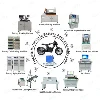
ACEY-BA3040-20 battery life cycle tester is used to test the lifespan, reliability, capacity and other parameters of the battery pack through cyclic charge and discharge test.
Regarding the third point, the compatibility between the electrodes (especially the anode) and the electrolyte is microscopically manifested by the formation of a dense, stable Solid Electrolyte Interphase (SEI) layer; macroscopically, it is observed through the rate of electrolyte consumption during cycling. An incomplete SEI film fails to effectively prevent side reactions between the anode and the electrolyte, leading to electrolyte consumption. Furthermore, defects in the SEI film trigger continuous re-formation of the film during cycling, which consumes both the reversible lithium source and the electrolyte. Whether a cell undergoes hundreds of cycles or experiences a performance drop after only a few dozen, if the electrolyte is depleted after cycling despite being sufficient initially, increasing the electrolyte retention is likely to improve cycle performance to some extent.
Objective Test Conditions: External factors-such as charge/discharge rates, cut-off voltages, charging cut-off currents, overcharge/over-discharge events, testing chamber temperature, sudden interruptions, and contact resistance between test probes and the cell-can all influence cycle performance test results to varying degrees. Additionally, different materials exhibit varying sensitivities to these factors; however, adopting standardized testing protocols and understanding the commonalities and specific characteristics of key materials should suffice for routine operations.
Summary: Much like the "bucket principle" (or law of the minimum), the ultimate determinant of a cell's cycle performance is the "shortest stave"-the single most limiting factor among the many variables at play. Moreover, these factors interact with one another. Given identical materials and manufacturing capabilities, higher cycle life often comes at the cost of lower energy density. Therefore, the primary objective is to identify the optimal balance that meets customer requirements while ensuring maximum consistency in cell manufacturing.
About us
Acey New Energy is dedicated to providing semi-automated and fully automated assembly line solutions for lithium-ion battery packs used in sectors such as energy storage systems (ESS), drones, e-bikes, e-scooters, power tools, and two- or three-wheeled electric vehicles. We also offer a comprehensive suite of equipment covering the entire battery assembly process-including battery sorters, insulation paper sticking machine, CCD tester, manual / automatic spot welders, BMS testers, battery comprehensive performance testers, and battery pack tester-to help customers achieve efficient, intelligent, and large-scale production.