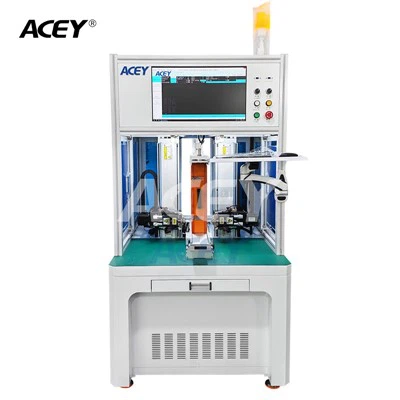
Hey there! As a supplier of Battery Pack Test Systems, I'm super stoked to chat with you about how our systems work to protect battery packs during testing. It's a crucial aspect of what we do, and I'm excited to break it down for you.


First off, let's understand why protecting battery packs during testing is so important. Battery packs are complex and expensive pieces of technology. They're used in all sorts of applications, from electric vehicles to portable electronics. When we test these battery packs, we're essentially pushing them to their limits to ensure they meet the required standards and perform safely. Without proper protection, there's a risk of damaging the battery packs, which can lead to costly replacements and even safety hazards.
One of the key ways our Battery Pack Test System protects battery packs is through precise voltage and current control. You see, overcharging or over - discharging a battery pack can cause serious damage. Our system is designed to monitor the voltage and current levels constantly during the testing process. If the voltage or current approaches unsafe levels, the system will automatically adjust the charging or discharging parameters to keep the battery pack within a safe operating range.
For example, let's say we're testing a battery pack with our Battery Pack Charge Discharge Tester. This tester is equipped with advanced sensors and control algorithms. It can detect even the slightest changes in voltage and current. If the battery pack starts to overcharge, the tester will reduce the charging current or stop the charging process altogether. This prevents the battery from reaching a voltage level that could cause thermal runaway or other forms of damage.
Another important protection mechanism is temperature monitoring. Batteries generate heat during charging and discharging, and excessive heat can degrade the battery's performance and lifespan. Our Battery Pack Test System includes built - in temperature sensors that continuously measure the temperature of the battery pack. If the temperature rises above a safe threshold, the system will take action. It might slow down the charging or discharging rate to reduce heat generation, or it could activate a cooling system if available.
Our 500V 500A Battery Charge Discharge Test Equipment is a great example of a system that emphasizes temperature protection. This high - power equipment is used for testing large - scale battery packs, which tend to generate more heat. The temperature sensors in this system are highly accurate and can respond quickly to any temperature changes. By keeping the battery pack at an optimal temperature, we can ensure its long - term reliability and performance.
In addition to voltage, current, and temperature protection, our Battery Pack Test System also offers short - circuit protection. A short - circuit can occur due to a manufacturing defect, damage to the battery pack, or improper handling during testing. When a short - circuit happens, it can cause a large amount of current to flow through the battery pack, leading to overheating and potential explosion.
Our system has a built - in short - circuit protection mechanism. It can detect a short - circuit condition within milliseconds and immediately cut off the power supply to the battery pack. This prevents any further damage and ensures the safety of the testing environment. Whether you're using our 60V 10A Charge 10A Discharge Battery Pack Cycle Tester for small - scale battery packs or our high - power equipment for large - scale ones, you can rest assured that short - circuit protection is in place.
We also understand that different battery chemistries have different requirements. For instance, lithium - ion batteries, which are widely used in modern electronics and electric vehicles, have specific charging and discharging profiles. Our Battery Pack Test System can be customized to accommodate these different chemistries. We can set up the testing parameters based on the specific requirements of the battery pack, ensuring that it's tested in the most appropriate and safe way.
Moreover, our systems are designed with redundancy in mind. In case one of the protection mechanisms fails, there are backup systems in place. For example, if the primary voltage sensor malfunctions, there's a secondary sensor that can take over and continue to monitor the voltage. This redundancy ensures that the battery pack is always protected, even in the event of a component failure.
When it comes to software, our Battery Pack Test System has a user - friendly interface that allows operators to easily set up and monitor the testing process. The software also includes diagnostic tools that can detect any potential issues with the battery pack or the testing equipment. It can provide real - time alerts if there's a problem, allowing operators to take immediate action.
We're constantly improving our Battery Pack Test System to keep up with the latest technological advancements and industry standards. Our R & D team is always working on new features and enhancements to make our systems even more reliable and efficient.
If you're in the market for a Battery Pack Test System, you want a system that can protect your valuable battery packs during testing. Our systems offer a comprehensive range of protection mechanisms, from voltage and current control to temperature monitoring and short - circuit protection. We've got the experience and expertise to ensure that your battery packs are tested safely and accurately.
So, if you're interested in learning more about our Battery Pack Test Systems or have any questions about how they can protect your battery packs, don't hesitate to reach out. We're here to help you make the right choice for your battery testing needs. Whether you're a small - scale manufacturer or a large - scale enterprise, we've got a solution for you.
References
- Battery Testing Handbook: A Guide to Battery Test Equipment and Methods
- Journal of Power Sources: Research on Battery Safety and Testing Technologies