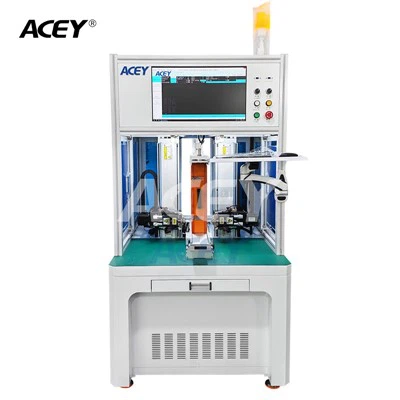
Hey there! As a BMS tester supplier, I've seen firsthand how crucial it is to have the right features in a BMS tester. Whether you're a manufacturer looking to ensure the quality of your battery management systems or a researcher exploring new battery technologies, the features of a BMS tester can make or break your testing process. In this blog, I'll walk you through the key features to look for in a BMS tester.
Accuracy
First off, accuracy is non - negotiable. A BMS tester needs to provide precise measurements of voltage, current, and temperature. After all, the battery management system's job is to monitor and control battery parameters accurately, so your tester has to be just as accurate.
For example, when testing the voltage of individual cells in a battery pack, a high - precision BMS tester can detect even the slightest voltage discrepancies. This is vital because uneven cell voltages can lead to reduced battery life and performance. Look for a tester with a high - resolution analog - to - digital converter (ADC). A 16 - bit or higher ADC is often a good sign, as it provides more precise data points for better analysis.
Testing Range
The testing range of a BMS tester is another crucial factor. Different battery management systems are designed for various battery configurations, such as different numbers of series cells and different current ratings.
You might be working with consumer electronics with small battery packs, or maybe large - scale energy storage systems with high - capacity batteries. A good BMS tester should be able to handle a wide range of voltage and current levels. For instance, our 1 - 24 Series 100A Charge 150A Discharge BMS Tester can support up to 24 series cells and handle relatively high charge and discharge currents, making it suitable for a variety of applications.
Programmability
Programmability gives you the flexibility to tailor the testing process according to your specific needs. A programmable BMS tester allows you to set custom test profiles, including charge and discharge rates, time intervals, and stop conditions.
This is especially useful for simulating real - world usage scenarios. For example, if you're testing a BMS for an electric vehicle, you can program the tester to mimic the charging and discharging patterns that occur during a typical drive cycle. Some advanced testers even come with intuitive software interfaces that make it easy to create and edit these test profiles. Our Optional 24 Series Battery Management System Test Equipment With PC offers great programmability, and you can control it conveniently through a PC.
Data Logging and Analysis
Data is king in the world of BMS testing. A reliable BMS tester should be able to log all the relevant test data, such as voltage, current, and temperature readings over time. This data is not only useful for immediate testing purposes but also for long - term analysis and quality control.


Look for a tester that can store large amounts of data and provides easy - to - use data analysis tools. The ability to generate graphs and reports is a huge plus. With detailed data analysis, you can identify trends, detect potential issues early, and make data - driven decisions about the performance of your BMS.
Safety Features
Safety should always be a top priority when working with batteries and BMS testers. A good BMS tester comes with a range of safety features to protect both the tester and the battery under test.
Over - current protection, over - voltage protection, and temperature monitoring are some of the standard safety features. These features prevent damage to the battery and the tester in case of a malfunction. Additionally, some testers have features like short - circuit protection and emergency stop buttons, which add an extra layer of safety.
Communication Interfaces
In today's connected world, having good communication interfaces in a BMS tester is essential. You'll likely want to transfer the test data to a computer or other devices for further analysis and storage.
Common communication interfaces include USB, Ethernet, and RS - 232. A tester with multiple communication options gives you more flexibility in how you connect it to your existing systems. Moreover, some advanced testers support wireless communication protocols like Bluetooth or Wi - Fi, which can be very convenient for remote monitoring and control.
Modularity
Modularity is a great feature to consider, especially if you expect your testing needs to grow or change over time. A modular BMS tester allows you to add or remove testing channels or functionality as required.
For example, if you initially only need to test small battery packs with a few cells, you can start with a basic configuration. But as your business expands and you start working with larger battery packs, you can easily add more channels to the tester. This can save you money in the long run as you don't have to replace the entire tester when your testing requirements change.
Ease of Use
Last but not least, ease of use is a key factor. A complicated tester can waste your time and increase the likelihood of errors. Look for a tester with a user - friendly interface, whether it's a physical control panel or a software - based interface.
Clear labels, easy - to - navigate menus, and helpful documentation can make a big difference. A tester that is easy to set up, operate, and maintain will make your testing process much more efficient.
So, there you have it—the key features to look for in a BMS tester. If you're in the market for a high - quality BMS tester with all these features and more, we've got you covered. Our 1 - 24 Series 50A Charge 120A Discharge BMS Testing Equipment is just one of the many great options available. Whether you're a small - scale operation or a large - scale manufacturer, we can provide the right BMS testing solution for your needs.
If you're interested in learning more about our BMS testers or if you have any questions regarding your specific testing requirements, don't hesitate to reach out. We're here to help you make the best choice for your business and get you the most out of your BMS testing process.
References
- Battery Management System Basics, Battery University
- Handbook of Battery Management, Springer