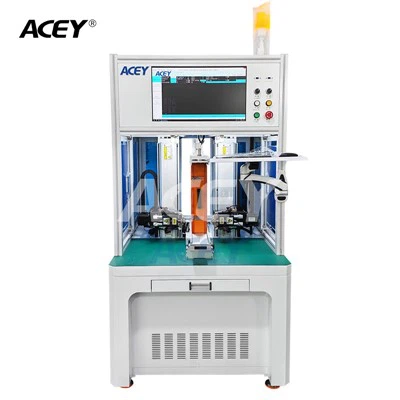
As a supplier of Bms Testing Equipment, I've witnessed firsthand the critical role these devices play in the battery industry. Barely a month ago, I spoke with a client who was stuck with a faulty battery management system (BMS) for a large-scale energy storage project. Their lithium-ion batteries were underperforming, and they had no idea why. That's where our BMS testing equipment came into action. By accurately mimicking the battery's real - world conditions and analyzing how the BMS interacted with it, we were able to pinpoint the issues and get the project back on track. This is just one of numerous stories highlighting the need for advanced BMS testing solutions, especially when dealing with different battery chemistries.
Understanding Battery Chemistries
Before diving into how our equipment handles various battery chemistries, it's essential to understand the primary types we commonly encounter. Lithium - ion batteries, known for their high energy density and long cycle life, are the go - to for applications ranging from smartphones to electric vehicles. Lead - acid batteries, with their low cost and reliability, are still widely used in backup power systems and starting engines in vehicles. Nickel - metal hydride (NiMH) batteries offer a good balance of energy density and environmental friendliness, making them prevalent in some consumer electronics and older hybrid vehicles.
Each of these chemistries has unique characteristics, such as different charging and discharging curves, voltage ranges, and thermal behaviors. For example, lithium - ion batteries are sensitive to over - charging and over - discharging, which can lead to safety hazards like thermal runaway. Lead - acid batteries require a specific charging profile to prevent sulfation, a condition that reduces battery life. NiMH batteries have a relatively high self - discharge rate compared to lithium - ion batteries.
How Our Bms Testing Equipment Adapts
Our Bms Testing Equipment is designed with flexibility in mind to handle these diverse battery chemistries.
Customizable Charging and Discharging Profiles
We understand that different battery chemistries need specific charging and discharging profiles. For lithium - ion batteries, our equipment can be configured to follow a constant - current/constant - voltage (CC/CV) charging profile. This involves initially charging the battery at a constant current until it reaches a predefined voltage, after which the charging switches to a constant voltage to avoid over - charging. For lead - acid batteries, the equipment can apply a multi - stage charging process, including bulk charge, absorption charge, and float charge, to optimize battery life and performance. Our 1 - 24 Series 50A Charge 120A Discharge BMS Testing Equipment allows users to easily program these customized charging and discharging profiles, ensuring accurate testing for different battery types.
Voltage and Current Range Adaptability
Battery chemistries also have different voltage and current requirements. Lithium - ion batteries typically operate in a voltage range of 2.5 - 4.2V per cell, while lead - acid batteries have a nominal voltage of 2V per cell. Our testing equipment is capable of handling a wide range of voltages and currents. The 1 - 24 Series 300A Charge 400A Discharge Battery Bms Tester can accurately measure and control high - current applications, making it suitable for testing large - scale battery packs used in electric vehicles or energy storage systems. It can also be adjusted for lower - current applications, such as those involving small consumer electronics.
Temperature Monitoring and Control
Temperature plays a crucial role in battery performance, and different chemistries respond differently to temperature changes. Lithium - ion batteries can experience reduced capacity and increased degradation at high temperatures, while lead - acid batteries may have a shorter lifespan if operated at extremely low temperatures. Our BMS testing equipment is equipped with advanced temperature sensors to monitor the battery's temperature during testing. It can also simulate different temperature conditions to evaluate how the BMS performs under various environmental scenarios. This ability to control and monitor temperature ensures that the testing results are accurate and representative of real - world operating conditions.


Safety Features for Different Chemistries
Safety is of utmost importance when testing batteries, especially given the potential risks associated with different chemistries. Lithium - ion batteries, for instance, can pose a fire or explosion hazard if mishandled. Our BMS testing equipment includes comprehensive safety features such as over - voltage protection, over - current protection, and short - circuit protection. These features are tailored to the specific requirements of each battery chemistry to prevent dangerous situations during testing.
Case Studies
Lithium - ion Battery Testing in Electric Vehicles
A major electric vehicle manufacturer came to us with the challenge of testing their new BMS for a high - performance lithium - ion battery pack. The BMS needed to be thoroughly tested to ensure it could accurately monitor and control the battery's state of charge, state of health, and temperature. Our 1 - 24 Series 300A Charge 400A Discharge Battery Bms Tester was used to simulate the battery's charging and discharging cycles under different driving conditions. By accurately mimicking the real - world scenarios, we were able to identify and rectify several potential issues with the BMS, such as inaccurate state - of - charge estimation and improper thermal management.
Lead - acid Battery Testing in Backup Power Systems
A data center relying on lead - acid batteries for backup power needed to ensure the reliability of their BMS. Our Bms Testing Equipment was used to test the BMS's ability to manage the charging and discharging processes of the lead - acid battery bank. We programmed the equipment to follow a lead - acid - specific charging profile and monitored the battery's performance over multiple cycles. The testing revealed that the BMS was not providing the correct float charge voltage, which could have led to premature battery failure. After making the necessary adjustments, the BMS was able to effectively manage the battery bank, ensuring reliable backup power for the data center.
Looking to the Future
As the battery industry continues to evolve, new chemistries such as solid - state batteries and lithium - sulfur batteries are emerging. These new chemistries bring unique challenges and opportunities for BMS testing. Our team of engineers is constantly working on developing new features and capabilities for our Bms Testing Equipment to stay ahead of the curve. We are researching how to adapt our equipment to handle the different voltage ranges, charging mechanisms, and safety requirements of these emerging battery chemistries.
Contact for Procurement and Consultation
If you're in the market for high - quality BMS testing equipment, or if you have any questions about how our products can handle your specific battery chemistry testing needs, we'd love to hear from you. Whether you're developing a new battery - powered product, maintaining existing battery systems, or conducting research on battery chemistries, our equipment can provide the accurate and reliable testing you need. We pride ourselves on our technical expertise and commitment to customer service, and we're ready to help you find the best solution for your battery testing requirements. Don't hesitate to reach out to discuss your procurement options and get started on optimizing your battery management system testing process.
References
- Linden, D., & Reddy, T. B. (2002). Handbook of Batteries. McGraw - Hill.
- Dunlop, R. (2017). Battery Management Systems: Design by Modelling. Wiley.