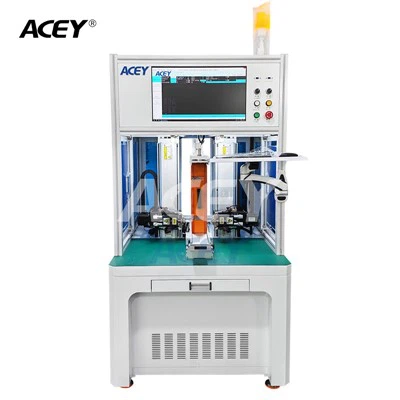
A lithium-ion cell tester is an essential tool for evaluating the state of health (SOH) of lithium-ion cells. The SOH of a cell is a critical parameter that indicates the cell's overall condition and performance compared to its original state. This blog post aims to explore the indicators of a cell's SOH that can be measured by a lithium-ion cell tester, which we proudly supply to meet the diverse needs of our customers.
1. Open - Circuit Voltage (OCV)
Open - circuit voltage is one of the most fundamental indicators for assessing the SOH of a lithium - ion cell. When a cell is at rest (not being charged or discharged), the OCV reflects the electrochemical potential difference between the positive and negative electrodes. As a cell ages, its OCV gradually changes. A healthy cell typically has a well - defined OCV curve corresponding to its state of charge (SOC). However, as the SOH deteriorates, the relationship between OCV and SOC becomes less predictable.
Our lithium - ion cell testers can accurately measure the OCV of cells. By comparing the measured OCV with the reference values for a new cell at the same SOC, we can detect deviations that may indicate aging or other issues. For example, a lower - than - expected OCV at a given SOC could suggest a loss of active material in the electrodes or an increase in internal resistance.
2. Internal Resistance
Internal resistance is another crucial indicator of a cell's SOH. It represents the resistance within the cell to the flow of current. As a cell ages, its internal resistance tends to increase due to various factors such as the growth of solid - electrolyte interphase (SEI) layers on the electrodes, depletion of active materials, and degradation of the electrolyte.
An increase in internal resistance can lead to several problems. During charging, it can cause more energy to be dissipated as heat, reducing the charging efficiency. During discharging, it can result in a larger voltage drop, reducing the available output voltage and capacity. Our lithium - ion cell testers are equipped with advanced techniques to measure the internal resistance of cells accurately. We offer a range of testers suitable for different applications, such as the 5V 200A Li Ion Battery Cell Testing Equipment, which can handle high - current scenarios and provide precise internal resistance measurements.
3. Capacity
The capacity of a lithium - ion cell is defined as the amount of charge it can store and deliver. It is measured in ampere - hours (Ah) or milliampere - hours (mAh). A cell's capacity gradually decreases over its lifetime due to electrode degradation, loss of active materials, and side reactions.
Our lithium - ion cell testers can perform charge - discharge cycles to accurately measure the actual capacity of the cell. By comparing the measured capacity with the rated capacity of a new cell, we can calculate the SOH in terms of capacity retention. For example, if a new cell has a rated capacity of 2000 mAh and the measured capacity after a certain number of cycles is 1600 mAh, the capacity retention is 80%, indicating a SOH of 80%.
4. Self - Discharge Rate
Self - discharge is the process by which a charged cell loses its charge over time even when not in use. A high self - discharge rate is often an indication of a poor SOH. It can be caused by internal short - circuits, side reactions in the electrolyte, or the presence of impurities in the cell.
Our lithium - ion cell testers can measure the self - discharge rate of cells by monitoring the change in voltage over a specific period. By observing how quickly the cell loses its charge under idle conditions, we can assess its SOH. A significant increase in the self - discharge rate compared to a new cell may suggest that the cell is approaching the end of its useful life.


5. Charge - Discharge Efficiency
Charge - discharge efficiency is defined as the ratio of the energy output during discharge to the energy input during charging. In an ideal cell, the charge - discharge efficiency would be 100%. However, in real - world scenarios, there are always losses due to various factors such as internal resistance and side reactions.
As a cell ages, its charge - discharge efficiency usually decreases. Our lithium - ion cell testers can measure the charge and discharge energy accurately and calculate the charge - discharge efficiency. By monitoring this parameter over time, we can detect the degradation of the cell and predict its remaining useful life.
6. Thermal Behavior
The thermal behavior of a lithium - ion cell is closely related to its SOH. During charging and discharging, cells generate heat due to internal resistance. A healthy cell should have a relatively stable and predictable thermal profile. However, as the SOH decreases, the cell may exhibit abnormal heating patterns.
Our lithium - ion cell testers are often equipped with temperature sensors to monitor the thermal behavior of cells during operation. Excessive heating can indicate increased internal resistance, chemical reactions within the cell, or other issues that are detrimental to the cell's health. For example, our 5V 20A 256 Channels Cylindrical Cell Capacity Grading Machine can monitor the temperature of multiple cells simultaneously, allowing for a comprehensive assessment of their thermal behavior.
7. Cycling Performance
Cycling performance refers to the ability of a cell to withstand repeated charge - discharge cycles. The number of cycles a cell can endure before its capacity drops below a certain threshold is an important indicator of its SOH.
Our lithium - ion cell testers can perform a large number of charge - discharge cycles to evaluate the cycling performance of cells. We can analyze parameters such as capacity fade rate per cycle, the cycle life at different depths of discharge (DOD), and the impact of cycling conditions on the cell's SOH. By testing cells under different cycling profiles, we can provide customers with valuable information about the long - term performance of their lithium - ion cells.
8. Cell Grading
Cell grading is a process of sorting cells based on their performance characteristics. It is closely related to the SOH of cells. Our Lithium Ion Cell Grading Machine can grade cells according to various parameters such as capacity, voltage, and internal resistance.
By separating cells into different grades, customers can ensure the consistency and quality of their battery packs. Cells with similar SOH values are grouped together, which helps to optimize the performance and lifespan of the battery pack. For example, in applications where high capacity and long cycle life are required, only cells with high grades can be selected for use.
In conclusion, a lithium - ion cell tester can measure multiple indicators of a cell's SOH, including open - circuit voltage, internal resistance, capacity, self - discharge rate, charge - discharge efficiency, thermal behavior, cycling performance, and facilitate cell grading. Our company is a leading supplier of lithium - ion cell testers, offering a wide range of products to meet the specific needs of different industries. Whether you are a battery manufacturer, a researcher, or an end - user, our testers can provide you with accurate and reliable data to evaluate the SOH of your lithium - ion cells.
If you are interested in our products and would like to learn more about how our lithium - ion cell testers can help you assess the SOH of your cells, please feel free to contact us for procurement and in - depth discussions. We look forward to partnering with you to ensure the quality and performance of your lithium - ion battery solutions.
References
- Wang, X., & Zhang, Y. (2019). State of health estimation of lithium - ion batteries: A review. Journal of Power Sources, 435, 226805.
- Chen, Y., & Liu, X. (2020). A review of lithium - ion battery state of health estimation and lifetime prediction methods. Batteries, 6(3), 47.
- Zhang, W., & Li, H. (2018). Internal resistance measurement methods for lithium - ion batteries: A review. Journal of Energy Storage, 18, 1 - 8.