As a supplier of Battery Pack Assembly Lines, I've witnessed firsthand the importance of proper battery pack labeling on the production line. In this blog post, I'll delve into the requirements for battery pack labeling, which are crucial for safety, compliance, and consumer information.
Safety and Regulatory Compliance
One of the primary reasons for battery pack labeling is to ensure safety and comply with relevant regulations. Batteries, especially lithium - ion batteries, can pose significant risks if not handled properly. Regulatory bodies around the world have established strict guidelines for battery pack labeling to mitigate these risks.
For instance, the International Electrotechnical Commission (IEC) has developed standards such as IEC 62133, which provides requirements for the safety of secondary lithium cells and batteries for use in portable applications. These standards mandate that battery packs must be labeled with information about the battery chemistry, rated voltage, rated capacity, and warning signs regarding potential hazards such as overcharging, short - circuiting, and exposure to high temperatures.
In the United States, the Federal Hazardous Substances Act (FHSA) and the Consumer Product Safety Commission (CPSC) regulations require clear and prominent labeling of battery packs. The labels should indicate any potential health risks associated with the battery, including information about chemicals used in the battery and proper disposal methods. This is not only for the safety of end - users but also for those involved in the transportation and storage of battery packs.
Product Identification and Traceability
Battery pack labeling also plays a vital role in product identification and traceability. Each battery pack should have a unique identifier, such as a serial number or barcode. This identifier allows manufacturers to track the production history of each battery pack, including details such as the date of manufacture, production line, and raw material batch numbers.
Traceability is crucial for quality control and recall management. In case of a defect or safety issue with a particular batch of battery packs, manufacturers can quickly identify and locate the affected products using the unique identifiers on the labels. This helps in minimizing the impact on consumers and reducing potential liability for the manufacturer.
Technical Information
In addition to safety and identification information, battery pack labels should provide essential technical details. This includes the battery's nominal voltage, capacity, charge and discharge rates, and recommended operating temperature range.


The nominal voltage indicates the typical voltage output of the battery pack under normal operating conditions. The capacity, usually measured in ampere - hours (Ah) or watt - hours (Wh), tells the user how much energy the battery can store. Charge and discharge rates are important for understanding how fast the battery can be charged and discharged safely. For example, a battery with a high charge rate may require a specialized charger.
The recommended operating temperature range is also critical. Operating a battery pack outside of this range can significantly reduce its performance and lifespan, and in some cases, may even lead to safety issues. By providing this technical information on the label, manufacturers ensure that users can make informed decisions about how to use and maintain the battery packs.
Labeling Requirements on the Assembly Line
On a battery pack assembly line, meeting these labeling requirements involves several steps. First, the labeling system must be integrated into the production process. This may involve using automated labeling machines that can accurately apply labels to the battery packs at a high speed.
The labels themselves need to be of high quality. They should be durable and resistant to factors such as moisture, heat, and abrasion. This ensures that the information on the label remains legible throughout the battery pack's lifespan.
Proper alignment of the labels is also important. Misaligned labels can not only look unprofessional but may also make it difficult for users to read the information. Assembly line workers need to be trained to ensure that labels are applied correctly.
Our Solutions for Battery Pack Labeling
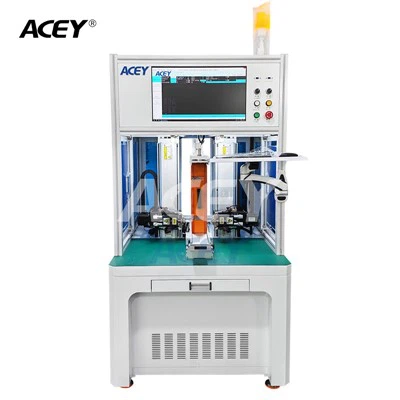
At our company, we offer a range of solutions to meet the battery pack labeling requirements. Our ESS Battery Pack Assembly Line is designed to handle the entire battery pack assembly process, including labeling. This line is equipped with advanced labeling systems that can apply labels accurately and efficiently.
We also provide Lithium Battery Pack Spot Welder which is an important part of the battery pack assembly process. After the welding process, the battery packs are ready for labeling. Our spot welders ensure high - quality connections within the battery pack, which is essential for the overall performance and safety of the product.
For the actual labeling process, our Handheld Batch Coding Machine is a great option. It allows for flexible and on - the - go coding of labels, which can be useful for small - scale production or for adding additional information to the labels.
Conclusion
In conclusion, proper battery pack labeling is essential for safety, compliance, product identification, and providing technical information to users. Meeting the labeling requirements on a battery pack assembly line requires careful planning, high - quality labeling materials, and appropriate equipment.
If you are in the market for a reliable battery pack assembly line that can meet all your labeling and production needs, we invite you to contact us for a detailed discussion. Our team of experts is ready to assist you in finding the best solutions for your specific requirements.
References
- International Electrotechnical Commission (IEC). IEC 62133: Safety requirements for secondary lithium cells and batteries for use in portable applications.
- Federal Hazardous Substances Act (FHSA), United States.
- Consumer Product Safety Commission (CPSC) regulations, United States.