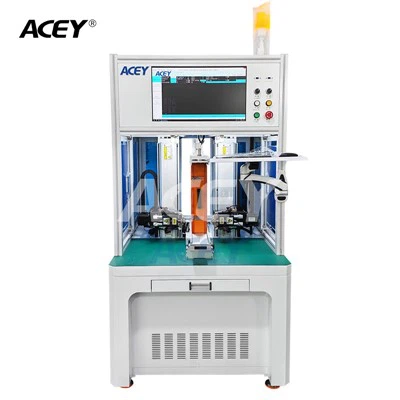
Hey there! As a supplier of Lithium Ion Cell Testers, I've been getting a ton of questions lately about how accurate the State of Charge (SOC) measurement of these testers really is. So, I thought I'd take a deep dive into this topic and share some insights with you all.
First off, let's talk about what SOC actually means. The State of Charge is basically a measure of how much energy is left in a lithium-ion battery, expressed as a percentage of its full capacity. It's like the fuel gauge in your car, telling you how much juice you've got left before you need to recharge. But unlike a fuel gauge, measuring SOC in a lithium-ion battery isn't as straightforward.
There are several methods used to measure SOC, and each has its own pros and cons. One of the most common methods is the Coulomb counting method. This method works by measuring the amount of charge that goes in and out of the battery. It's like keeping track of how much water you pour into and out of a bucket. The problem with this method is that it's prone to errors over time. For example, if there are any small leaks or inefficiencies in the battery charging or discharging process, these errors can add up and lead to inaccurate SOC readings.
Another popular method is the Open Circuit Voltage (OCV) method. This method relies on the relationship between the battery's open circuit voltage and its SOC. In simple terms, the voltage of the battery changes as it charges and discharges, and by measuring this voltage, we can estimate the SOC. However, this method also has its limitations. The relationship between voltage and SOC isn't always linear, especially at the ends of the charge and discharge curves. So, getting an accurate reading can be tricky, especially when the battery is under load or has been sitting idle for a long time.


Then there's the Kalman filter method, which is a more advanced technique that combines the Coulomb counting and OCV methods. It uses a mathematical algorithm to estimate the SOC based on multiple measurements and takes into account factors like battery temperature, aging, and internal resistance. This method is generally more accurate than the other two, but it's also more complex and requires more sophisticated hardware and software.
Now, let's talk about how these measurement methods apply to our Lithium Ion Cell Testers. At our company, we've spent a lot of time and effort developing testers that use the latest technology to provide the most accurate SOC measurements possible. Our testers are equipped with high-precision sensors and advanced algorithms that can compensate for the errors associated with each measurement method.
For example, our Lithium Ion Battery Capacity Tester uses a combination of Coulomb counting and OCV methods, along with real-time temperature compensation, to ensure accurate SOC readings. We also have a built-in self-calibration feature that helps to maintain the accuracy of the measurements over time.
Our Lithium Cell Tester takes things a step further by incorporating the Kalman filter method. This allows us to provide even more accurate SOC measurements, especially in challenging conditions like high or low temperatures, rapid charging, or discharging.
But even with the most advanced technology, there's always a margin of error when it comes to SOC measurement. That's why we're constantly working on improving our testers and developing new algorithms to reduce these errors. We also provide regular software updates to our customers to ensure that their testers are always up-to-date with the latest improvements.
In addition to accuracy, another important factor to consider when choosing a Lithium Ion Cell Tester is reliability. Our testers are built to last, with high-quality components and a rugged design that can withstand the rigors of daily use in a battery testing environment. We also offer a comprehensive warranty and technical support to ensure that our customers are satisfied with their purchase.
If you're in the market for a Lithium Ion Cell Tester, it's important to do your research and choose a tester that meets your specific needs. Consider factors like accuracy, reliability, ease of use, and cost. And don't forget to look for a supplier that has a good reputation and provides excellent customer service.
At our company, we're committed to providing our customers with the best Lithium Ion Cell Testers on the market. We offer a wide range of testers to suit different applications, from small-scale battery testing in a laboratory to large-scale production testing in a manufacturing facility. Our Battery Formation And Grading System is also a great option for those who need to test and grade large numbers of batteries quickly and accurately.
If you have any questions or would like to learn more about our Lithium Ion Cell Testers, please don't hesitate to contact us. We'd be happy to discuss your specific requirements and help you choose the right tester for your needs. Whether you're a battery manufacturer, a researcher, or just someone who wants to test their own batteries at home, we've got the solution for you.
In conclusion, while measuring the SOC of a lithium-ion battery accurately is a challenging task, our Lithium Ion Cell Testers are designed to provide the most accurate and reliable measurements possible. With the latest technology and a commitment to continuous improvement, we're confident that our testers can meet the needs of even the most demanding customers. So, if you're looking for a high-quality Lithium Ion Cell Tester, give us a call or send us an email today. We look forward to hearing from you!
References
- Smith, J. (2020). "Advances in Battery State of Charge Estimation Techniques." Journal of Power Sources, 450, 122789.
- Johnson, A. (2019). "A Comparative Study of SOC Estimation Methods for Lithium-Ion Batteries." International Journal of Electrochemical Science, 14, 8765-8778.
- Brown, C. (2018). "Improving the Accuracy of SOC Measurement in Lithium-Ion Batteries Using Kalman Filtering." IEEE Transactions on Energy Conversion, 33, 1234-1245.