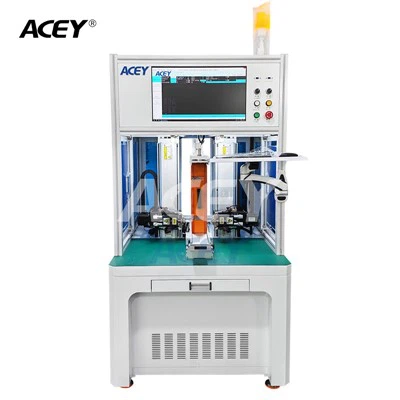
What is the control system of a Battery Pasting Machine?
As a reputable supplier of Battery Pasting Machines, I often receive inquiries about the control systems that power these essential pieces of equipment. Understanding the control system of a Battery Pasting Machine is crucial for optimizing production efficiency, ensuring product quality, and maintaining operational safety. In this blog, I will delve into the components, functions, and significance of the control system in a Battery Pasting Machine.


Components of the Control System
The control system of a Battery Pasting Machine is a sophisticated network of hardware and software components that work in harmony to regulate the machine's operations. Here are the key components:
-
PLC (Programmable Logic Controller): The PLC serves as the brain of the control system. It is a digital computer specially designed for industrial applications. The PLC is programmed to execute specific sequences of operations, monitor input signals from various sensors, and send output signals to control different actuators such as motors, valves, and solenoids. For example, it can control the speed of the conveyor belt, the flow rate of the paste, and the timing of the pasting process.
-
HMI (Human - Machine Interface): The HMI is the interface through which operators interact with the Battery Pasting Machine. It typically consists of a touchscreen panel that displays real - time information about the machine's status, such as the current speed, temperature, and pressure. Operators can use the HMI to input commands, set operating parameters, and view historical data. This user - friendly interface simplifies the operation and maintenance of the machine.
-
Sensors: A variety of sensors are installed in the Battery Pasting Machine to monitor different physical parameters. These include proximity sensors, photoelectric sensors, temperature sensors, and pressure sensors. Proximity sensors are used to detect the presence of batteries or components on the conveyor belt, ensuring accurate positioning for the pasting process. Temperature and pressure sensors help maintain the optimal conditions for the paste, preventing issues such as overheating or under - pressure that could affect the quality of the pasted batteries.
-
Actuators: Actuators are devices that convert electrical signals from the PLC into mechanical motion. They include motors, pneumatic cylinders, and hydraulic pumps. For instance, a servo motor can be used to control the movement of the pasting head precisely, ensuring even application of the paste on the battery surface. Pneumatic cylinders can be used to clamp the battery during the pasting process, providing stability.
-
Communication Modules: In modern Battery Pasting Machines, communication modules are often integrated to enable data transfer between the machine and other devices or systems. These modules can support communication protocols such as Ethernet, Modbus, or Profibus. This allows for remote monitoring and control of the machine, as well as integration with the factory's overall production management system.
Functions of the Control System
The control system of a Battery Pasting Machine performs several vital functions to ensure smooth and efficient operation:
-
Process Automation: The control system automates the entire pasting process, from the loading of batteries onto the conveyor belt to the application of the paste and the unloading of the finished products. This reduces the need for manual intervention, minimizing the risk of human error and increasing production speed. For example, once the operator sets the desired parameters on the HMI, the PLC takes over and controls the sequence of operations, ensuring consistent pasting results.
-
Parameter Control: It allows for precise control of various process parameters. Operators can adjust the speed of the conveyor belt, the viscosity of the paste, and the pressure applied during the pasting process. By maintaining these parameters within the optimal range, the control system ensures the quality and uniformity of the pasted batteries. For instance, if the paste is too thick, the control system can adjust the flow rate and pressure to ensure proper application.
-
Alarm and Monitoring: The control system continuously monitors the machine's operation and detects any abnormal conditions. If a sensor detects a problem, such as a blocked conveyor belt or a sudden drop in temperature, the system triggers an alarm. The alarm can be visual, audible, or sent as a message to the operator's mobile device. Additionally, the control system记录 historical data, which can be analyzed to identify trends and potential issues before they cause major problems.
-
Safety Interlocking: Safety is a top priority in any industrial setting. The control system of a Battery Pasting Machine includes safety interlocks that prevent the machine from operating under unsafe conditions. For example, if the safety door is opened during operation, the control system will immediately stop the machine to prevent accidents.
Significance of the Control System
The control system plays a crucial role in the performance and success of a Battery Pasting Machine:
-
Quality Assurance: By providing precise control over the pasting process, the control system ensures that each battery is pasted with consistent quality. This is essential for meeting the strict quality standards of the battery industry. A well - controlled pasting process can prevent issues such as uneven paste distribution, which can affect the battery's performance and lifespan.
-
Productivity Improvement: Automation and efficient control of the process parameters significantly increase the productivity of the Battery Pasting Machine. The machine can operate at higher speeds without sacrificing quality, allowing for higher production volumes in less time.
-
Cost Savings: The ability to monitor and optimize the process parameters helps reduce waste. For example, by controlling the flow rate of the paste accurately, the machine uses the right amount of paste, minimizing material waste. Additionally, preventive maintenance based on the historical data collected by the control system can reduce downtime and repair costs.
-
Flexibility and Adaptability: The control system can be easily reprogrammed to accommodate different types and sizes of batteries. This flexibility allows battery manufacturers to quickly adapt to changing market demands and produce a variety of battery products on the same machine.
Our Battery Pasting Machines
At our company, we offer a wide range of Battery Pasting Machines equipped with advanced control systems. Our Battery Insulation Paper Pasting Machine For 32140 33140, Insulation Paper Pasting Machine, and Battery Paper Pasting Machine are designed to provide high - quality pasting solutions for various battery types.
Our control systems are based on the latest PLC and HMI technologies, ensuring reliable and user - friendly operation. We continuously invest in research and development to improve the performance and functionality of our control systems, keeping up with the evolving needs of the battery industry.
If you are in the market for a Battery Pasting Machine, we invite you to contact us for a detailed discussion. Our experienced team can provide you with customized solutions based on your specific requirements. Whether you are a small - scale battery producer or a large - scale industrial manufacturer, we have the right machine and control system to meet your production needs. Let's work together to enhance your battery production efficiency and quality.
References
- PLC Programming and Industrial Automation Handbook.
- Sensors and Actuators for Industrial Machinery.
- Human - Machine Interface Design Principles for Industrial Applications.