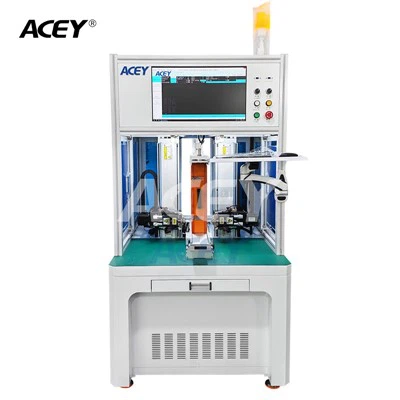
Hey there! As a supplier of Battery Cycler Testers, I often get asked about the output impedance of these nifty devices. So, let's dive right in and break it down in a way that's easy to understand.
First off, what's output impedance anyway? Well, in simple terms, it's the resistance that a device, like our Battery Cycler Tester, presents to the load connected to its output. Think of it as a kind of "roadblock" that the electrical current has to deal with on its way from the tester to the battery or whatever you're testing.
Why does it matter? Output impedance plays a crucial role in how well the Battery Cycler Tester can interact with the battery under test. A low output impedance means that the tester can supply a relatively constant voltage to the battery, regardless of the current being drawn. This is super important because batteries often have different charging and discharging requirements, and we want the tester to be able to handle those changes smoothly.
On the other hand, a high output impedance can cause problems. It can lead to voltage drops when a large current is drawn, which can affect the accuracy of the testing results. For example, if you're trying to measure the capacity of a battery during a high - current discharge, a high output impedance might make it seem like the battery has less capacity than it actually does.
Now, let's talk about how the output impedance of our Battery Cycler Testers is designed. We've put a lot of effort into optimizing this parameter to ensure the best performance. Our engineers use advanced circuit design techniques to keep the output impedance as low as possible. This involves carefully selecting components, such as resistors, capacitors, and transistors, and arranging them in a way that minimizes the overall resistance at the output.
One of the key factors in determining the output impedance is the internal resistance of the power supply within the tester. We use high - quality power supplies with low internal resistance to reduce the overall output impedance. Additionally, we implement feedback control circuits that continuously monitor the output voltage and adjust the current flow to maintain a stable output impedance.
Another aspect to consider is the frequency response of the output impedance. In some cases, the impedance might change depending on the frequency of the electrical signal. Our Battery Cycler Testers are designed to have a flat frequency response, which means that the output impedance remains relatively constant over a wide range of frequencies. This is important because batteries can generate or consume electrical signals at different frequencies during charging and discharging.


Let's take a look at some real - world applications. Suppose you're a battery manufacturer. You need to test the performance of your batteries accurately to ensure they meet the quality standards. Our Battery Cycler Testers with low output impedance can provide you with reliable and precise test results. You can trust the data you get from our testers to make informed decisions about your battery production process.
If you're a researcher working on new battery technologies, the output impedance of the tester is also crucial. You might be testing batteries under various conditions, such as high - speed charging or low - temperature operation. A tester with a stable and low output impedance can help you accurately measure the battery's performance characteristics, which is essential for developing better battery designs.
Now, I'd like to introduce you to some of our great products. We have the Battery Charging Discharging Tester, which is a versatile device that can handle a wide range of battery types and capacities. It has been carefully engineered to have a low output impedance, ensuring accurate and reliable testing.
Our Battery and Cell Test Equipment is another excellent option. It offers advanced features and precise control, making it suitable for both industrial and research applications. And if you're specifically looking for a tester for polymer batteries, our 5V 40A Polymer Battery Charge Discharge Capacity Tester is the way to go. It's designed to meet the unique requirements of polymer batteries and provides accurate capacity testing.
In conclusion, the output impedance of a Battery Cycler Tester is a critical parameter that can significantly impact the accuracy and reliability of battery testing. Our company is committed to providing high - quality testers with low output impedance to meet the needs of our customers. Whether you're a battery manufacturer, a researcher, or someone else in the battery industry, our products can help you get the most accurate test results.
If you're interested in learning more about our Battery Cycler Testers or are thinking about making a purchase, we'd love to hear from you. Just reach out to us, and our team of experts will be happy to assist you in finding the right tester for your specific needs. We're always here to support you in your battery testing endeavors.
References
- Battery Technology Handbook
- Electrical Engineering Principles for Battery Testing