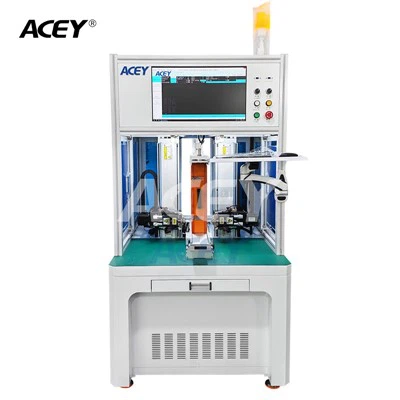
As a supplier of Battery Pack Testers, I often encounter inquiries from customers about the capabilities of our testing equipment. One of the most frequently asked questions is, "Can a Battery Pack Tester detect battery defects?" In this blog post, I'll delve into this topic, exploring the science behind battery defect detection and how our Battery Pack Testers play a crucial role in this process.
Understanding Battery Defects
Before we discuss how Battery Pack Testers can detect defects, it's essential to understand what battery defects are. Batteries can develop various types of defects over their life cycle, which can be broadly categorized into electrical and physical defects.
Electrical defects include issues such as internal short - circuits, self - discharge problems, and abnormal charge and discharge characteristics. An internal short - circuit occurs when the positive and negative electrodes of a battery come into contact within the cell, leading to a rapid discharge of the battery and potentially causing overheating or even explosion. Self - discharge is when a battery loses its charge over time even when not in use. Abnormal charge and discharge characteristics can manifest as slower charging times, reduced capacity, or an inability to hold a full charge.
Physical defects involve damage to the battery's structure, such as cracks in the battery casing, swelling, or leakage of electrolyte. These physical issues can also lead to electrical problems and pose safety risks.
How Battery Pack Testers Work
Battery Pack Testers are sophisticated pieces of equipment designed to measure and analyze various parameters of a battery pack. They work by applying controlled electrical loads to the battery and monitoring the battery's response.
One of the primary functions of a Battery Pack Tester is to measure the battery's voltage, current, and temperature during charging and discharging cycles. By closely monitoring these parameters, the tester can detect any abnormal behavior that may indicate a defect. For example, if the voltage drops suddenly during charging or discharging, it could be a sign of an internal short - circuit.
Another important aspect is the measurement of the battery's internal resistance. The internal resistance of a battery is a key indicator of its health. A healthy battery typically has a relatively low and stable internal resistance. An increase in internal resistance can be a sign of aging, damage, or other defects. Our Battery Ir Internal Resistance Tester is specifically designed to accurately measure the internal resistance of battery packs, providing valuable insights into their condition.


Detecting Electrical Defects
Our Battery Pack Testers are highly effective in detecting electrical defects. During a charge - discharge test, the tester can precisely measure the battery's capacity. If the measured capacity is significantly lower than the rated capacity, it indicates that the battery may have a defect. For instance, a battery that is supposed to have a capacity of 1000mAh but only delivers 800mAh during testing may have issues such as a reduced number of active materials or an internal short - circuit.
The tester can also monitor the self - discharge rate of the battery. By charging the battery to a full state and then leaving it in a resting state for a certain period, the tester can measure the amount of charge lost over time. A high self - discharge rate can be a sign of an internal defect, such as a parasitic current path within the battery.
Our 30V 20A Battery Pack Charge Discharge Test Equipment is capable of performing comprehensive charge - discharge tests on battery packs. It can simulate real - world usage scenarios, allowing us to accurately assess the battery's performance and detect any electrical defects that may occur under normal operating conditions.
Detecting Physical Defects
While Battery Pack Testers are primarily focused on electrical measurements, they can also provide indirect clues about physical defects. For example, if a battery pack shows abnormal temperature behavior during testing, it could be related to a physical issue. A battery that overheats during charging or discharging may have a problem with its thermal management system or may be experiencing internal short - circuits due to physical damage.
Swelling of the battery pack can also be detected by monitoring the battery's dimensions over time. Some of our advanced Battery Pack Testers are equipped with sensors that can detect even slight changes in the battery's size, which may indicate swelling caused by internal pressure build - up.
The Role of Battery Life Cycle Testing
Battery life cycle testing is an essential part of defect detection. Our Battery Life Cycle Tester can perform multiple charge - discharge cycles on a battery pack, simulating its entire lifespan. By analyzing the battery's performance over these cycles, we can detect long - term trends and potential defects that may not be apparent in a single test.
During a life cycle test, we can observe how the battery's capacity, internal resistance, and other parameters change over time. A gradual decline in capacity or an increase in internal resistance may indicate normal aging, but a sudden and significant change could be a sign of a defect. Life cycle testing also helps us to evaluate the battery's performance under different operating conditions, such as high or low temperatures, which can further reveal potential weaknesses in the battery design.
Conclusion
In conclusion, Battery Pack Testers are powerful tools for detecting battery defects. They can accurately measure various electrical parameters and provide valuable insights into the battery's health. By detecting both electrical and physical defects early, we can prevent potential safety hazards and ensure the reliability of battery packs.
If you are in the market for high - quality Battery Pack Testers or have any questions about battery defect detection, we are here to help. Our team of experts can provide you with detailed information about our products and how they can meet your specific testing needs. Whether you are a battery manufacturer, a research institution, or an end - user looking to ensure the safety and performance of your battery packs, our Battery Pack Testers are the ideal solution.
Contact us today to start a discussion about your battery testing requirements and explore how our products can benefit your business.
References
- Linden, D., & Reddy, T. B. (2002). Handbook of Batteries. McGraw - Hill.
- Gregory, T. (2017). Battery Management Systems: Design by Example. John Wiley & Sons.
- Tarascon, J. M., & Armand, M. (2001). Issues and challenges facing rechargeable lithium batteries. Nature, 414(6861), 359 - 367.