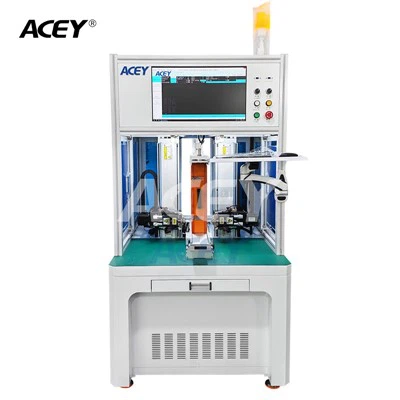
Hey there! As a supplier of Battery Testing Systems, I often get asked about the repeatability of our system's measurements. So, let's dive right into it and break down what this all means.
What is Repeatability Anyway?
First off, repeatability in the context of a battery testing system refers to how consistently the system can measure the same parameter of a battery under the same conditions over and over again. In simpler terms, if you test a battery's capacity today, and then test the exact same battery under the exact same conditions tomorrow, the measurements should be pretty darn close.
Think of it like weighing yourself on a scale. If you step on the scale five times in a row, and each time it gives you a different weight by a significant amount, that scale isn't very reliable. The same goes for a battery testing system. If the measurements vary wildly each time you test the same battery, it's not doing its job well.
Why is Repeatability Important in Battery Testing?
You might be wondering, "Why does it even matter?" Well, there are a few reasons.
Quality Control
For battery manufacturers, repeatability is crucial for quality control. They need to ensure that every battery they produce meets certain standards. If the testing system isn't repeatable, it's hard to tell if a battery is actually defective or if the test result is just off because of the system's inconsistency. This can lead to faulty batteries getting out into the market, which can be a huge headache for both the manufacturer and the end - user.
Research and Development
In the field of battery research and development, accurate and repeatable measurements are essential. Scientists are constantly looking for ways to improve battery performance, whether it's increasing the capacity, reducing charging time, or enhancing safety. If the testing system isn't repeatable, it becomes difficult to compare the results of different experiments and draw meaningful conclusions.
Compliance and Certification
Batteries often need to meet certain industry standards and regulations. For example, they might need to be certified for use in specific applications like electric vehicles or portable electronics. A reliable and repeatable testing system is necessary to prove that the batteries meet these standards. If the test results aren't consistent, it can be challenging to get the necessary certifications.
Factors Affecting Repeatability in Battery Testing Systems
There are several factors that can impact the repeatability of a battery testing system's measurements.
Environmental Conditions
The temperature, humidity, and pressure in the testing environment can all affect a battery's performance and, consequently, the test results. For example, if the temperature is too high or too low, the battery's capacity and charging characteristics can change. That's why it's important to conduct tests in a controlled environment as much as possible.
Test Equipment Calibration
The accuracy of the testing equipment itself is crucial. If the equipment isn't calibrated properly, the measurements will be off. Regular calibration is necessary to ensure that the system is measuring accurately. For example, if you're using a Lithium Ion Battery Capacity Tester, it needs to be calibrated at regular intervals to maintain its accuracy.
Battery Aging and Degradation
As batteries are used and recharged over time, they naturally age and degrade. This can cause changes in their performance, which can make it challenging to get consistent measurements. When testing, it's important to take into account the battery's age and usage history.
How Our Battery Testing System Ensures Good Repeatability
At our company, we understand the importance of repeatability, and we've taken several steps to ensure that our Battery and Cell Test Equipment provides reliable and consistent measurements.
Precise Temperature Control
Our testing systems are equipped with advanced temperature control features. We can maintain a stable temperature within a narrow range during testing, which helps to minimize the impact of temperature on the battery's performance. This means that the test results are more likely to be repeatable.
Regular Calibration
We have a strict calibration schedule for all our testing equipment. Our technicians are trained to perform accurate calibrations using high - precision reference standards. This ensures that the testing system is always measuring accurately and that the results are consistent.
Advanced Software Algorithms
Our testing systems use advanced software algorithms to analyze the data and compensate for any potential variations. These algorithms can detect and correct for small errors in the measurements, which helps to improve the repeatability of the system.
Real - World Examples of Our System's Repeatability
Let's take a look at a real - world example to illustrate the repeatability of our system. We recently had a customer who was testing a batch of lithium - ion batteries for a new portable electronic device. They used our 5V 3A Battery Charge Discharge Tester to measure the capacity of the batteries.
They tested 10 batteries from the same batch multiple times, and the results were incredibly consistent. The variation in the measured capacity between different tests of the same battery was less than 1%. This level of repeatability gave the customer the confidence they needed to move forward with their product development and ensure that their batteries met the required specifications.


Conclusion
In conclusion, repeatability is a critical aspect of a battery testing system. It affects quality control, research and development, and compliance with industry standards. At our company, we're committed to providing high - quality Battery and Cell Test Equipment that offers excellent repeatability.
If you're in the market for a reliable battery testing system, whether you're a battery manufacturer, a researcher, or a company looking to test batteries for your products, we'd love to talk to you. Our team of experts can help you find the right testing solution for your needs. Don't hesitate to reach out and start a conversation about your battery testing requirements.
References
- Battery Testing Handbook, 2nd Edition
- Journal of Power Sources, various issues related to battery testing and measurement accuracy