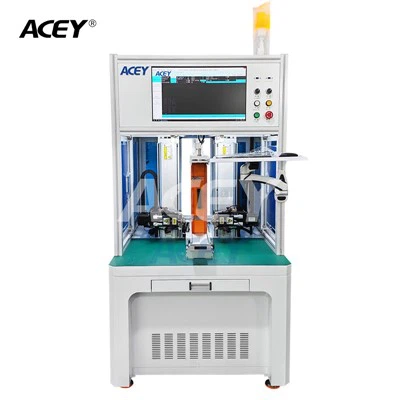
Hey there! As a supplier of Battery Sorting Machines, I've seen firsthand how crucial sensors are in these machines. In this blog, I'm gonna break down the role of sensors in a battery sorting machine and why they're so important.
What are Battery Sorting Machines?
Before we dive into the role of sensors, let's quickly go over what battery sorting machines are. These machines are designed to sort batteries based on various parameters such as voltage, capacity, internal resistance, and more. They're used in battery manufacturing plants, recycling facilities, and other industries where batteries need to be sorted for quality control, recycling, or other purposes.
There are different types of battery sorting machines available, like the 5 Channels Automatic Battery Sorting Machine, Lithium Polymer Cell Sorting Machine, and Lithium Ion Battery Sorting Machine. Each type is tailored to specific battery types and sorting requirements.
The Role of Sensors in Battery Sorting Machines
1. Measuring Voltage
One of the most basic yet crucial functions of sensors in a battery sorting machine is to measure the voltage of each battery. Voltage is a key indicator of a battery's state of charge and overall health. Different batteries have different nominal voltages, and sensors are used to accurately measure the actual voltage of each battery passing through the sorting machine.
For example, in a lithium-ion battery sorting process, sensors can quickly detect if a battery has a voltage that's too high or too low. Batteries with abnormal voltages might be defective or damaged, and the sorting machine can then separate them from the good ones. This helps in ensuring that only batteries with the correct voltage are used in products, which is essential for the safety and performance of the end device.
2. Detecting Capacity
Battery capacity refers to the amount of charge a battery can store. Sensors in a battery sorting machine can estimate the capacity of each battery. This is done by measuring the current flowing in and out of the battery over a certain period of time.
In a manufacturing setting, sorting batteries by capacity is important because it allows for the grouping of batteries with similar capacities. This is crucial when batteries are used in series or parallel configurations. If batteries with different capacities are connected together, it can lead to uneven charging and discharging, which can reduce the overall performance and lifespan of the battery pack.
3. Assessing Internal Resistance
Internal resistance is another important parameter that sensors can measure. It represents the resistance within the battery itself to the flow of electric current. A high internal resistance can indicate a problem with the battery, such as a damaged electrode or electrolyte.
Sensors in the sorting machine continuously monitor the internal resistance of each battery. Batteries with high internal resistance may not be able to deliver power efficiently, and they can also generate more heat during charging and discharging. By sorting out batteries with high internal resistance, the sorting machine helps in selecting only the batteries that are suitable for high - performance applications.
4. Temperature Sensing
Temperature plays a significant role in battery performance and safety. Sensors in a battery sorting machine can monitor the temperature of each battery. High temperatures can accelerate battery degradation and increase the risk of thermal runaway, which is a dangerous condition where the battery overheats and can even catch fire.
During the sorting process, if a sensor detects that a battery is running too hot, the sorting machine can divert it to a separate bin for further inspection or disposal. Temperature sensors also help in ensuring that the sorting process itself doesn't cause excessive heating of the batteries, which could affect their performance and accuracy of the sorting results.
5. Identifying Battery Chemistry
In some cases, sensors can be used to identify the type of battery chemistry. Different battery chemistries, such as lithium - ion, lead - acid, and nickel - metal hydride, have different characteristics and require different handling and charging methods.
By using sensors to identify the battery chemistry, the sorting machine can ensure that batteries are sorted into the correct categories. This is especially important in recycling facilities, where different battery chemistries need to be processed separately to recover valuable materials efficiently and safely.
Benefits of Using Sensors in Battery Sorting Machines
1. Improved Quality Control
Sensors enable the sorting machine to accurately identify and separate defective or sub - standard batteries from the good ones. This helps in maintaining high - quality standards in battery production. By ensuring that only high - quality batteries are used in products, manufacturers can reduce the number of product failures and returns, which can save a lot of money in the long run.
2. Increased Efficiency
With sensors, the sorting process becomes much faster and more accurate. The machine can quickly analyze multiple parameters of each battery and make a sorting decision in a matter of seconds. This allows for a high throughput of batteries, which is essential in large - scale manufacturing and recycling operations.


3. Enhanced Safety
By detecting batteries with abnormal voltage, high internal resistance, or high temperature, sensors help in preventing potentially dangerous situations. This is crucial for both the workers handling the batteries and the end - users of the products that use these batteries.
Conclusion
As you can see, sensors play a vital role in battery sorting machines. They are the eyes and ears of the machine, allowing it to accurately measure and analyze various battery parameters. Whether it's for quality control, efficiency, or safety, sensors are essential for the proper functioning of the sorting process.
If you're in the market for a battery sorting machine and want to learn more about how our sensors can benefit your operations, don't hesitate to reach out. We're here to help you find the best sorting solution for your specific needs. Let's start a conversation about how we can work together to improve your battery sorting process!
References
- Battery Technology Handbook, 3rd Edition
- Journal of Power Sources (various articles on battery testing and sorting)
- IEEE Transactions on Industrial Electronics (papers related to sensor applications in battery management)