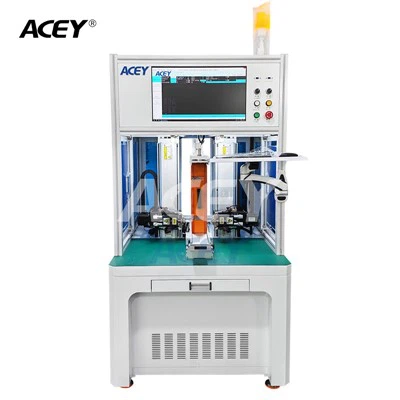
Yo! As a supplier of Battery Cycler Testers, I often get asked about the step response time of these nifty devices. So, I thought I'd take a deep dive into what step response time is, why it matters, and how it plays out in our Battery Cycler Testers.
Let's start with the basics. Step response time is a measure of how quickly a system can respond to a sudden change in input. In the context of a Battery Cycler Tester, this sudden change is usually a step change in the current or voltage requirements during the charging or discharging process. When you're testing batteries, you might need to quickly switch from one charging or discharging rate to another. The step response time tells you how fast the tester can adjust to this new rate.
Why does step response time matter? Well, a fast step response time is crucial for accurate battery testing. Batteries are complex energy storage devices, and their performance can vary widely depending on how they're charged and discharged. If the tester can't quickly adjust to the new requirements, it could lead to inaccurate test results. For example, if you're trying to charge a battery at a high rate and the tester takes too long to ramp up the current, the battery might not charge as efficiently as it should. This could lead to incorrect assessments of the battery's capacity, efficiency, and lifespan.
Another reason why step response time is important is for safety. When you're charging or discharging batteries, especially high - energy lithium - ion batteries, any sudden changes in the electrical parameters need to be handled quickly. A slow step response time could result in overcharging or over - discharging, which can be extremely dangerous. It could lead to thermal runaway, battery swelling, or even explosion in the worst - case scenario. So, a fast and reliable step response is essential to ensure the safe operation of the battery testing process.
Now, let's talk about how step response time is measured in a Battery Cycler Tester. Typically, the step response time is measured from the moment the step change in input (current or voltage) is applied to the moment the output of the tester reaches a certain percentage (usually 90% or 95%) of the new setpoint. There are a few factors that can affect the step response time of a Battery Cycler Tester.


One of the main factors is the internal circuitry of the tester. A well - designed circuit with high - speed components can respond to step changes more quickly. For example, using fast - acting power transistors and high - bandwidth control circuits can significantly reduce the step response time. Another factor is the control algorithm used by the tester. Advanced control algorithms can predict the changes in the system and adjust the output more efficiently, leading to a faster step response.
Our company offers a range of Battery Cycler Testers, including the Prismatic Battery Charge Discharge Tester, Lithium Battery Cell Capacity Tester, and Prismatic Battery Charge And Discharge Tester. These testers are designed with the latest technology to ensure a fast step response time.
In our Prismatic Battery Charge Discharge Tester, we've used state - of - the - art power electronics and a sophisticated control algorithm. This allows the tester to respond to step changes in current or voltage within a few milliseconds. This fast response time ensures that the battery is charged and discharged accurately, leading to more reliable test results.
Similarly, our Lithium Battery Cell Capacity Tester is optimized for high - speed response. Lithium - ion batteries are very sensitive to charging and discharging conditions, and a fast step response time is essential for accurate capacity testing. Our tester can quickly adjust to the changing requirements during the capacity test, providing precise measurements.
The Prismatic Battery Charge And Discharge Tester also boasts a fast step response time. This tester is designed for testing prismatic batteries, which are commonly used in electric vehicles and other high - power applications. The ability to quickly adjust to step changes in current and voltage is crucial for simulating real - world charging and discharging scenarios.
If you're in the market for a Battery Cycler Tester, step response time should be one of your key considerations. A tester with a fast step response can save you time and money in the long run by providing accurate and reliable test results. It can also enhance the safety of your battery testing process.
If you're interested in learning more about our Battery Cycler Testers or want to discuss your specific testing needs, we're here to help. Whether you're a research institution looking to test new battery chemistries or a battery manufacturer in need of quality control, our team of experts can guide you through the selection process. We can also provide customized solutions to meet your unique requirements. So, don't hesitate to reach out and start a conversation. Let's work together to ensure your battery testing is as accurate and efficient as possible.
References:
- Battery Testing Handbook: Principles and Practices
- Power Electronics: Converters, Applications, and Design