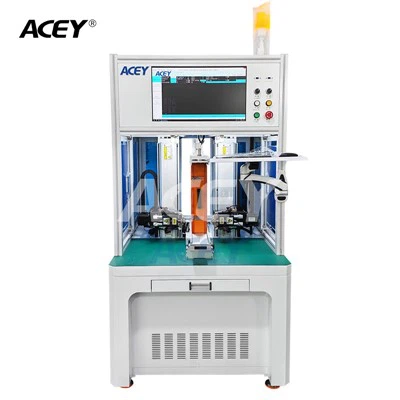
As a supplier of Bms Testing Machines, I often encounter questions from customers about the capabilities of our equipment. One of the most frequently asked questions is whether a Bms Testing Machine can test the battery management algorithm of a Battery Management System (BMS). In this blog post, I will delve into this topic, exploring the relationship between Bms Testing Machines and battery management algorithms, and discussing the feasibility and limitations of testing these algorithms using our equipment.
Understanding Battery Management Systems and Their Algorithms
Before we can discuss whether a Bms Testing Machine can test battery management algorithms, it's important to understand what a BMS is and what its algorithms do. A Battery Management System is an electronic system that manages a rechargeable battery (cell or battery pack), such as by protecting the battery from operating outside its safe operating area, monitoring its state, calculating secondary data, reporting that data, controlling its environment, authenticating it, and / or balancing it.
The battery management algorithms are the set of rules and calculations that the BMS uses to perform these functions. These algorithms can be quite complex, taking into account factors such as battery voltage, current, temperature, state of charge (SOC), state of health (SOH), and more. They are designed to optimize the performance and safety of the battery, extending its lifespan and ensuring reliable operation.
The Role of Bms Testing Machines
Bms Testing Machines are designed to simulate various operating conditions and test the performance of a BMS. They can provide inputs such as voltage, current, and temperature to the BMS and measure its outputs, such as control signals and status reports. This allows manufacturers and developers to verify the functionality of the BMS, identify any issues or defects, and ensure that it meets the required specifications and standards.
Our Bms Testing Machine is a versatile and reliable tool that can be used to test a wide range of BMSs. It offers a high level of accuracy and precision, allowing for detailed analysis of the BMS's performance. With its user - friendly interface and advanced features, it is suitable for both research and development and mass production testing.
Testing Battery Management Algorithms with Bms Testing Machines
Now, let's address the question of whether a Bms Testing Machine can test the battery management algorithm of a BMS. The short answer is yes, to a certain extent.
A Bms Testing Machine can be used to test the functionality of the algorithms by simulating different battery operating conditions. For example, it can apply different charge and discharge currents, change the temperature, and vary the battery voltage to see how the BMS responds. By comparing the BMS's output with the expected results based on the algorithm's design, we can determine whether the algorithm is working correctly.


Our Optional 24 Series Battery Management System Test Equipment With PC is capable of simulating complex battery scenarios, which makes it ideal for testing battery management algorithms. It can generate a wide range of input signals, allowing for comprehensive testing of the BMS's response to different conditions.
However, there are some limitations to testing battery management algorithms with a Bms Testing Machine. First, the algorithms are often proprietary and highly complex, and it may be difficult to fully understand and replicate all of their functions. Second, the real - world operating conditions of a battery can be very different from the simulated conditions in a testing environment. For example, factors such as vibration, humidity, and electromagnetic interference can affect the performance of the BMS and its algorithms, which may not be fully captured in the test.
Another challenge is that the algorithms may be continuously updated and improved over time. As new battery chemistries and applications emerge, the BMS and its algorithms need to adapt. This means that the testing process needs to be flexible and able to accommodate these changes.
Strategies for Effective Algorithm Testing
Despite these limitations, there are several strategies that can be used to effectively test battery management algorithms with a Bms Testing Machine.
- Boundary Testing: Test the algorithm at the boundaries of its operating conditions, such as the maximum and minimum voltage, current, and temperature. This can help identify any potential issues or failures that may occur under extreme conditions.
- Scenario - Based Testing: Create realistic scenarios that mimic the actual use of the battery in different applications. For example, if the battery is used in an electric vehicle, simulate driving cycles with different acceleration, deceleration, and charging patterns. Our 1 - 24 Series 100A Charge 150A Discharge BMS Tester can be used to simulate these complex scenarios, providing valuable insights into the performance of the algorithm.
- Long - Term Testing: Conduct long - term tests to evaluate the stability and reliability of the algorithm over time. This can help detect any gradual degradation or changes in the algorithm's performance.
- Comparative Testing: Compare the performance of different BMSs or different versions of the same algorithm. This can help identify the best - performing algorithm and highlight any areas for improvement.
Conclusion
In conclusion, while there are challenges and limitations, a Bms Testing Machine can be a valuable tool for testing the battery management algorithm of a BMS. It allows for the simulation of different operating conditions and the evaluation of the BMS's response, helping to ensure the functionality and reliability of the algorithm.
As a supplier of Bms Testing Machines, we are committed to providing our customers with high - quality equipment and support. Our products are designed to meet the evolving needs of the battery industry, and we are constantly working on improving their capabilities to better test battery management algorithms.
If you are interested in learning more about our Bms Testing Machines or have any questions about testing battery management algorithms, please feel free to contact us. We are here to assist you in finding the best solutions for your testing needs and look forward to the opportunity to discuss potential procurement and collaboration.
References
- Battery Management Systems: Design by Modeling and Simulation, by Chris Mi and Mehrdad Ehsani
- Fundamentals of Battery Management Systems for Large Lithium - Ion Battery Packs, by Johan B. G. de Vries