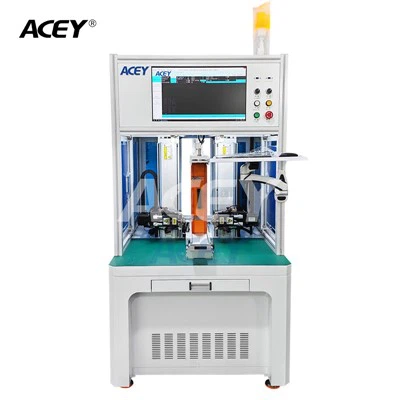
When it comes to battery pack manufacturing, one of the most crucial aspects is the welding process, and specifically, the welding speed of a battery pack spot welder. As a leading supplier of battery pack spot welders, I've witnessed firsthand the impact that welding speed can have on the efficiency, quality, and overall success of battery production. In this blog post, I'll delve into the concept of welding speed, its influencing factors, and its significance in the battery manufacturing industry.
Understanding Welding Speed
Welding speed refers to the rate at which a spot welder can create a series of welds. It is typically measured in welds per minute (WPM) and can vary significantly depending on the type of welder, the materials being welded, and the specific application requirements. In the context of battery pack manufacturing, a higher welding speed generally translates to increased productivity and lower production costs. However, it's important to note that welding speed should not be pursued at the expense of weld quality.
Factors Affecting Welding Speed
Several factors can influence the welding speed of a battery pack spot welder. Understanding these factors is essential for optimizing the welding process and achieving the desired balance between speed and quality.
Welder Design and Technology
The design and technology of the spot welder play a significant role in determining its welding speed. Modern spot welders are equipped with advanced features such as high-frequency power supplies, precision control systems, and automated feeding mechanisms, which can significantly increase the welding speed. For example, a welder with a high-frequency power supply can deliver more energy to the weld area in a shorter period, allowing for faster welding. Additionally, automated feeding mechanisms can reduce the time required to position the battery cells and tabs, further improving the overall welding speed.
Material Properties
The properties of the materials being welded, such as their conductivity, thickness, and surface finish, can also affect the welding speed. Materials with high conductivity, such as copper and aluminum, require less energy to weld and can therefore be welded at a faster speed. Thicker materials, on the other hand, require more energy and time to weld, which can slow down the welding process. The surface finish of the materials can also impact the welding speed, as rough or dirty surfaces can increase the resistance at the weld interface, requiring more energy to achieve a proper weld.


Weld Quality Requirements
The desired weld quality is another important factor that can influence the welding speed. Higher quality welds typically require more precise control of the welding parameters, such as the welding current, time, and pressure. This can result in a slower welding speed as the welder needs to ensure that each weld meets the specified quality standards. For example, in applications where the weld strength and reliability are critical, such as in electric vehicle battery packs, the welding speed may need to be reduced to ensure that the welds are strong and durable.
Significance of Welding Speed in Battery Pack Manufacturing
The welding speed of a battery pack spot welder has several important implications for battery pack manufacturing.
Productivity
One of the most obvious benefits of a high welding speed is increased productivity. In a high-volume manufacturing environment, even a small increase in welding speed can result in a significant reduction in production time and cost. For example, if a spot welder can increase its welding speed from 60 welds per minute to 80 welds per minute, it can produce 33% more battery packs in the same amount of time. This can lead to increased profitability and a competitive advantage in the market.
Cost Efficiency
A high welding speed can also contribute to cost efficiency in battery pack manufacturing. By reducing the production time, manufacturers can save on labor costs, energy consumption, and equipment wear and tear. Additionally, a faster welding speed can allow manufacturers to produce more battery packs with the same amount of equipment, reducing the need for additional capital investment.
Quality Control
While welding speed is important, it should not be sacrificed for the sake of productivity. Maintaining a consistent and high-quality weld is crucial for the performance and safety of battery packs. A well-designed spot welder with advanced control systems can ensure that the welding speed is optimized without compromising the weld quality. This can help manufacturers meet the strict quality standards required by the battery industry and reduce the risk of product failures and recalls.
Our Battery Pack Spot Welders
As a supplier of battery pack spot welders, we offer a range of high-quality welders that are designed to meet the specific needs of battery pack manufacturers. Our welders are equipped with the latest technology and features to ensure high welding speeds, excellent weld quality, and reliable performance.
Spot Welding Machine for Battery Pack
Our spot welding machine for battery pack is specifically designed for the mass production of battery packs. It features a high-frequency power supply, precision control system, and automated feeding mechanism, which can achieve a welding speed of up to 100 welds per minute. The machine is also equipped with a user-friendly interface and advanced monitoring system, allowing operators to easily adjust the welding parameters and monitor the welding process in real-time.
Spot Welding Machine for 18650 Battery
The spot welding machine for 18650 battery is designed for the welding of 18650 lithium-ion battery cells. It uses a unique welding technology that can ensure a strong and reliable weld between the battery cells and tabs. The machine has a high welding speed of up to 80 welds per minute and can be customized to meet the specific requirements of different battery pack designs.
Spot Welder for Lithium Batteries
Our spot welder for lithium batteries is suitable for the welding of various types of lithium batteries, including lithium-ion, lithium-polymer, and lithium-iron-phosphate batteries. It features a compact design, easy operation, and high welding efficiency. The welder can achieve a welding speed of up to 90 welds per minute and is equipped with a safety protection system to ensure the safety of operators.
Conclusion
In conclusion, the welding speed of a battery pack spot welder is a critical factor that can significantly impact the productivity, cost efficiency, and quality of battery pack manufacturing. By understanding the factors that influence welding speed and choosing the right spot welder for your specific application, you can optimize the welding process and achieve the best results. As a leading supplier of battery pack spot welders, we are committed to providing our customers with high-quality products and excellent service. If you are interested in learning more about our battery pack spot welders or have any questions about the welding process, please feel free to contact us. We look forward to working with you to meet your battery pack manufacturing needs.
References
- "Principles of Resistance Welding" by John C. Lancaster
- "Battery Pack Manufacturing Technology" by Michael M. Pecht
- "Welding Handbook, Volume 2: Welding Processes" by American Welding Society