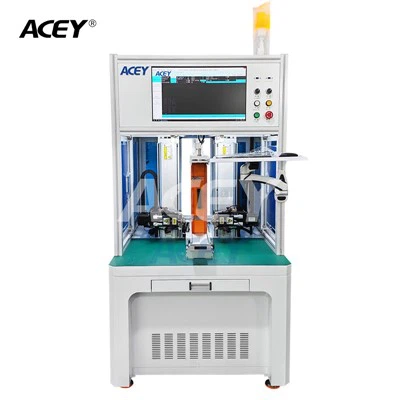
A Battery Management System (BMS) is a critical component in any battery-powered application, from small consumer electronics to large-scale electric vehicles and energy storage systems. As a BMS testing machine supplier, we often receive the question: "Can a BMS testing machine test all types of BMS?" This blog post aims to provide a comprehensive answer to this question.
Understanding Battery Management Systems
Before delving into the capabilities of BMS testing machines, it's essential to understand the diversity of BMS types. BMSs can vary significantly based on several factors:
-
Application Size and Scale:
- Consumer Electronics: These BMSs are designed for small devices like smartphones, laptops, and wearable devices. They typically manage single or a few battery cells and focus on functions like over - charge and over - discharge protection.
- Electric Vehicles (EVs): EV BMSs need to handle hundreds or thousands of cells in a battery pack. They are responsible for not only basic protection but also cell balancing, state - of - charge (SOC) estimation, and thermal management.
- Energy Storage Systems (ESS): Similar to EVs, ESS BMSs manage large battery banks. However, they also need to interface with the power grid, which adds another layer of complexity in terms of power flow control and grid compatibility.
-
Cell Chemistry: Different battery chemistries, such as lithium - ion (Li - ion), lead - acid, and nickel - metal hydride (NiMH), have different characteristics. For example, Li - ion batteries are more sensitive to over - charging and over - discharging compared to lead - acid batteries. BMSs need to be tailored to the specific chemistry to ensure safe and efficient operation.
-
Functionality Requirements: Some BMSs may have basic protection functions only, while others may include advanced features like data logging, communication interfaces (such as CAN bus, RS - 485), and remote monitoring.
The Capabilities of BMS Testing Machines
A well - designed BMS testing machine can test a wide range of BMS features, but it may not be able to test all types of BMS with the same level of comprehensiveness. Here are the key aspects of BMS testing and how testing machines can handle them:
1. Basic Electrical Parameter Testing
Most BMS testing machines are capable of testing basic electrical parameters such as voltage, current, and temperature. These parameters are fundamental to the operation of any BMS. For example, they can measure the battery voltage at different states of charge and check if the BMS correctly triggers over - charge or over - discharge protection at the set thresholds. Our Bms Testing Equipment is equipped with high - precision sensors to accurately measure these electrical parameters.
2. Cell Balancing Testing
Cell balancing is a critical function in multi - cell battery packs. BMS testing machines can simulate different cell voltages and check if the BMS can effectively balance the cells. However, the complexity of cell balancing algorithms can vary widely among different BMSs. Some advanced BMSs may use active cell - balancing techniques, while others use passive methods. A testing machine may need to be configured differently to test these different balancing strategies. Our 1 - 24 Series 100A Charge 150A Discharge BMS Tester has the flexibility to simulate different cell voltage conditions for cell - balancing testing.
3. Communication Interface Testing
Many modern BMSs are equipped with communication interfaces for data exchange with other devices. Testing machines can verify the functionality of these interfaces, such as sending and receiving data through the CAN bus or RS - 485. However, different BMSs may use different communication protocols and data formats. A testing machine needs to support a wide range of protocols to be able to test various BMSs. Our testing equipment can be configured to support multiple communication protocols, ensuring comprehensive testing of BMS communication interfaces.
4. Thermal Management Testing
Thermal management is crucial for the safety and performance of battery systems, especially in high - power applications like EVs and ESSs. BMS testing machines can simulate different temperature conditions and check if the BMS can activate cooling or heating systems at the appropriate times. However, the design and complexity of thermal management systems can vary, and a testing machine may need to be customized to accurately test these systems.
Limitations of BMS Testing Machines
Despite their capabilities, BMS testing machines have some limitations when it comes to testing all types of BMS:
1. Custom - designed BMSs
Some BMSs are custom - designed for specific applications with unique requirements. These BMSs may have proprietary algorithms or functions that are not easily testable with off - the - shelf testing machines. In such cases, the testing machine may need to be customized or additional testing procedures may need to be developed.
2. High - voltage and High - power BMSs
Testing high - voltage and high - power BMSs, such as those used in large - scale ESSs, requires specialized testing equipment. Standard BMS testing machines may not be able to provide the high voltage and current levels needed for comprehensive testing. Our Optional 1 - 32Series 500A Charge 800A Discharge Battery Management System Test Equipment is designed to meet the high - power testing requirements of such BMSs.
3. Future - proofing
As battery technology and BMS functionality continue to evolve, new types of BMSs with advanced features will emerge. A testing machine that is capable of testing current BMSs may not be sufficient to test future - generation BMSs without significant upgrades.
Conclusion
In conclusion, while a BMS testing machine can test many types of BMSs and their key functions, it cannot test all types of BMS with the same level of comprehensiveness. The diversity of BMS types, including differences in application, cell chemistry, functionality, and design, presents challenges for testing machines. However, by choosing a testing machine with a wide range of capabilities, such as the ones we offer at Bms Testing Equipment, and being willing to customize the testing process when necessary, it is possible to perform thorough testing on a large number of BMSs.
If you are in the market for BMS testing machines or need more information about our products' ability to test different types of BMSs, we encourage you to contact us for procurement discussions. Our team of experts is ready to assist you in finding the best testing solution for your specific needs.


References
- Smith, J. (2020). Battery Management Systems: Design and Implementation. Wiley.
- Chen, Y., & Wang, H. (2021). Advances in Battery Management System Testing Technologies. Journal of Power Sources, 498, 229932.
- International Electrotechnical Commission. (2018). IEC 62619: Secondary batteries and battery installations containing alkaline or other non - acid electrolytes - Safety requirements for secondary lithium batteries and battery installations for use in industrial applications.