Which Technology is Right for Your Production Line?
With the continued growth in demand for lithium-ion battery packs from electric vehicles, energy storage systems, power tools, and consumer electronics, manufacturers are constantly seeking efficient and reliable connection technologies.
Welding is one of the most critical processes in battery pack assembly. The quality of each weld directly affects the battery's conductivity, mechanical strength, safety, and overall performance. Currently, the two most widely used technologies are spot welding and laser welding. Although both battery spot weldeing machineand laser welders can connect batteries and busbars, they differ significantly in terms of cost, precision, production efficiency and application scenarios.
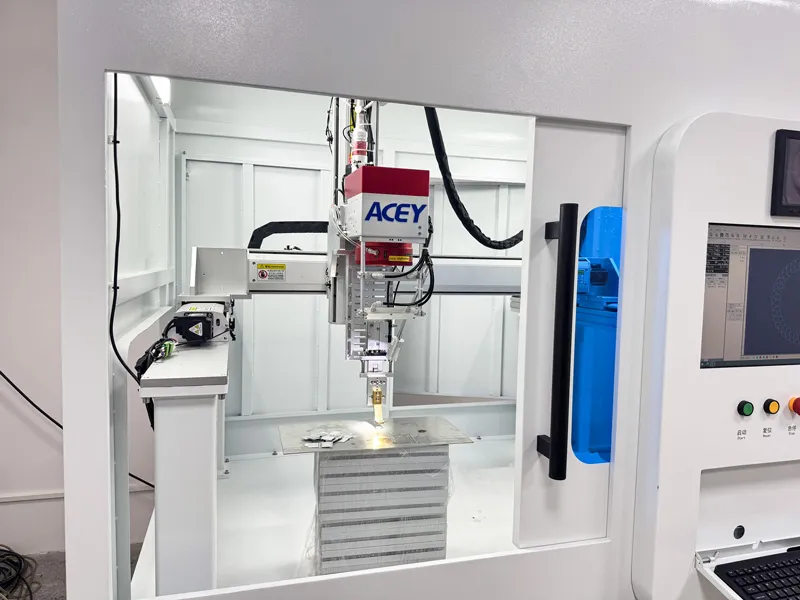
As a battery production line solutions provider with over 14 years of experience, Acey provides an in-depth comparison of these two technologies to help you make an informed choice for your production line.
I. Basic Principles: How Do They Work?
Spot Welding
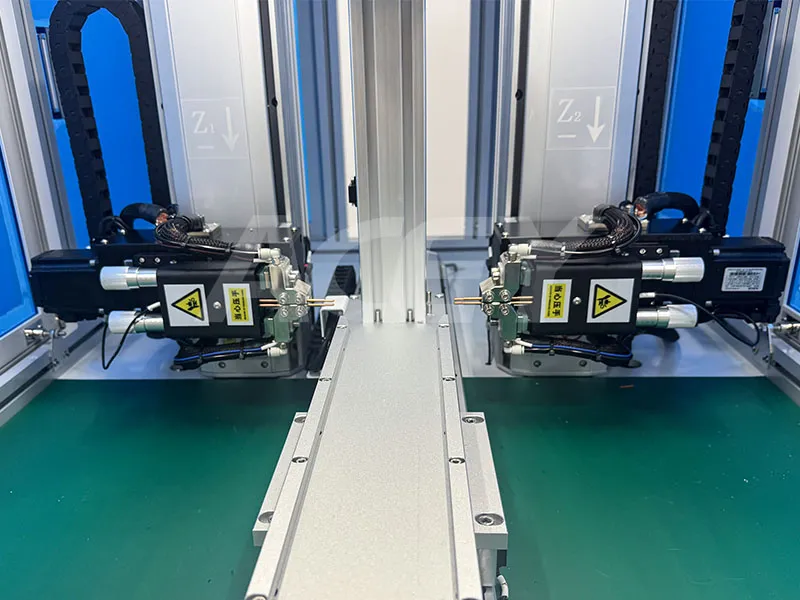
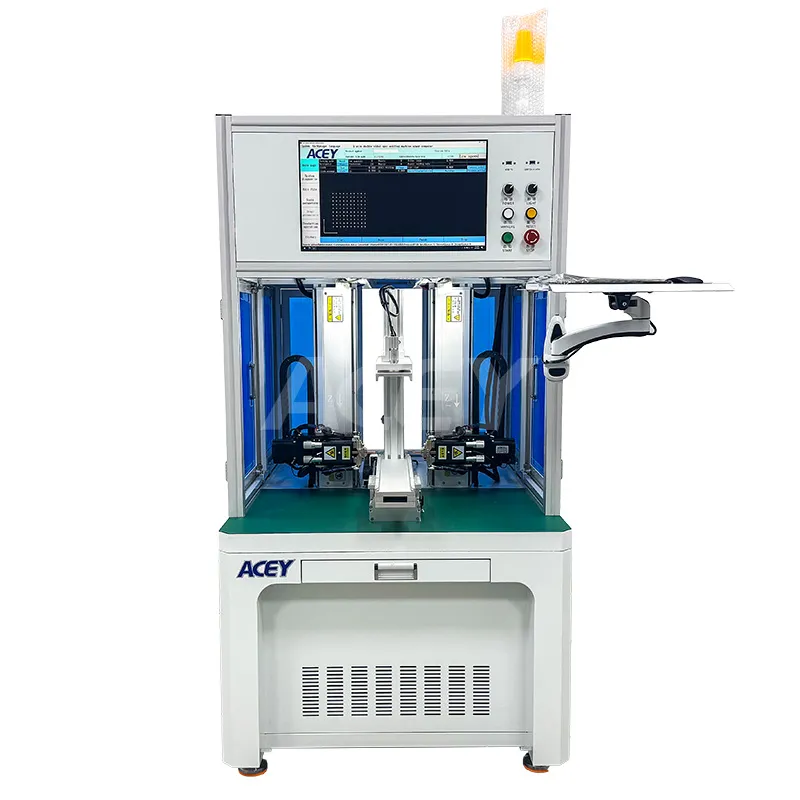
Spot welding is a resistance welding method. It utilizes a high current applied through electrodes to the contact points of metal workpieces, using the instantaneous high temperature (metal melting) generated by the contact resistance to form a weld nugget. Electrode life is one of the key cost factors in this process.
Laser Welding
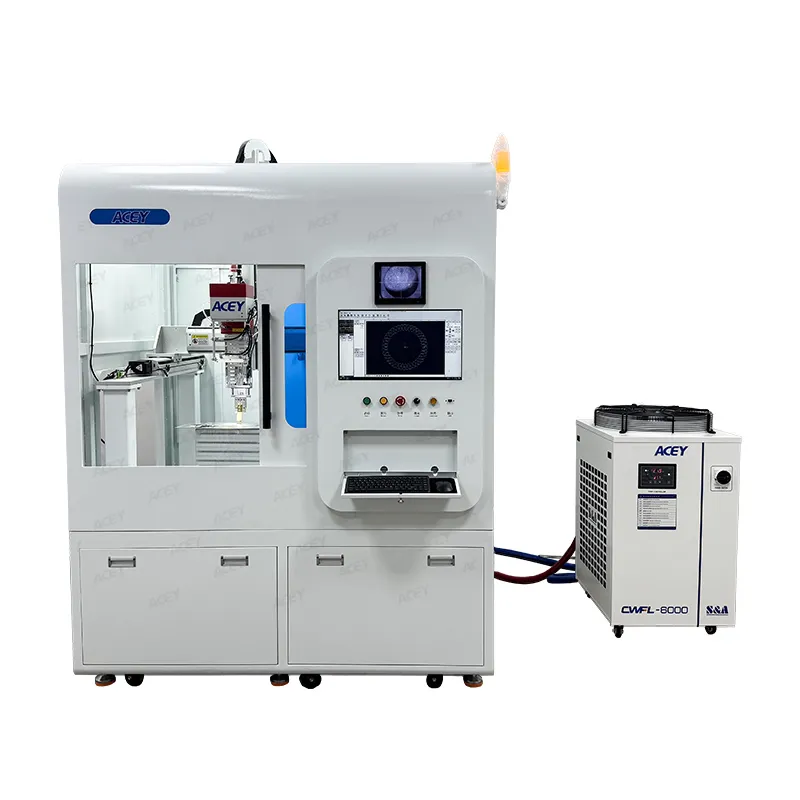
Fiber laser welding machine uses a high-energy-density laser beam as a heat source. The laser beam locally melts the workpiece material, forming a molten pool, which, upon cooling, forms a weld with a high aspect ratio. This is a non-contact process with a very small heat-affected zone.
II. Direct Comparison: Laser Welding vs. Spot Welding
|
Comparison Dimensions: |
Laser Welding |
Spot Welding |
|
Welding Quality and Consistency: |
Excellent. Precise and controllable energy output, smooth weld, no spatter, high airtightness, suitable for electric vehicles and energy storage batteries with stringent reliability requirements. |
Good. Significantly affected by electrode wear and surface cleanliness; welding parameters require frequent adjustments. Potential problems include spatter and excessively deep indentations. |
|
Base Material Applicability: |
Very wide range. Particularly good at welding copper, aluminum, nickel, steel, and dissimilar metals (such as copper-aluminum), making it the preferred process for current high-power batteries (all-copper busbars). |
Limited. Mainly suitable for welding nickel strips, nickel-plated steel strips, and thicker pure nickel sheets. Extremely difficult when welding pure copper or aluminum, prone to incomplete welds. |
|
Heat Impact and Safety: |
he heat-affected zone is extremely small. Energy is highly concentrated, preventing damage to the separator or overheating of the electrolyte, minimizing harm to the battery cell. |
The heat impact is relatively large. Heat diffuses outward from the contact point, potentially causing aging of the battery seals or increased internal temperature, affecting cycle life. |
|
Production Efficiency and Automation: |
Extremely high. Scanning galvanometer laser welding can reach speeds of tens of points per second, and with robots, it can complete complex three-dimensional trajectory welding, suitable for fully automated production lines. |
Moderate. The speed is acceptable, but regular electrode replacement or grinding is required, increasing downtime. Automation flexibility is not as good as laser welding. |
|
Initial Investment and Operating Costs: |
High initial investment (laser and safety protection systems are expensive). However, operating costs are low (no electrode consumption), resulting in lower long-term overall costs. |
Low initial investment (simple equipment structure). However, operating costs are high (electrode heads, consumables, high maintenance frequency), with a significant cost disadvantage in mass production. |
|
Weld Inspection Difficulty: |
Regular welds are easy to inspect online automatically using vision systems, achieving closed-loop quality control. |
Weld quality is greatly affected by human factors and electrode factors, making accurate online inspection difficult. |
III. Application Scenarios Recommendations
Which Option Should Your Production Line Choose?
Typical Scenarios Where Laser Welding Should Be Prioritized:
1. Electric Vehicle (EV) Battery Packs: Requires extremely low internal resistance, high shock resistance, and long cycle life. Copper and aluminum busbar welding is standard.
2. High-End Energy Storage Systems: Prioritize long-term reliability and low maintenance costs.
3. High-Power, Large Single-Cell Batteries: Such as welding of prismatic battery connectors and cylindrical battery (32140, 4680) current collectors.
4. Fully Automated Production Lines: Require high capacity, low downtime, and digital quality traceability.
Scenarios Where Spot Welding Can Still Be Performed:
1. Small-Scale, Entry-Level Lithium-ion Battery Packs: Such as small-volume electric bicycle battery repairs and consumer electronics battery repairs.
2. Cylindrical Battery Packs Connected with Pure Nickel or Nickel-Plated Steel Strips: Cost-sensitive and with low production volume.
3. Laboratory or Pilot Production Lines: Used for initial sample production with limited equipment investment budgets.
IV. Acey's Professional Advice: A Future-Oriented Choice
While spot welding still holds its place in small-scale, low-end applications, the overall industry trend-power batteries and large-scale energy storage batteries are shifting towards all-copper and all-aluminum connections, demanding higher production efficiency and lower total cost of ownership (TCO)-makes laser welding the mainstream, and even standard, choice for modern professional battery pack production lines.
Xiamen Acey New Energy offers more than just equipment; we provide complete solutions tailored to your product positioning:
- If you plan to produce EVs or high-end energy storage batteries: Our fully automated laser welding workbench and production line integrates vision positioning and welding quality inspection systems to ensure every weld meets automotive-grade standards.
- If your products are still suitable for spot welding: We also offer high-precision transistor or inverter spot welding machines and provide professional process guidance to help you fully utilize your equipment's performance.
Conclusion
Choosing between spot welding and laser welding essentially depends on your product positioning, production scale, and strategic assessment of the future market. For manufacturers pursuing quality, efficiency, and brand value, investing in laser welding technology will provide a decisive competitive advantage in the long run.
Contact the Acey technical team immediately, providing your cell type (cylindrical/prismatic/pouch), bus material (nickel/steel/copper/aluminum), and expected production capacity. We will provide you with a customized welding process assessment and production line design solution.