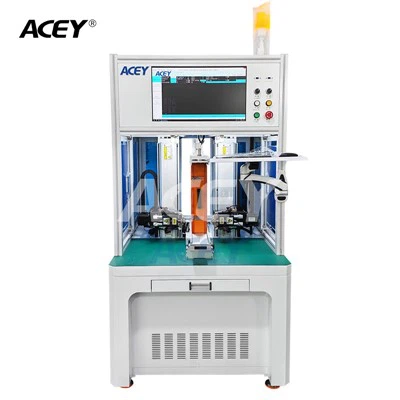
As a supplier of Battery Cycler Testers, I often encounter inquiries from battery manufacturers regarding the suitability of our testers for battery production line testing. This blog aims to delve into this question, exploring the practicality, benefits, and considerations when using a Battery Cycler Tester in a battery production line.
The Role of Battery Cycler Testers in Battery Production
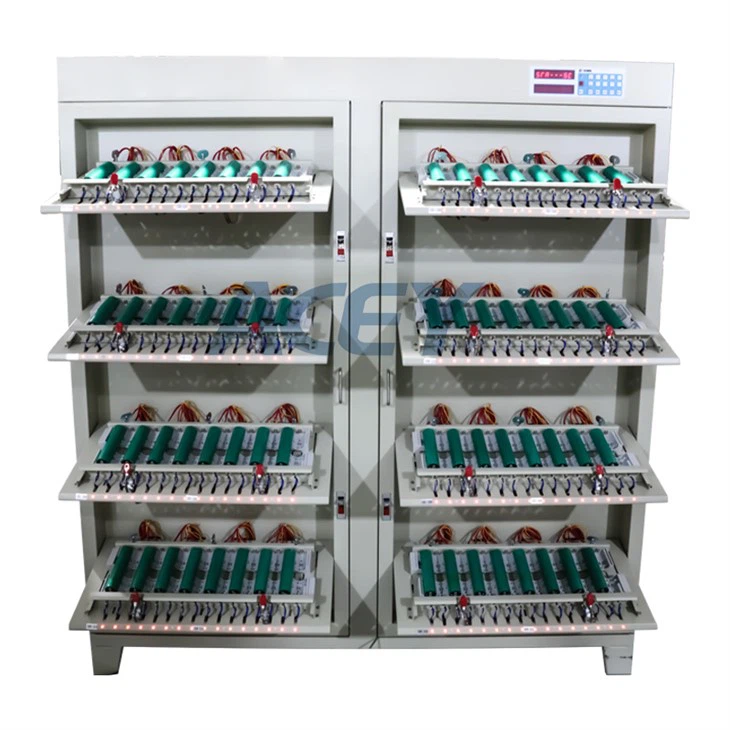
Battery production is a complex process that requires strict quality control at every stage. Battery Cycler Testers play a crucial role in ensuring the performance and safety of batteries. These testers are designed to simulate real - world charging and discharging cycles, allowing manufacturers to assess key parameters such as capacity, voltage, internal resistance, and cycle life.
In a production line, the ability to quickly and accurately test batteries is essential. Battery Cycler Testers can be used to perform initial quality checks on raw battery cells, verify the performance of assembled battery packs, and conduct final inspections before the products are shipped. By detecting defective batteries early in the production process, manufacturers can reduce waste, improve efficiency, and enhance customer satisfaction.

Advantages of Using Battery Cycler Testers in Production Lines
1. High - Precision Testing
Our Battery Cycler Testers are equipped with advanced sensors and control systems that can measure battery parameters with high precision. This is crucial for ensuring that batteries meet the required specifications. For example, the 5V 300A 16 Channels Energy - Feedback Prismatic Battery Cell Grading Machine can accurately grade prismatic battery cells based on their capacity and internal resistance, enabling manufacturers to sort cells for optimal performance in battery packs.
2. Multiple Channel Testing
Many of our testers feature multiple channels, which allows for simultaneous testing of multiple batteries. This significantly increases the testing throughput in the production line. For instance, a 16 - channel tester can test 16 batteries at the same time, reducing the overall testing time and increasing the production efficiency.
3. Customizable Testing Programs
Battery Cycler Testers can be programmed to perform a variety of testing procedures according to different battery types and application requirements. Manufacturers can customize the charging and discharging profiles, test durations, and cutoff conditions. The Thermostatic Prismatic Battery Charge Discharge Tester offers thermostatic control, which is particularly useful for testing batteries under different temperature conditions, simulating real - world usage scenarios.
4. Data Logging and Analysis
Our testers are capable of logging and analyzing test data in real - time. This data can be used for quality control, process optimization, and product development. Manufacturers can track the performance of individual batteries over time, identify trends, and make informed decisions to improve the production process.
Considerations for Using Battery Cycler Testers in Production Lines
1. Compatibility with Production Line Speed
The testing speed of the Battery Cycler Tester should be compatible with the production line speed. If the testing process is too slow, it will become a bottleneck in the production line. Therefore, it is important to choose a tester with a high - speed testing capability.
2. Space Requirements
In a production line, space is often limited. Our Battery Cycler Testers are designed to be compact and space - efficient. However, manufacturers still need to consider the physical dimensions of the testers and ensure that there is enough space for installation and operation.
3. Maintenance and Calibration
Regular maintenance and calibration are essential to ensure the accuracy and reliability of the Battery Cycler Testers. Manufacturers should establish a maintenance schedule and ensure that trained personnel are available to perform the necessary maintenance tasks.
Case Studies
Let's take a look at some real - world examples of how our Battery Cycler Testers have been used in battery production lines.
A lithium - ion battery manufacturer was facing challenges in ensuring the consistency of their battery packs. They implemented our 5V 10A 20A Lithium Battery Capacity Tester in their production line. The tester was able to accurately measure the capacity of each lithium battery cell, allowing the manufacturer to sort cells and assemble battery packs with more consistent performance. As a result, the number of defective battery packs decreased significantly, and the overall production efficiency improved.
Another prismatic battery manufacturer used our 16 - channel energy - feedback prismatic battery cell grading machine. By grading the prismatic cells based on their performance, the manufacturer was able to optimize the cell selection process for battery pack assembly. This led to an improvement in the overall quality of the battery packs and a reduction in production costs.
Conclusion
In conclusion, Battery Cycler Testers can be effectively used for battery production line testing. They offer high - precision testing, multiple - channel capabilities, customizable testing programs, and data logging and analysis features, which are essential for ensuring the quality and performance of batteries in a production environment.
However, manufacturers need to consider factors such as compatibility with production line speed, space requirements, and maintenance and calibration when choosing a Battery Cycler Tester.
If you are a battery manufacturer looking to improve your production line testing process, we invite you to contact us for more information about our Battery Cycler Testers. Our team of experts can provide you with detailed product information, technical support, and customized solutions to meet your specific needs. Let's work together to enhance the quality and efficiency of your battery production.
References
- "Battery Testing and Characterization for Electric Vehicles", SAE International.
- "Handbook of Battery Materials", Wiley - VCH.
- Industry reports on battery production and quality control.