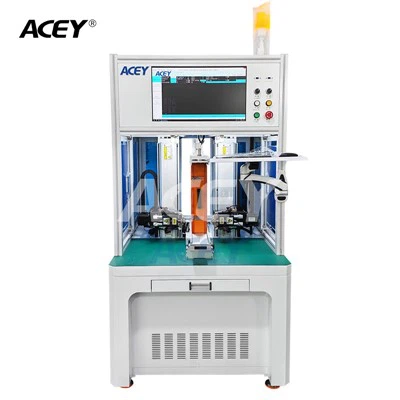
As a supplier of Battery Integrated Testers, I often get asked about the types of batteries our testers can handle. Well, let me tell you, our testers are pretty versatile and can test a wide range of battery types. In this blog post, I'll break down the different battery types that our Battery Integrated Testers can effectively test.
Lead - Acid Batteries
Lead - acid batteries are one of the most common types of batteries out there. They're used in a variety of applications, from cars to backup power systems. Our Battery Integrated Testers are well - equipped to test lead - acid batteries. Whether it's a flooded lead - acid battery, which is the traditional type found in many vehicles, or a sealed lead - acid (SLA) battery like AGM (Absorbent Glass Mat) or gel batteries, our testers can do the job.
These batteries have different charge and discharge characteristics. For example, flooded lead - acid batteries need to be maintained with the right level of electrolyte, and our testers can check the state of charge, capacity, and internal resistance of these batteries. AGM and gel batteries are maintenance - free to a large extent, but they still need proper testing to ensure they're performing optimally. Our Battery Comprehensive Tester can accurately measure the parameters of lead - acid batteries, helping you determine if they need to be replaced or recharged.
Lithium - Ion Batteries
Lithium - ion batteries are becoming increasingly popular due to their high energy density, long cycle life, and low self - discharge rate. They're used in everything from smartphones to electric vehicles. Our Battery Integrated Testers can test different chemistries of lithium - ion batteries, such as lithium cobalt oxide (LiCoO₂), lithium manganese oxide (LiMn₂O₄), and lithium iron phosphate (LiFePO₄).
Each lithium - ion battery chemistry has its own unique properties. For instance, LiCoO₂ batteries have high energy density but are less stable compared to LiFePO₄ batteries. Our testers can monitor the voltage, current, and temperature of lithium - ion batteries during charge and discharge cycles. They can also detect issues like overcharging, over - discharging, and short - circuits, which are critical for the safety and longevity of these batteries. The 100V 30A 300A Battery Comprehensive Tester is particularly useful for testing high - power lithium - ion battery packs used in electric vehicles.
Nickel - Metal Hydride (NiMH) Batteries
NiMH batteries were once a popular alternative to lithium - ion batteries in consumer electronics. They have a relatively high energy density and are more environmentally friendly compared to nickel - cadmium (NiCd) batteries. Our Battery Integrated Testers can test NiMH batteries to assess their capacity, state of charge, and internal resistance.
NiMH batteries have a tendency to self - discharge at a faster rate compared to lithium - ion batteries. Our testers can accurately measure this self - discharge rate and help you determine if the battery needs to be recharged. They can also detect problems like memory effect, although NiMH batteries are less prone to this compared to NiCd batteries. The 100V 30A 120A Battery Comprehensive Tester can handle NiMH batteries of different sizes and capacities, ensuring accurate testing results.
Nickel - Cadmium (NiCd) Batteries
Although NiCd batteries are less common these days due to their environmental concerns and memory effect issues, there are still some applications where they're used, such as in some industrial equipment and older portable devices. Our Battery Integrated Testers can test NiCd batteries to check their performance.
The memory effect in NiCd batteries can cause a reduction in their capacity over time. Our testers can detect the presence and severity of the memory effect by analyzing the charge and discharge curves of the battery. They can also measure the internal resistance and state of charge of NiCd batteries, helping you decide if the battery can still be used or if it needs to be replaced.


Other Specialized Batteries
In addition to the common battery types mentioned above, our Battery Integrated Testers can also test some specialized batteries. For example, sodium - sulfur batteries are used in large - scale energy storage systems. These batteries operate at high temperatures and have unique charge and discharge characteristics. Our testers can be configured to handle the specific requirements of sodium - sulfur batteries and accurately measure their parameters.
Fuel cells are another type of energy source that can be considered a form of battery. Our Battery Integrated Testers can test the performance of different types of fuel cells, such as proton exchange membrane fuel cells (PEMFCs), which are used in some electric vehicles and portable power systems. By measuring the voltage, current, and power output of fuel cells, our testers can help you evaluate their efficiency and performance.
Why Choose Our Battery Integrated Testers?
Our testers are designed with the latest technology to provide accurate and reliable test results. They're easy to use, with intuitive interfaces that allow even non - technical users to operate them. We also offer excellent customer support, so if you have any questions or need assistance with your testing, our team is always ready to help.
Whether you're a battery manufacturer, a maintenance technician, or a researcher, our Battery Integrated Testers can meet your testing needs. We understand that different batteries require different testing methods, and our testers are flexible enough to adapt to these requirements.
If you're interested in purchasing our Battery Integrated Testers or have any questions about the types of batteries they can test, don't hesitate to get in touch. We're here to help you ensure the optimal performance of your batteries. Contact us today to start a discussion about your specific needs and how our testers can benefit your business.
References
- Linden, D., & Reddy, T. B. (2002). Handbook of Batteries. McGraw - Hill.
- Berndt, D. (2011). Battery Systems Engineering. Wiley.