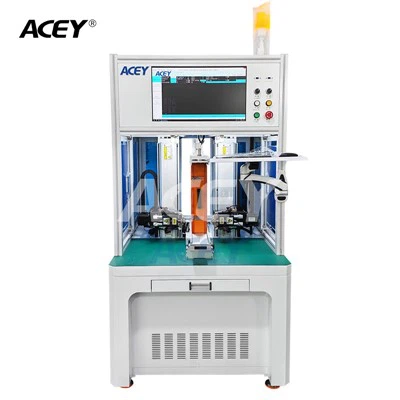
Can a Lithium Ion Cell Tester detect cell degradation?
Lithium-ion batteries have become the cornerstone of modern energy storage solutions, powering everything from smartphones to electric vehicles. As the demand for these batteries continues to soar, ensuring their reliability and performance over time is of paramount importance. One crucial aspect of battery management is detecting cell degradation, which can lead to reduced capacity, increased internal resistance, and ultimately, battery failure. In this blog post, we'll explore whether a lithium-ion cell tester can effectively detect cell degradation and how our products as a lithium ion cell tester supplier play a vital role in this process.
Understanding Lithium-Ion Cell Degradation
Before delving into the capabilities of lithium-ion cell testers, it's essential to understand what causes cell degradation. Several factors contribute to the deterioration of lithium-ion cells over time. One primary factor is cycling, which refers to the process of charging and discharging the battery. Each cycle causes a small amount of irreversible damage to the battery's electrodes and electrolyte, gradually reducing its capacity.
Another significant factor is temperature. High temperatures can accelerate the chemical reactions within the battery, leading to increased degradation. Conversely, extremely low temperatures can also affect the battery's performance by reducing the mobility of lithium ions. Additionally, overcharging, over-discharging, and high current rates can all contribute to cell degradation.
How Lithium-Ion Cell Testers Work
Lithium-ion cell testers are sophisticated devices designed to measure various parameters of lithium-ion cells, such as voltage, current, capacity, and internal resistance. These testers work by applying a controlled charge or discharge current to the cell and monitoring its response. By analyzing the data collected during these tests, it's possible to gain insights into the cell's health and performance.
One of the key parameters that lithium-ion cell testers measure is capacity. Capacity is the amount of charge that a battery can store, and it's typically measured in ampere-hours (Ah). As a battery degrades, its capacity gradually decreases. By comparing the measured capacity of a cell with its rated capacity, it's possible to determine the extent of degradation.
Internal resistance is another important parameter that lithium-ion cell testers can measure. Internal resistance is a measure of the opposition to the flow of current within the battery. As a battery degrades, its internal resistance typically increases. This can lead to a decrease in the battery's efficiency and an increase in heat generation during charging and discharging.
Detecting Cell Degradation with a Lithium-Ion Cell Tester
So, can a lithium-ion cell tester detect cell degradation? The answer is yes. By measuring parameters such as capacity and internal resistance, lithium-ion cell testers can provide valuable information about the health and performance of a cell.


For example, if the measured capacity of a cell is significantly lower than its rated capacity, it's a clear indication that the cell has degraded. Similarly, if the internal resistance of a cell has increased over time, it's another sign of degradation. By monitoring these parameters regularly, it's possible to detect cell degradation early and take appropriate action, such as replacing the cell or adjusting the charging and discharging parameters.
In addition to measuring capacity and internal resistance, some lithium-ion cell testers can also perform more advanced tests, such as electrochemical impedance spectroscopy (EIS). EIS is a technique that measures the impedance of a battery at different frequencies. By analyzing the impedance spectrum, it's possible to gain insights into the internal processes occurring within the battery, such as charge transfer reactions and diffusion processes. This can provide a more detailed understanding of the cell's degradation mechanisms and help to predict its remaining useful life.
Our Lithium-Ion Cell Testers and Their Role in Detecting Cell Degradation
As a leading supplier of lithium-ion cell testers, we offer a wide range of products that are designed to meet the needs of different applications. Our testers are known for their high accuracy, reliability, and ease of use.
One of our popular products is the Prismatic Battery Charge Discharge Tester. This tester is specifically designed for testing prismatic lithium-ion batteries, which are commonly used in electric vehicles and energy storage systems. It can measure parameters such as voltage, current, capacity, and internal resistance with high accuracy, allowing users to detect cell degradation early and ensure the performance and safety of their batteries.
Another product in our lineup is the 5V 6A Battery Charge Discharge Test Equipment. This tester is suitable for testing small to medium-sized lithium-ion batteries, such as those used in smartphones, tablets, and laptops. It provides a simple and cost-effective solution for measuring battery performance and detecting degradation.
We also offer the Thermostatic Prismatic Battery Charge Discharge Tester, which is equipped with a temperature control system. This allows users to simulate different operating temperatures and evaluate the performance of their batteries under various conditions. By testing batteries at different temperatures, it's possible to gain a better understanding of the impact of temperature on cell degradation and optimize the charging and discharging parameters accordingly.
Importance of Regular Testing
Regular testing of lithium-ion cells is essential for ensuring their long-term performance and safety. By detecting cell degradation early, it's possible to take proactive measures to prevent battery failure and extend the life of the battery. This can save time and money in the long run, as well as reduce the risk of accidents and downtime.
In addition to detecting cell degradation, regular testing can also help to optimize the charging and discharging processes. By understanding the performance characteristics of the battery, it's possible to adjust the charging and discharging parameters to maximize the battery's capacity and efficiency. This can improve the overall performance of the system and reduce energy consumption.
Contact Us for Your Testing Needs
If you're in the market for a reliable and accurate lithium-ion cell tester, look no further. Our products are designed to provide you with the information you need to ensure the health and performance of your lithium-ion cells. Whether you're a battery manufacturer, an electric vehicle manufacturer, or a user of lithium-ion batteries, our testers can help you detect cell degradation early and take appropriate action.
We invite you to contact us to discuss your specific testing requirements and learn more about our products. Our team of experts is ready to assist you in finding the right solution for your needs. Don't let cell degradation go undetected – invest in a high-quality lithium-ion cell tester today and ensure the reliability and performance of your batteries.
References
- Arora, P., Zhang, Z., & White, R. E. (1999). Capacity fade mechanism and side reactions in lithium - ion batteries. Journal of the Electrochemical Society, 146(10), 3647-3661.
- Liang, X., & Van de Ven, A. (2006). Lithium - ion battery process design: Part II. Multiscale degradation model with cycle - life predictions. Journal of Power Sources, 159(1), 320-338.
- Xia, G., Sun, Y. K., Liu, Y., & Amine, K. (2018). Challenges and prospects of lithium - ion battery cathode materials. Chemical Reviews, 118(13), 6230-6269.