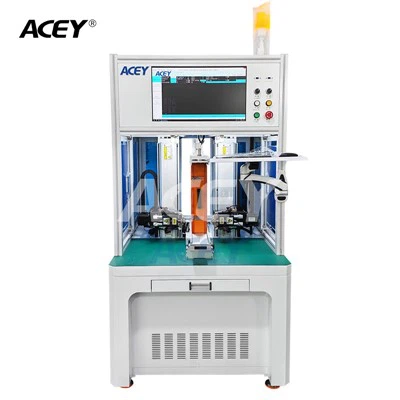
What is the ripple factor of a Battery Cycler Tester's output?
As a leading supplier of Battery Cycler Testers, I often encounter questions from customers about various technical aspects of our products. One such important question is about the ripple factor of a Battery Cycler Tester's output. In this blog, I will delve into what the ripple factor is, why it matters in the context of battery cycler testers, and how it impacts the testing process.
Understanding the Ripple Factor
The ripple factor is a measure of the amount of AC (alternating current) component present in the DC (direct current) output of a power supply or, in our case, a Battery Cycler Tester. In an ideal scenario, the output of a battery cycler tester should be a pure DC signal. However, due to the inherent nature of the electrical circuits and the components used, there is always some small amount of AC component mixed with the DC output.
Mathematically, the ripple factor (RF) is defined as the ratio of the root - mean - square (RMS) value of the AC component to the DC component of the output voltage or current.
[RF=\frac{V_{rms(AC)}}{V_{DC}}]


where (V_{rms(AC)}) is the RMS value of the alternating current component and (V_{DC}) is the direct current component of the output voltage.
A low ripple factor indicates that the output is closer to a pure DC signal, while a high ripple factor means there is a significant amount of AC component in the output.
Why Ripple Factor Matters in Battery Cycler Testers
Battery cycler testers are used to perform a series of charge - discharge cycles on batteries to evaluate their performance, capacity, and lifespan. These tests require a stable and accurate power supply to ensure reliable results.
-
Accuracy of Battery Testing: A high ripple factor can introduce errors in the measurement of battery parameters such as capacity, internal resistance, and charge - discharge efficiency. For example, the AC component can cause fluctuations in the current and voltage readings, leading to inaccurate calculations of the battery's energy storage and delivery capabilities.
-
Battery Life and Performance: Excessive ripple can also have a negative impact on the battery itself. The AC component can cause additional heating within the battery, which may accelerate the aging process and reduce the battery's overall lifespan. Moreover, it can affect the chemical reactions inside the battery, leading to changes in its performance characteristics over time.
-
Safety: In some cases, a high ripple factor can pose a safety risk. If the ripple causes overheating or other abnormal conditions in the battery, it may lead to swelling, leakage, or even thermal runaway, which can be extremely dangerous.
Impact of Ripple Factor on Different Battery Types
Different types of batteries may respond differently to the ripple in the input signal.
-
Lithium - ion Batteries: Lithium - ion batteries are widely used in various applications due to their high energy density and long cycle life. These batteries are sensitive to the input voltage and current. A high ripple factor can cause uneven charging and discharging, which may lead to the formation of lithium plating on the electrodes. This can reduce the battery's capacity and increase the risk of short - circuits and thermal runaway.
-
Lead - acid Batteries: Lead - acid batteries are commonly used in automotive and stationary applications. While they are generally more tolerant of electrical fluctuations compared to lithium - ion batteries, a high ripple factor can still cause increased water decomposition in the electrolyte. This leads to a loss of electrolyte, reduced battery performance, and a shorter lifespan.
Measuring and Controlling the Ripple Factor
-
Measuring the Ripple Factor: To measure the ripple factor of a Battery Cycler Tester's output, specialized equipment such as an oscilloscope and a digital multimeter can be used. The oscilloscope can display the waveform of the output signal, allowing us to visualize the AC and DC components. The digital multimeter can be used to measure the RMS value of the AC component and the DC component of the output voltage or current.
-
Controlling the Ripple Factor: At our company, we take several measures to ensure that our Battery Cycler Testers have a low ripple factor. We use high - quality power supply components, such as low - noise voltage regulators and well - designed filter circuits, to minimize the AC component in the output. Additionally, we perform rigorous testing and calibration procedures during the manufacturing process to ensure that the ripple factor meets the required standards.
Our Battery Cycler Tester Products
We offer a wide range of Battery Cycler Testers to meet the diverse needs of our customers. For example, our 5V 100A Lithium Battery Cell Cycler Tester is designed for high - current testing of lithium - ion battery cells. It provides a stable and accurate output with a very low ripple factor, ensuring reliable and precise test results.
Our Battery Formation And Grading System is another product that offers advanced features for battery testing and evaluation. It can handle multiple battery cells simultaneously and provides detailed information about the battery's performance and characteristics.
In addition, our 5V 20A Lithium Battery Capacity Testing Equipment is ideal for small - scale battery testing and research purposes. It is easy to use and provides accurate capacity measurements with a low ripple factor output.
Conclusion
The ripple factor of a Battery Cycler Tester's output is a crucial parameter that can significantly affect the accuracy of battery testing, battery life, and safety. As a supplier, we understand the importance of providing high - quality products with a low ripple factor. Our Battery Cycler Testers are designed and manufactured to meet the highest standards, ensuring reliable and accurate battery testing results.
If you are in the market for a Battery Cycler Tester and want to learn more about our products or discuss your specific testing requirements, we encourage you to reach out to us. We are committed to providing excellent customer service and finding the best solution for your battery testing needs.
References
- Fink, D. (2000). Electronics Engineers' Handbook. McGraw - Hill.
- Linden, D., & Reddy, T. B. (2002). Handbook of Batteries. McGraw - Hill.
- Rand, D. A. J., Moseley, P. T., Garche, J., & Parker, C. (2002). Valve - Regulated Lead - Acid Batteries. Elsevier.