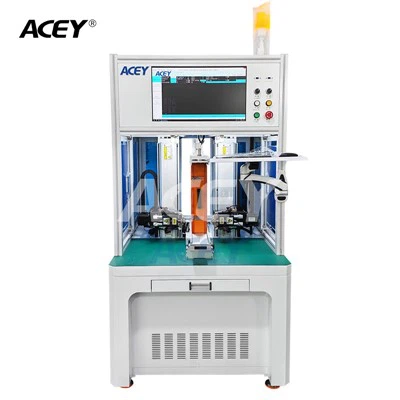
As a trusted supplier of Battery Pack Testers, I understand the critical importance of ensuring operator safety during the testing process. Battery packs, especially those used in high - energy applications, can pose significant risks such as electrical shock, thermal runaway, and explosion. In this blog, I will explore how our Battery Pack Testers are designed to safeguard operators while conducting tests.
1. Electrical Safety Features
One of the primary dangers in battery testing is electrical shock. Our Battery Pack Testers are equipped with multiple layers of electrical insulation. High - quality insulating materials are used in the construction of the tester's housing and internal components. This insulation effectively prevents electrical current from leaking out and coming into contact with operators.
We also implement ground - fault circuit interrupters (GFCIs) in our testers. GFCIs constantly monitor the electrical current flow. If they detect an imbalance in the current, indicating a potential ground fault, they immediately cut off the power supply. This feature is vital as it can prevent serious electrical injuries to operators in case of a short - circuit or a fault in the test setup.
Another safety measure is the use of isolated test circuits. These circuits ensure that the electrical power used for testing is isolated from the main electrical supply and from other parts of the tester. This isolation not only protects the operator but also helps in preventing electrical interference that could affect the accuracy of the test results. For instance, our 500V 500A Battery Charge Discharge Test Equipment is designed with highly reliable isolated test circuits, providing both safety and precision in high - voltage and high - current testing scenarios.
2. Thermal Safety Management
Battery packs can generate a significant amount of heat during charging, discharging, and other testing processes. Excessive heat can lead to thermal runaway, which is a self - accelerating reaction that can cause the battery to overheat, catch fire, or even explode.
Our Battery Pack Testers are designed with advanced thermal management systems. Active cooling mechanisms, such as fans and heat sinks, are incorporated to dissipate heat effectively. These cooling systems are constantly monitored to ensure that they are working properly. If the temperature rises above a pre - set safe limit, the tester will automatically adjust the test parameters or shut down the test to prevent any thermal hazards.
In addition, the testers are equipped with thermal sensors placed at strategic locations within the test chamber. These sensors continuously measure the temperature of the battery pack and the surrounding environment. The data from these sensors is used to provide real - time feedback and trigger appropriate safety responses. Our 100V 60A Energy - saving Battery Pack Life Cycle Tester features a highly efficient thermal management system that ensures safe and reliable long - term testing of battery packs.
3. Mechanical Safety Design
The physical structure of our Battery Pack Testers is also designed with safety in mind. The test chambers are made of robust materials that can withstand external impacts and contain any potential explosion or fire within the chamber. The chambers are sealed to prevent the release of hazardous gases or debris in case of a battery failure.
The access doors of the test chambers are equipped with safety interlocks. These interlocks ensure that the tester cannot be operated when the door is open. When the operator wants to access the battery pack inside the chamber, the tester automatically shuts off the power supply to avoid any accidental electrical contact.
Furthermore, the testers are designed with ergonomic features. Easy - to - reach controls and clear display panels are provided to minimize the need for operators to reach into potentially dangerous areas. All the moving parts of the tester, if any, are properly guarded to prevent entanglement or crushing injuries.
4. Software - Based Safety Protocols
Our Battery Pack Testers are integrated with intelligent software that includes a range of safety protocols. Before starting a test, the software conducts a self - diagnostic check to ensure that all the components of the tester are functioning properly. If any faults are detected, the software will prevent the test from starting and provide error messages to the operator.


During the test, the software continuously monitors various parameters such as voltage, current, temperature, and state of charge. If any of these parameters exceed the predefined safe limits, the software will immediately take corrective actions. This could include adjusting the charge or discharge rate, pausing the test, or shutting down the tester completely.
The software also has a built - in data logging and reporting function. This allows operators to analyze the test data and identify any potential safety issues over time. For example, if a particular battery pack consistently shows abnormal temperature rises during testing, it can be flagged for further investigation. Our Battery Aging Machine is controlled by sophisticated software that provides comprehensive safety monitoring and control throughout the battery aging process.
5. Training and Support
In addition to the above safety features, we also provide extensive training and support to our customers. We offer on - site training sessions where our technical experts teach operators how to use the Battery Pack Testers safely and effectively. The training covers topics such as proper installation, operation, maintenance, and troubleshooting of the testers.
We also provide detailed user manuals and online resources for our customers. These resources include safety guidelines, frequently asked questions, and technical specifications. Our customer support team is always available to answer any questions or concerns that operators may have regarding the safety of the testers.
If you are in the market for a reliable and safe Battery Pack Tester, we invite you to contact us for more information. We have a wide range of testers suitable for different types of battery packs and testing requirements. Let's discuss your specific needs and find the best solution for your battery testing needs.
References
- Battery Testing Handbook, XYZ Publications.
- Safety Standards for Battery Testing Equipment, International Electrical Safety Association.
- Advances in Battery Technology and Safety, ABC Research Institute.