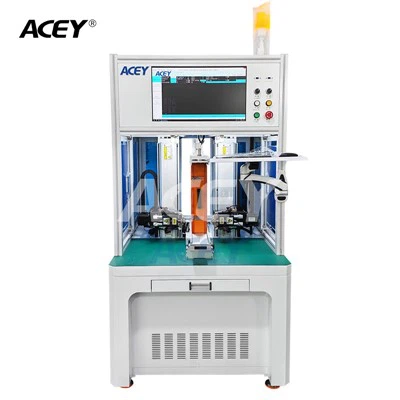
Hey there, battery enthusiasts and industry pros! As a supplier of Battery Cycler Testers, I get asked a ton of questions about choosing the right test mode. It's a crucial decision that can make or break your battery testing process. So, let's dive into how you can select the appropriate test mode on a Battery Cycler Tester.
Understanding Your Battery Types
First things first, you gotta know what kind of batteries you're working with. Different batteries have different characteristics, and these will determine the test modes you should use. For instance, lithium - ion batteries are super common these days, especially in portable electronics and electric vehicles. They have a specific voltage range and charge - discharge behavior.
On the other hand, lead - acid batteries are often used in backup power systems and automotive starting applications. Their chemistry is different, and they require different test conditions. If you're dealing with smaller, portable lithium - ion batteries for smartphones or tablets, the 5V 30A Prismatic Battery Capacity Tester With Alligator Clips might be your go - to. It's designed to handle lower current loads and is great for quick capacity checks.


But if you're testing larger lithium - ion batteries like those in electric bikes or small electric cars, the 5V 60A Prismatic Li Ion Battery Capacity Tester can provide the higher current needed for more accurate testing.
Test Modes in a Nutshell
Most Battery Cycler Testers come with a variety of test modes, and each one serves a different purpose. The most common ones are constant current (CC), constant voltage (CV), and combined CC - CV modes.
- Constant Current (CC) Mode: In this mode, the tester keeps the current flowing through the battery at a fixed rate. It's great for testing the battery's capacity under a steady load. You can set the current value based on the battery's specifications. For example, if you're testing a battery rated for a 1C charge rate and it has a capacity of 2Ah, you can set the CC mode to 2A.
- Constant Voltage (CV) Mode: Here, the tester maintains a constant voltage across the battery terminals. This mode is often used during the final stage of charging to prevent overcharging. When the battery voltage reaches the set value in CV mode, the charging current gradually decreases until the battery is fully charged.
- Combined CC - CV Mode: This is a two - step process. First, the battery is charged or discharged at a constant current until it reaches a certain voltage. Then, the mode switches to constant voltage to finish the process. It's a more comprehensive way of testing and charging batteries, especially for lithium - ion batteries that require careful voltage management.
Factors to Consider When Choosing a Test Mode
There are several factors that you need to take into account when selecting the appropriate test mode:
Battery State of Health (SOH)
If you're testing a brand - new battery, you might want to use a more comprehensive test mode to establish a baseline for its performance. A combination of CC - CV charging and discharging can give you detailed information about its capacity, efficiency, and internal resistance.
On the other hand, if you're testing an old battery to see if it still has some life left, a simple constant current discharge test can quickly tell you if it can still hold a reasonable amount of charge.
Testing Time
Time is money, right? If you're in a hurry to get test results, a constant current test might be the way to go. It's usually faster than a combined CC - CV test because it doesn't have the additional step of the constant voltage phase. However, if you need highly accurate results, you might have to invest the extra time in a more complex test mode.
Safety
Safety is always a top priority when working with batteries. Some test modes can put more stress on the battery, which can lead to overheating or even thermal runaway in extreme cases. Make sure to choose a test mode that is within the battery's safe operating limits. For example, if a battery has a maximum charging current of 3A, don't set the CC mode to a higher value.
Using the Right Tester for the Job
As a Battery Cycler Tester supplier, I can't stress enough the importance of using the right tester for your specific needs. Our Battery Charge and Discharge Tester is a versatile option that can handle a wide range of battery types and test modes.
It has a user - friendly interface that allows you to easily set the test parameters. You can choose between different test modes, set the current and voltage values, and monitor the battery's performance in real - time. Whether you're a small research lab or a large battery manufacturing plant, this tester can meet your requirements.
Real - World Examples
Let's look at a couple of real - world scenarios to see how the selection of the test mode works in practice.
Scenario 1: Testing a Lithium - Ion Battery for a Smartphone
You have a new lithium - ion battery for a smartphone that you want to test. Since it's a relatively small battery with a lower capacity (let's say around 3000mAh), you can use the 5V 30A Prismatic Battery Capacity Tester With Alligator Clips.
For the test mode, start with a combined CC - CV charging mode. Set the constant current to about 1A (which is a common charging current for smartphone batteries) until the battery voltage reaches around 4.2V. Then, switch to constant voltage mode at 4.2V until the charging current drops to a very low value (e.g., 0.1A).
Next, discharge the battery in constant current mode at 0.5A until the voltage drops to 3V. This will give you a good idea of the battery's actual capacity and its ability to hold a charge.
Scenario 2: Testing a Lead - Acid Battery for a UPS System
You're testing a lead - acid battery for a UPS system. These batteries are usually larger and have different charging and discharging requirements. You might want to use the Battery Charge and Discharge Tester for this job.
Start the charging process in constant current mode at a relatively low current (e.g., 5A for a medium - sized lead - acid battery). Once the battery voltage reaches around 2.4V per cell (so for a 12V battery, around 14.4V), switch to constant voltage mode at 14.4V until the charging current stabilizes.
For discharging, you can use a constant current mode at a higher current (e.g., 10A) until the battery voltage drops to around 10.5V. This will test the battery's ability to provide power during a power outage.
Conclusion
Selecting the appropriate test mode on a Battery Cycler Tester is not as complicated as it might seem at first. By understanding your battery types, the available test modes, and the factors that influence your choice, you can ensure accurate and reliable battery testing.
Remember, using the right tester for the job is just as important as choosing the right test mode. If you have any questions about our Battery Cycler Testers or need help with selecting the appropriate test mode for your specific application, don't hesitate to reach out. We're here to help you get the most out of your battery testing process. Whether you're a researcher, a manufacturer, or just someone who wants to test a few batteries at home, we've got the solutions you need. So, let's start testing those batteries and making sure they're in top - notch condition!
References
- Battery Technology Handbook
- Journal of Power Sources
- Battery Testing Guidelines from Industry Standards