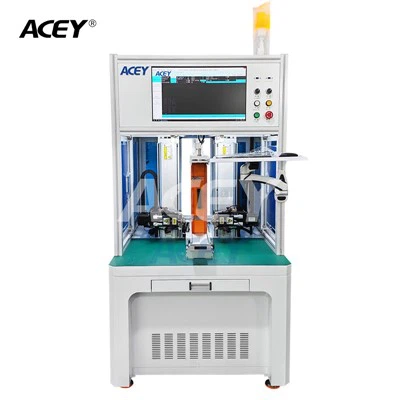
Hey there! As a supplier of Battery Pasting Machines, I often get asked about how these machines ensure the stability of paste application. It's a crucial aspect, especially in the battery manufacturing industry where precision and consistency are key. So, let's dive right in and explore the ins and outs of this process.
Understanding the Basics of Battery Pasting
First off, let's talk a bit about what battery pasting is all about. In battery production, the paste is a mixture of active materials, binders, and additives that are applied to the battery plates. This paste plays a vital role in the battery's performance, as it's responsible for storing and releasing electrical energy.
The stability of paste application is super important. If the paste isn't applied evenly or consistently, it can lead to a whole bunch of issues. For example, uneven paste distribution can cause imbalances in the battery's charge and discharge cycles, which can ultimately reduce the battery's lifespan and performance.
Key Components of a Battery Pasting Machine
To understand how a Battery Pasting Machine ensures stability, we need to take a look at its key components. These machines are typically made up of several parts, each with its own specific function.
One of the most important components is the paste hopper. This is where the paste is stored before it's applied to the battery plates. The hopper is designed to keep the paste at a consistent temperature and viscosity, which is crucial for ensuring a stable application. If the paste gets too thick or too thin, it can be difficult to apply evenly.


Another key component is the applicator head. This is the part of the machine that actually applies the paste to the battery plates. The applicator head is designed to dispense the paste in a precise and controlled manner. It can be adjusted to apply different amounts of paste depending on the specific requirements of the battery being produced.
The conveyor system is also an important part of the machine. It moves the battery plates through the pasting process at a consistent speed. This helps to ensure that the paste is applied evenly across the entire surface of the plate.
Ensuring Consistent Paste Viscosity
As I mentioned earlier, maintaining a consistent paste viscosity is crucial for a stable application. A Battery Pasting Machine uses several techniques to achieve this.
One common method is temperature control. The paste hopper is usually equipped with a heating or cooling system to keep the paste at the optimal temperature. This helps to prevent the paste from thickening or thinning out, which can affect its flow properties.
Another technique is agitation. The paste hopper often has a stirring mechanism that keeps the paste well-mixed. This helps to prevent the separation of the different components in the paste, which can also affect its viscosity.
Precise Application Control
To ensure a stable paste application, a Battery Pasting Machine needs to have precise control over the amount of paste being applied. This is achieved through a combination of mechanical and electronic controls.
The applicator head is typically equipped with a metering system that measures the amount of paste being dispensed. This system can be adjusted to apply different amounts of paste depending on the size and type of the battery plate.
In addition to the metering system, the machine also uses sensors to monitor the application process. These sensors can detect any variations in the paste flow or thickness and make adjustments as needed. For example, if the sensors detect that the paste is being applied too thickly in one area, the machine can automatically reduce the amount of paste being dispensed in that area.
Quality Assurance and Monitoring
A good Battery Pasting Machine also includes a quality assurance and monitoring system. This system helps to ensure that the paste application meets the required standards.
One way this is done is through visual inspection. The machine may be equipped with cameras or other imaging devices that can detect any defects or inconsistencies in the paste application. If a defect is detected, the machine can automatically reject the battery plate and send it for further inspection or rework.
Another important aspect of quality assurance is process monitoring. The machine can collect data on various parameters, such as paste viscosity, temperature, and application speed. This data can be analyzed to identify any trends or issues that may affect the stability of the paste application. By monitoring these parameters, the machine can make adjustments in real-time to ensure a consistent and high-quality application.
The Role of Advanced Technology
In recent years, there have been significant advancements in Battery Pasting Machine technology. These advancements have helped to improve the stability and precision of paste application even further.
For example, some machines now use advanced software algorithms to control the pasting process. These algorithms can analyze the data collected by the sensors and make more accurate adjustments to the machine's settings. This helps to ensure that the paste is applied with a high degree of precision and consistency.
Another area of advancement is the use of robotics. Some Battery Pasting Machines are now equipped with robotic arms that can perform the pasting process with even greater accuracy and flexibility. Robotic arms can be programmed to apply the paste in complex patterns or to reach areas that are difficult to access with traditional applicator heads.
Related Machines and Their Importance
In addition to the Battery Pasting Machine, there are other related machines that play an important role in the battery manufacturing process. For example, the Insulation Paper Sticking Machine is used to apply insulation paper to the battery plates. This helps to prevent short circuits and improve the battery's safety and performance.
The Battery Barley Paper Sticking Machine For 18650 21700 26650 32650 32700 is specifically designed for applying barley paper to certain types of batteries. This paper provides additional insulation and protection for the battery cells.
The Insulation Paper Pasting Machine is another important machine that is used to apply insulation paper to the battery components. These machines work in conjunction with the Battery Pasting Machine to ensure the overall quality and performance of the battery.
Conclusion
In conclusion, a Battery Pasting Machine ensures the stability of paste application through a combination of key components, precise control mechanisms, quality assurance measures, and advanced technology. By maintaining a consistent paste viscosity, controlling the amount of paste being applied, and monitoring the application process, these machines can produce batteries with a high degree of quality and performance.
If you're in the battery manufacturing industry and are looking for a reliable Battery Pasting Machine, we'd love to hear from you. Our machines are designed to provide a stable and precise paste application, helping you to produce high-quality batteries efficiently. Whether you have specific requirements or need advice on the best machine for your needs, feel free to reach out and start a conversation about your procurement needs.
References
- Smith, J. (2020). Battery Manufacturing Technology. New York: ABC Publishing.
- Johnson, A. (2019). Advances in Battery Pasting Machines. Journal of Battery Science, 15(2), 45-56.