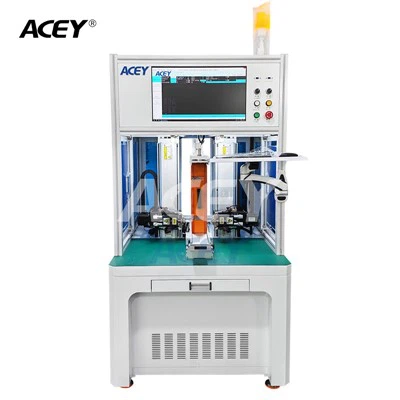
Hey there! As a supplier of Battery Pack Spot Welders, I often get asked about the minimum welding force of these machines. It's a crucial question because the right welding force can make or break the quality of the battery pack welds. So, let's dive into this topic and figure out what the minimum welding force really is.
First off, what exactly is welding force? Well, in simple terms, it's the amount of pressure applied during the spot - welding process. When you're welding battery packs, this force is essential for creating a strong and reliable connection between the battery cells and the tabs. If the force is too low, the weld might not be strong enough, leading to poor conductivity and potential safety issues. On the other hand, if it's too high, it could damage the battery cells.
Now, determining the minimum welding force isn't a one - size - fits - all situation. It depends on several factors. One of the most important factors is the type of battery cells you're working with. For example, lithium - ion batteries, which are widely used in many applications, have different requirements compared to other types of batteries. Lithium - ion batteries are more sensitive, and you need to be careful not to apply too much force that could damage the internal structure of the cell. You can check out our Lithium Ion Spot Welding Machine which is specifically designed to handle these delicate cells.
The thickness of the tabs also plays a big role. Thicker tabs generally require more welding force to create a proper weld. If you're using thin tabs, a lower force might be sufficient. But you still need to make sure that the force is enough to ensure good contact and a solid weld.
Another factor is the material of the tabs. Different materials have different properties, and they respond differently to the welding force. For instance, copper tabs are highly conductive but might require a different welding force compared to nickel tabs.
So, how do we figure out the minimum welding force? Well, it usually involves some testing. You can start by referring to the manufacturer's specifications of the battery cells and tabs. These specs often provide some guidelines on the recommended welding parameters, including the force. But these are just starting points. You'll still need to do some trial - and - error testing on a small scale.
We've found that a good way to approach this is to start with a relatively low force and gradually increase it while monitoring the quality of the welds. You can use tools like a microscope to check the integrity of the welds. Look for signs of a good weld, such as a clean and uniform joint, and no signs of damage to the battery cells or tabs.
In general, for small - scale battery packs with thin tabs, the minimum welding force could be around 10 - 20 Newtons. But this is just a rough estimate. For larger battery packs or those with thicker tabs, the force could be significantly higher, maybe in the range of 50 - 100 Newtons or more.
Our 18650 Battery Manual Spot Welding Machine is a great option for those working with 18650 battery cells. It allows you to have more control over the welding process, including adjusting the welding force. You can fine - tune the force according to your specific needs and the results of your testing.
If you're looking for a more automated solution for larger - scale battery pack production, our Spot Welding Machine for Battery Pack is a top - notch choice. It comes with advanced features that can help you achieve consistent and high - quality welds.
It's also important to note that the welding force isn't the only factor that affects the quality of the welds. The welding time, current, and electrode material also play crucial roles. You need to optimize all these parameters together to get the best results.

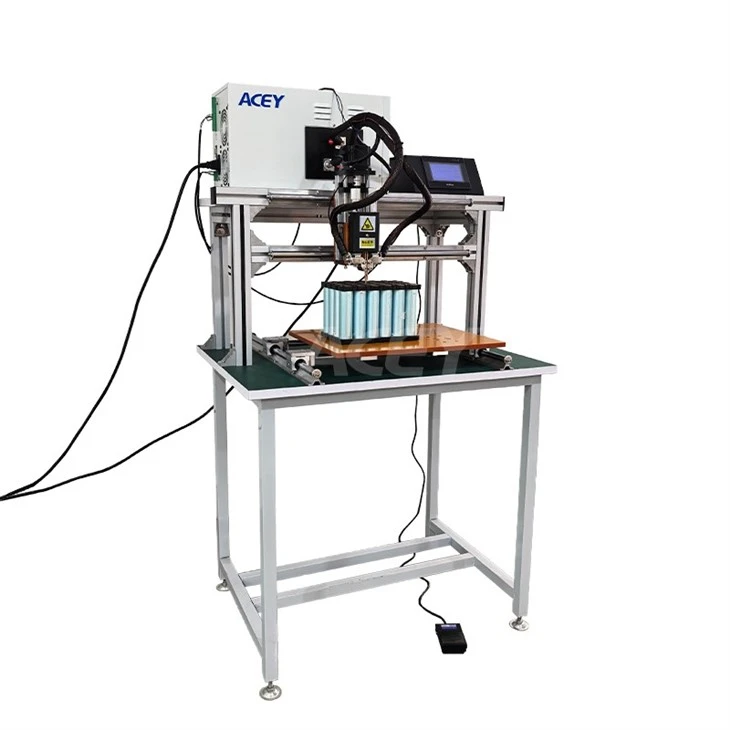
In conclusion, the minimum welding force of a battery pack spot welder depends on multiple factors such as the type of battery cells, tab thickness, and tab material. There's no fixed number that applies to all situations. Through proper testing and following the manufacturer's guidelines, you can find the right minimum welding force for your specific battery pack welding needs.
If you're in the market for a battery pack spot welder or have any questions about welding force or other welding parameters, don't hesitate to reach out. We're here to help you make the best choice for your battery pack production. Whether you're a small - scale hobbyist or a large - scale manufacturer, we've got the right solutions for you. Let's start a conversation and see how we can work together to improve your battery pack welding process.
References
- Battery cell and tab manufacturer specifications
- Industry research on battery pack spot welding techniques