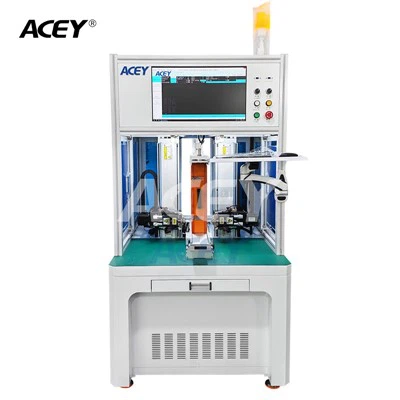
User acceptance testing (UAT) is a critical phase in the software development life cycle, ensuring that the final product meets the users' requirements and expectations. As a Comprehensive Tester supplier, I have witnessed firsthand the significant role that a Comprehensive Tester plays in this process. In this blog, I will explore the various aspects of the role of a Comprehensive Tester in user acceptance testing.
Understanding the Basics of User Acceptance Testing
User acceptance testing is the last line of defense before a product is released to the end - users. It focuses on validating that the software, application, or system functions as intended in a real - world environment and meets the business needs. The goal is to ensure that the end - users will be able to use the product effectively and that it aligns with their operational requirements.
The Multi - faceted Role of a Comprehensive Tester in UAT
1. Requirements Analysis
A Comprehensive Tester begins by thoroughly understanding the project requirements. This involves collaborating with business analysts, product owners, and end - users to gather all the necessary information. For example, when testing a battery management application, the tester needs to know the specific battery types, voltage and current ranges it should support. Our 100V 30A 120A Battery Comprehensive Tester is designed to work with a wide range of battery specifications, and understanding these requirements is crucial for accurate testing. By analyzing the requirements, the tester can create a detailed test plan that covers all the critical functionality.
2. Test Planning and Design
Once the requirements are clear, the Comprehensive Tester develops a comprehensive test plan. This plan outlines the test objectives, test scope, test cases, test data, and test schedule. The test cases are designed to cover all possible scenarios, from normal usage to edge cases. For instance, in the case of a Battery Integrated Tester, the test cases might include testing the accuracy of voltage and current measurements under different load conditions. The tester also determines the appropriate test data, which could be real - world battery usage data or simulated data to cover a wide range of situations.
3. Test Execution
During the test execution phase, the Comprehensive Tester runs the test cases against the product. This includes both manual and automated testing methods. Manual testing allows the tester to experience the product from the end - user's perspective, checking for usability issues, intuitive navigation, and user - friendliness. Automated testing, on the other hand, is used for repetitive tasks, such as checking the performance of the battery tester under continuous usage. Using our 120V 50A 200A Lithium Battery Multifunction Tester, the tester can automate the process of testing different charge - discharge cycles. As the tests are executed, the tester records the results, including any defects or issues found.


4. Defect Identification and Reporting
One of the most important responsibilities of a Comprehensive Tester is to identify defects. When a defect is found, the tester carefully documents it, including a detailed description of the problem, steps to reproduce it, the expected and actual results, and the environment in which the defect occurred. For example, if the battery tester shows incorrect voltage readings, the tester will note down the exact battery type, the test conditions, and the specific readings. This detailed information is crucial for the development team to understand the issue and fix it efficiently. The tester then reports the defects to the appropriate stakeholders, usually through a defect tracking system.
5. Collaboration with Stakeholders
A Comprehensive Tester acts as a bridge between different stakeholders in the UAT process. They communicate with the development team to ensure that defects are understood and addressed. They also work with the end - users to get feedback on the testing process and the product. For example, if the end - users have specific concerns about the usability of the battery tester, the tester can relay these concerns to the development team. This collaboration ensures that the final product not only meets the technical requirements but also the end - user's expectations.
6. Continuous Improvement
The role of a Comprehensive Tester doesn't end with the completion of UAT. After the product is released, the tester analyzes the test results and the impact of the product in the real - world environment. They identify areas for improvement in the testing process itself. For example, if certain types of defects were consistently missed during UAT, the tester can suggest changes to the test plan or the test cases. This continuous improvement approach helps in enhancing the quality of future products and the effectiveness of the testing process.
The Impact of a Comprehensive Tester on the Success of UAT
The presence of a skilled Comprehensive Tester can significantly impact the success of user acceptance testing. Firstly, they ensure that the product is thoroughly tested, reducing the likelihood of critical defects being discovered after the product is released. This saves time and money by avoiding costly product recalls or emergency fixes. Secondly, they help in building confidence among the end - users. When end - users see that the product has been comprehensively tested and meets their requirements, they are more likely to accept and use the product effectively. Finally, a Comprehensive Tester contributes to the overall quality of the product, which can enhance the reputation of the company in the market.
Conclusion
In conclusion, a Comprehensive Tester plays a vital role in user acceptance testing. From requirements analysis to continuous improvement, they are involved in every step of the UAT process. Their expertise in testing, defect identification, and stakeholder collaboration ensures that the final product is of high quality and meets the end - user's needs. If you are in the market for reliable and high - performance testers for your products, especially battery - related applications, we would be delighted to discuss your requirements. Feel free to reach out to us to start a procurement conversation and find the best testing solutions for your business.
References
- Pressman, Roger S. "Software Engineering: A Practitioner's Approach." McGraw - Hill Education, 2014.
- Kaner, Cem, Jack Falk, and Hung Q. Nguyen. "Testing Computer Software." Wiley, 2013.