I. What exactly is battery balancing?
In a lithium battery pack, the parameters of each cell in each string cannot be exactly the same. Some cells have low internal resistance and store more charge; others have high internal resistance and store less charge. Although the differences are small at the beginning, over time, voltage differences will appear, which is called voltage drop. The purpose of balancing is only one: to keep the voltage of each string consistent, ensuring the entire battery pack operates in a synchronized manner. Without balancing: Over time, the voltage drop will increase, high-voltage cells will charge and discharge prematurely, low-voltage cells will never fully charge, charging becomes faster, battery life becomes shorter, and battery life decreases over time. With balancing: Consistent voltage is maintained in each string, ensuring full charging and discharging, maximizing battery life, and extending cycle life.
II. Passive Balancing vs. Active Balancing: How to Choose?
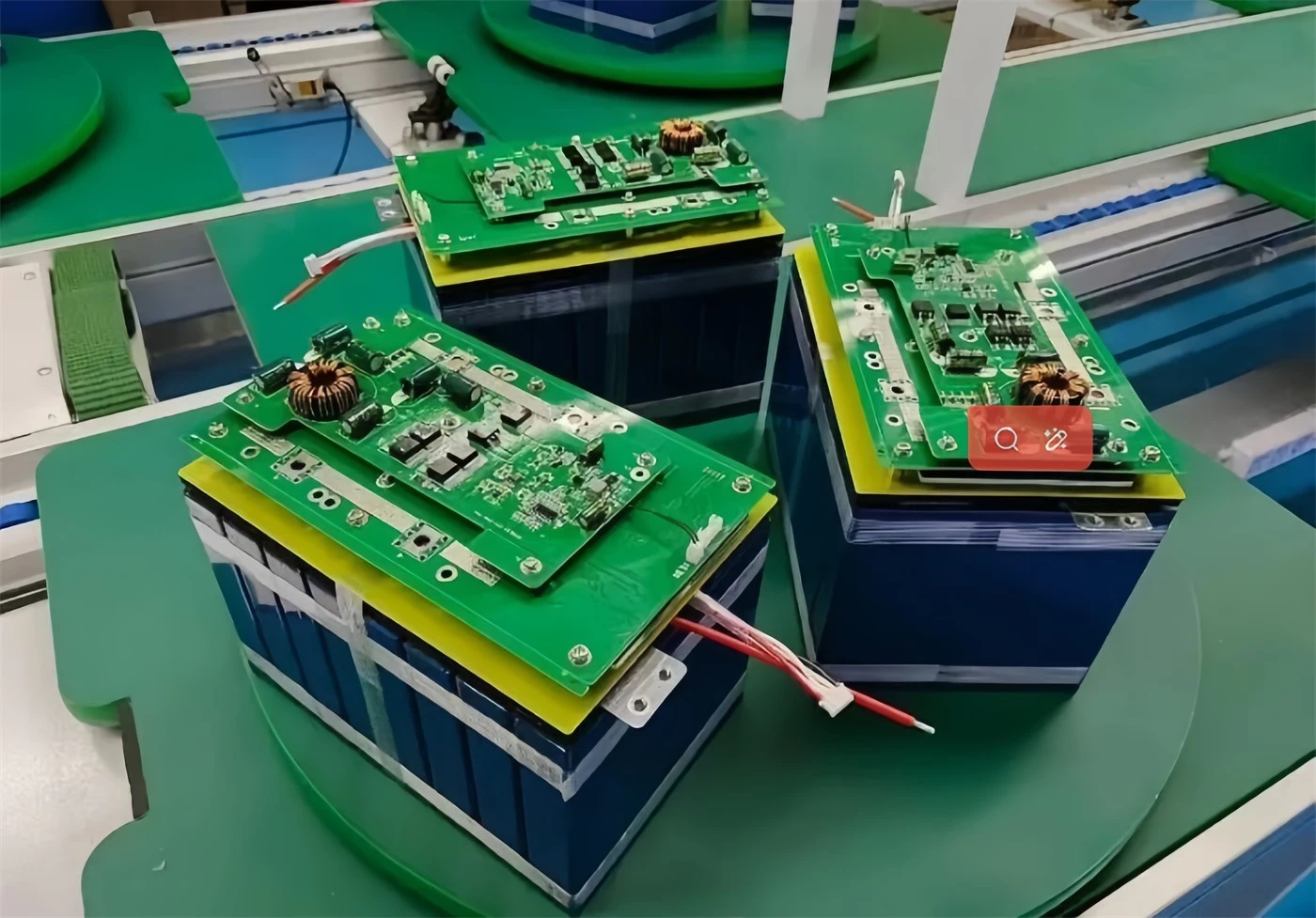
Currently, there are only two types of balancing on the market; there is no third. I will explain the advantages and disadvantages in the simplest terms.
1. Passive Balancing
Working Principle: The high-voltage cell uses a resistor to dissipate excess power and heat, forcibly lowering the voltage of the high-voltage cell to catch up with the low-voltage cell. (Similar to emptying the excess water from buckets of equal volume.)
Advantages: Inexpensive, simple structure, extremely low failure rate, almost indestructible under normal use.
Disadvantages:
√ Only lowers voltage, does not raise it: It can only dissipate power from the high-voltage cell, not replenish power to the low-voltage cell;
√ Extremely slow: It's a slow process, barely able to balance large voltage differences;
√ Heat generation: The balancing process generates heat continuously.
2. Active Balancing
Working Principle: Instead of wasting power, it transfers power from the high-voltage cell to the low-voltage cell internally, with almost no loss. (Just like buckets of the same size containing different amounts of water, pouring the water from the bucket with more water into the bucket with less water achieves balance.)
Advantages:
1. Fast speed and high efficiency, quickly leveling even large voltage differences;
2. No wasted power, minimal heat generation;
3. Recommended for long-term use to continuously suppress voltage difference increases.
Only disadvantage: High price and complex structure.
III. Key Points: Balancing is not a panacea
Many people mistakenly believe that as long as balancing is used, the battery will never have a voltage difference. This is completely wrong! Balancing can only correct "consistency errors," not "cell aging and damage." The following two situations cannot be repaired by either passive or active balancing:
1. Severe aging of a single cell string with a large capacity difference. For example, in an 80Ah battery pack, one string only has 50Ah remaining. This large capacity difference indicates hardware damage. This voltage difference is caused by the capacity difference, and balancing cannot level it off; the voltage difference will increase with use, requiring cell replacement.
2. Internal micro-short circuits and extremely rapid self-discharge within the battery cell: Some cells experience a significant voltage drop overnight, indicating a cell malfunction. The balancing function cannot keep up with this voltage drop and is completely ineffective.
IV. Practical Tutorial: Correct Balancing Repair Steps
Many people find balancing ineffective because they are operating it incorrectly! Here's a standard repair procedure for beginners to follow:
Step 1: Fully Charged and Allow to Stand for Balancing (Most Effective)
Fully charge the battery, disconnect the load, and do not unplug the charger. Let it stand for 1-3 hours. The protection board's balancing function will only work at full capacity when fully charged; this is the golden stage for repairing voltage differences.
Step 2: Manual Balancing Prioritized for Large Voltage Differences
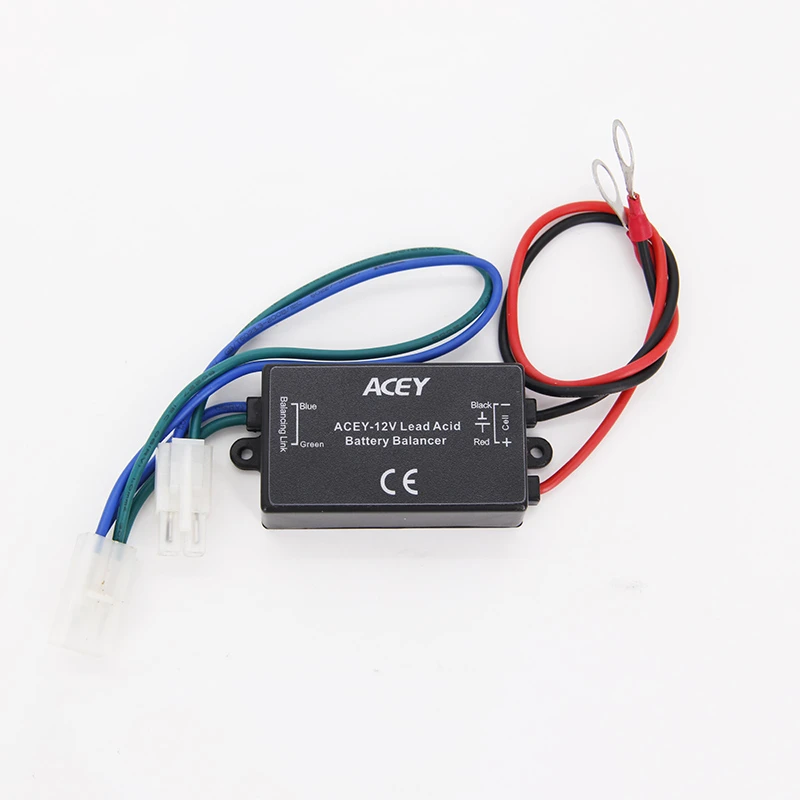
If the voltage difference exceeds 100mV, the protection board's built-in balancing speed is too slow. It is recommended to manually level the voltage using a balancing device first, then rely on the protection board's daily maintenance.
Step 3: Consecutive Shallow Charge and Discharge to Consolidate the Balance
After leveling the voltage difference, do not perform a deep discharge all at once. Perform 2-3 consecutive normal uses and normal charges to stabilize the cell state and prevent the voltage difference from rebounding.
V. Why Does the Voltage Difference Still Increase Even with Balancing on the Protection Board?
90% of cases are due to these five reasons:
1. Insufficient equalization time: Disconnecting the battery immediately after full charge prevents equalization from starting.
2. Aging cells: Inconsistent capacity makes equalization ineffective.
3. Prolonged deep discharge: Using the battery until it's completely depleted amplifies voltage differences between cells.
4. High-temperature use: High temperatures accelerate cell degradation within a single string, rapidly widening the voltage difference.
5. Inferior protection board: While nominally equipped with equalization, its actual function is practically useless.
Equalization isn't a panacea, but without proper equalization knowledge, a battery's lifespan will be significantly reduced. Learning how to correctly maintain voltage differences is the core key to extending battery cycle life!
Regarding the lithium battery equalizer, if you have any questions or need to make a purchase, please feel free to contact us at any time.
ACEY New Energy is a professional lithium battery equipment supplier, dedicated to providing the new energy industry with advanced lithium battery equipment and complete production line solutions. From laboratory-scale battery R&D and pilot production to fully automated large-scale production lines, we offer one-stop solutions.
Contact now