Battery tabs are usually sheets or strips made of metallic materials, such as nickel, copper, and aluminum. One end of the tab is connected to the positive or negative electrode inside the battery, and the other end is led out of the battery's housing for connection to external circuitry.
The main function of the battery tab is to act as a conductor of electric current, transmit the electrical energy generated inside the battery to the external circuit, or input the electrical energy from the external circuit into the battery for charging. It ensures an effective electrical connection between the battery and the external device, so as to realize the charging and discharging function of the battery.
Welding battery tabs is a critical step in the production of cylindrical lithium batteries. This article simplifies the process of welding cylindrical battery tabs.
Materials and tools required
Battery tabs (nickel, copper, or aluminum)
Cylindrical battery cells
Nickel strip (for spot welding)
Insulating tapes (e.g. Kapton tape)
Spot welders, laser welders, or ultrasonic welders
Protective equipment (gloves, goggles)
Cleaning supplies
Safety first
Wear protective gear to protect against electric shock and inhalation of harmful gases.
Work in a well-ventilated area.
Handle the battery with care to avoid damage.
Simplify the steps
1. Prepare the battery cells
Clean the battery cells to remove contaminants.
Arrange the battery cells into the desired series/parallel configuration according to the application requirements.
2. Select a welding method
Spot welding: suitable for DIY projects, cost-effective.
Laser welding: suitable for production lines, high precision.
Ultrasonic welding: suitable for thin foil materials.
3. Set up welding equipment
For spot welding, attach the electrode to the welding pen.
For laser welding, calibrate the laser beam.
For ultrasonic welding, set up the transducer and sonotrode according to the manufacturer's instructions.
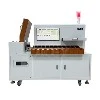
Metal Ultrasonic Spot Welder Ultrasonic spot welding metal tabs common to the winding and welding a metal lamination process, ACEY-USW-1 ultrasonic spot welding machine is small, the outershaped appearance, easy to operate, reliable structure, stability and security features.


4. Locate the battery tabs
Properly align the tabs on the battery cell.
Place the nickel strip evenly on the terminal blocks of the battery cell.
5. Perform welding
Spot welding: Apply the appropriate energy and lightly pressure the electrode.
Laser welding: Precisely moving the laser beam along the seam.
Ultrasonic welding: The workpiece is pressed and scrubbed with high-frequency vibration.
6. Check the welding quality
Check for defects (holes, splashes, incomplete fusion).
Make sure the connection is secure and the resistance is low.
7. Add BMS and insulate
Install a battery management system (BMS).
Cover all exposed conductive parts with insulating tape.
Secure the battery pack with cable ties.
Manufacturing a reliable battery pack requires attention to detail. Whether spot welding, laser welding, or ultrasonic welding, high-quality connections are essential for the performance and safety of the battery. By following these simplified steps and safety precautions, you can create an efficient and safe battery pack for a variety of applications.