Which Is Right for Your Business?
Choosing the right battery pack assembly line is an important decision for lithium battery manufacturers, battery pack assemblers, and companies entering the energy storage market.
For small-scale production, a manual battery pack assembly process may appear to be the most economical option. As production volume increases, however, manufacturers often consider semi-automatic or fully automatic battery pack assembly lines to improve efficiency, consistency, and production capacity.
So, which one is right for your business?
The answer depends on several factors, including production volume, battery type, labor costs, product complexity, available factory space, quality requirements, and future expansion plans.
This guide compares manual and automatic battery pack assembly lines and explains how to choose the right solution for different production needs.
What Is a Battery Pack Assembly Line?
A battery pack assembly line is a production system used to assemble individual lithium-ion cells into finished battery packs or battery modules.
A battery pack assembly line should normally be designed according to the battery cell format, pack structure, production capacity, and required level of automation.

Manual vs. Automatic Battery Pack Assembly Line
The main difference between manual and automatic production is how much of the manufacturing process is performed by operators and how much is handled by machines.
Manual Battery Pack Assembly
In a manual production setup, operators perform most of the assembly operations using individual machines or hand tools.
Manual production gives manufacturers greater flexibility and requires a relatively low initial investment.
However, production speed and consistency depend heavily on operator skill and working efficiency.
Manual assembly is usually suitable for:
- Small-batch production
- Prototype development
- New battery pack products
- Customized battery packs
- Start-up manufacturers
- Production environments with many product changes
For companies that are still testing the market or producing several battery pack models in relatively small quantities, investing in a complete automatic production line may not be necessary at the beginning.
Automatic Battery Pack Assembly Line
An Automatic Battery Pack Assembly Line Uses Automated Machines, Conveyors, Fixtures, Sensors, Robots, And Control Systems To Reduce Manual Operations.
Depending On The Project, Automated Processes May Include:
- Automatic cell capacity testing
- Automatic cell sorting
- Automatic battery positive and negative electrode detecting
- Automatic battery pack welding·
- Automatic BMS inspection
- Automatic comprehensive inspection·
- Automatic batery pack shrinking wraping·
- Automatic battery pack testing
- Automatic material transfer

For Larger-Scale Production, Automation Can Significantly Improve Production Efficiency And Process Consistency.
Modern Battery Pack Production Lines Can Also Integrate Different Stations Into One Production System. For Example, An Automatic Prismatic Battery Pack Assembly Line Can Combine Feeding And Sorting, Stacking, Extrusion And Binding, Polarity Detection, Pole Cleaning, Connection Bar Placement, Welding, EOL Testing, And Other Processes Into A Coordinated Production Line.
Manual vs. Automatic: Key Differences
The following factors should be considered when comparing the two production methods.
|
Factor |
Manual Assembly |
Automatic Assembly |
|
Initial investment |
Lower |
Higher |
|
Production capacity |
Low to medium |
Medium to high |
|
Labor requirement |
High |
Lower |
|
Production consistency |
Depends on operators |
High |
|
Product flexibility |
Very high |
Medium to high |
|
Production efficiency |
Lower |
Higher |
|
Process traceability |
Limited |
Easier to integrate |
|
Suitable for |
Small batches |
Medium and large-scale production |
|
Product changeover |
Easy |
Requires planning |
|
Long-term scalability |
Limited |
Excellent |
There is no universally better solution. The right choice depends on your production requirements.
1. Production Volume
Production volume is usually the first factor to consider.
If you produce a few hundred battery packs per month, a manual or semi-automatic production system may provide a better return on investment.
If your target is thousands or tens of thousands of battery packs per month, manual production can require a large number of operators and may become difficult to scale.
In this situation, an automatic battery pack assembly line can help increase throughput while reducing dependence on manual operations.
Before purchasing equipment, calculate your required daily and monthly production capacity rather than simply choosing the highest level of automation.

2. Labor Cost and Availability
As production increases, labor costs can become a significant part of the total manufacturing cost.
Automation can reduce the number of operators required for repetitive processes and make production less dependent on individual operator skills.
But automatic equipment does not completely eliminate labor. Operators are still required for material preparation, equipment operation, maintenance, quality control, and production management.
The real goal of automation is not necessarily "zero workers," but rather higher output and more consistent production with fewer repetitive manual operations.
3. Product Type and Battery Cell Format
Battery pack assembly lines are not one-size-fits-all systems.
Different battery formats require different production processes.
For example:
- Cylindrical cells such as 18650 and 21700 often require cell sorting, insulation paper application, nickel strip welding, and pack testing.
- Prismatic cells may require stacking, binding, laser cleaning, laser welding.
ACEY New Energy provides battery pack assembly solutions for different battery formats and applications, including cylindrical battery packs, prismatic battery modules, ESS battery packs, and UAV/drone battery packs.

This is why manufacturers should define the battery chemistry, cell format, pack structure, dimensions, and target output before selecting equipment.
4. Production Consistency
Battery pack production involves many repetitive operations.
For example, welding position, welding energy, cell arrangement, connection quality, and testing results can all affect the final battery pack.
In manual production, process quality can vary between operators.
Automatic equipment can control positioning, welding parameters, movement, and testing conditions more consistently.
This is particularly important when battery packs are produced in large quantities and need to maintain stable quality from one batch to another.
A well-designed automated system can also connect testing and production data, making it easier to track process parameters and identify abnormal products.
5. Product Flexibility
One major advantage of manual production is flexibility.
If you frequently change battery pack models, cell configurations, or production quantities, manual stations can often be adjusted quickly. Automatic production lines usually require more planning for product changeovers. However, modern automated battery pack assembly lines can also use modular designs. Different stations can be configured according to the customer's production process and product requirements.
For example, ACEY's customized automatic production lines use modular production concepts so that different functional stations can be integrated according to the customer's battery module design and factory layout. Therefore, automation does not necessarily mean sacrificing flexibility.
The key is to choose a production line designed around your actual products instead of purchasing a generic system.
Manual, Semi-Automatic or Fully Automatic?
For many manufacturers, the decision is not simply "manual or automatic."
A semi-automatic battery pack assembly line can often provide a practical middle ground.
Manual Production
Best for:
- Start-up businesses
- Prototypes
- Small production volumes
- Highly customized battery packs
- Frequent product changes
Semi-Automatic Production
Best for:
- Growing manufacturers
- Medium production volumes
- Companies upgrading from manual assembly
- Products requiring both automation and operator flexibility
- Manufacturers with limited initial investment budgets
Fully Automatic Production
Best for:
- High-volume production
- Standardized battery pack models
- ESS battery module production
- Automotive and power battery applications
- Manufacturers planning long-term capacity expansion
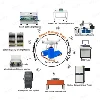
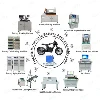
What Equipment is Primarily Included in A Battery Pack Assembly Line?
A battery pack assembly line can be built from individual machines or integrated into a complete production system.
Depending on the application, equipment may include:
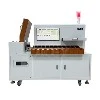
Battery Cell Testing Equipment
Battery testers can measure important parameters such as capacity, voltage, current, and other performance characteristics before cells enter the pack assembly process.
Battery Sorting Machine
Battery sorting equipment can classify cells according to parameters such as voltage and internal resistance, helping improve cell consistency before pack assembly.
Battery Sticking Machine
For cylindrical cells, an insulation paper or fish-paper pasting machine can automatically apply insulating material to the cell terminals.
Battery Pack Spot Welder
Spot welding machines are used to connect cells with nickel strips or other conductive materials.
Depending on production requirements, manufacturers can choose manual, semi-automatic, or automatic welding systems.
BMS Tester
The BMS is an important part of a lithium battery pack. A BMS tester can be used to verify protection and communication-related functions according to the battery pack design.
Battery Pack Tester
After assembly, the battery pack needs to be tested to verify its electrical performance and safety-related parameters.
A complete battery pack production system may therefore consist of multiple individual machines connected through manual workstations, semi-automatic stations, conveyors, or fully automated material handling systems.
How Much Does a Battery Pack Assembly Line Cost?
There is no fixed price for a battery pack assembly line because the cost depends heavily on the production requirements.
The main factors include:
- Battery cell format
- Battery pack configuration
- Production capacity
- Number of assembly stations
- Automation level
- Welding method
- Testing requirements
- Material handling system
- MES or production data requirements
- Factory layout
- Degree of customization
A small manual production setup can start with individual machines and gradually expand. A customized automatic production line requires a much larger initial investment, but it can provide significantly higher production capacity and automation. Therefore, manufacturers should compare total production cost and expected output, rather than simply comparing the purchase price of individual machines.
How to Choose the Right Battery Pack Assembly Line?
Before contacting a battery pack assembly line supplier, prepare the following information:
1. Battery Cell Type
Tell the supplier whether you are using:
- 18650
- 21700
- 26650
- 32700
- 32140
- Prismatic cells
- Pouch cells
- Other customized cells

2. Battery Pack Configuration
For example:
- 4S2P
- 10S4P
- 13S5P
- Custom module configuration
3. Target Production Capacity
Provide your expected:
- Packs per hour
- Packs per day
- Packs per month
This information is essential for determining the required equipment capacity.
4. Battery Pack Application
The application can affect the production process.
Common applications include:
- Power tools
- Electric bicycles
- Electric vehicles
- UAVs and drones
- Portable power stations
- Energy storage systems
- Consumer electronics
- Industrial equipment
5. Required Automation Level
Decide whether you need:
- Manual equipment
- Semi-automatic equipment
- Fully automatic production
- A customized combination of manual and automatic stations
6. Factory Space and Layout
Automatic production lines require sufficient space for equipment, material loading, conveyors, safety systems, maintenance access, and finished-product handling. Providing a factory layout to the supplier can help engineers design a more practical production solution.
Final Thoughts
Choosing between a manual and automatic battery pack assembly line should not be based only on equipment price. Instead, consider your production volume, labor costs, battery type, product consistency requirements, available factory space, investment budget, and future expansion plans.
Manual assembly offers flexibility and a lower initial investment.
Semi-automatic assembly provides a balance between flexibility and production efficiency.
Fully automatic assembly is better suited to high-volume, standardized production where efficiency, consistency, traceability, and scalability are priorities.
If you are planning a new lithium battery pack production line or upgrading an existing manufacturing process, the best solution is usually a customized production line designed around your actual battery pack specifications and target output.
Need Help Choosing the Right Battery Pack Assembly Line?
Tell us your battery cell type, pack configuration, target production capacity, and desired automation level. ACEY can recommend a suitable battery pack assembly solution and configure the required equipment according to your production process.
Contact ACEY for a customized battery pack assembly line solution.