Power Battery Pack Assembly Process
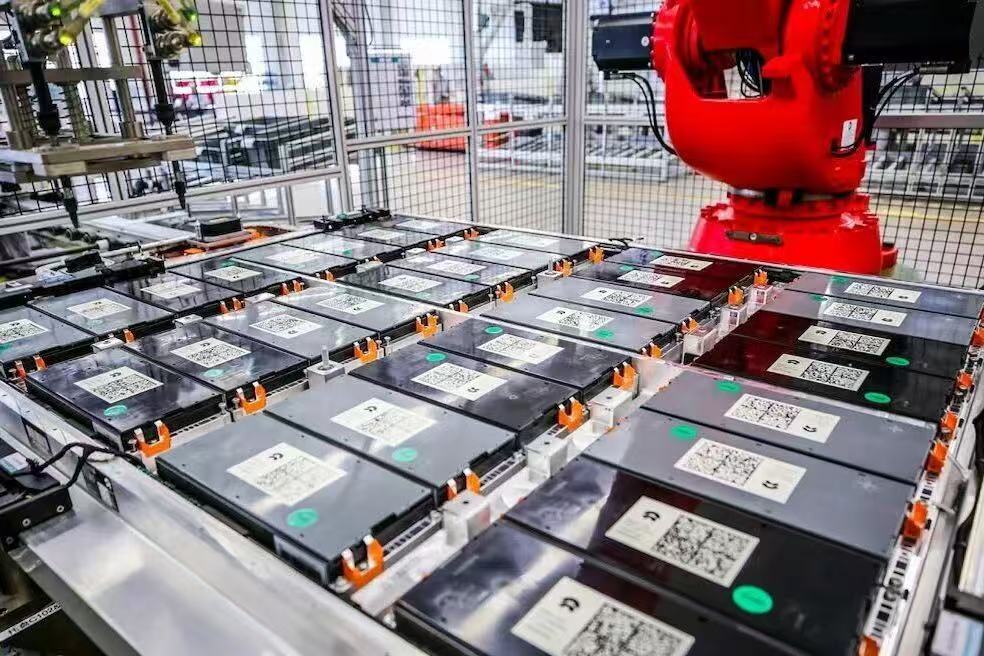
The process of assembly for the power battery pack assembly line is similar to that of traditional fuel vehicle engines. When assembling the various components of a power battery pack into a complete assembly, connectors such as bolts, nuts, cable ties, clamps, and wiring harness rivets are required to tightly connect the five major systems: the battery module, battery management system (BMS), thermal management system, electrical system, and mechanical system. Much like constructing a complex building, these connectors are the "screws" that firmly hold together the key "structures," ultimately creating a battery pack with reliable mechanical strength, laying the foundation for its subsequent proper function in new energy vehicles.
Airtightness Testing Process
Since the power battery pack is typically installed under the seat or trunk of a new energy vehicle, directly exposed to the external environment, it must possess excellent sealing properties. If the seal is not good, high voltage electricity could come into contact with water when the vehicle is exposed to water or moisture, potentially leading to serious consequences. Airtightness testing is crucial for ensuring battery safety. It involves two phases: airtightness testing at the thermal management system level and airtightness testing at the pack level. According to the protection level system drafted by the International Electrotechnical Commission (IEC), power battery packs must meet the IP67 rating.
For example, SAIC Passenger Vehicle demonstrated its high-level airtightness protection technology by placing the entire, fully charged pack in a goldfish tank for seven days. The goldfish remained unharmed, and no water entered the pack. This fully demonstrates the importance of good airtightness and the value of related testing processes. During the actual testing process, the battery pack is first sealed. Then, specialized airtightness testing equipment, such as a leak detector, applies a certain pressure to the interior of the battery pack and detects changes in pressure to determine if there are leaks. Testers also use airtight fixture jaws to quickly connect the battery pack to ensure test accuracy and efficiency. Furthermore, test parameters such as test pressure, maximum allowable leakage, inflation time, voltage stabilization time, test time, and exhaust time must be precisely adjusted based on the specific design and requirements of the battery pack. Only after comprehensively analyzing these parameters can the airtightness of the battery pack be accurately determined.
Software Flashing Process
The software flashing process is also known as software burning or software filling. In power battery packs, the key operation of this process is to flash the BMS control strategy in the form of code into the CMU (Cell Monitor Unit) and BMU (Battery Management Unit) within the BMS. During subsequent battery testing and actual use, the electronic control unit processes and analyzes the collected battery status data. Based on the analysis results, it issues corresponding control instructions to relevant functional modules within the system, ultimately transmitting this information to the outside world. It can be said that the software flashing process gives the power battery pack the ability to "think" and "adapt," allowing it to rationally adjust its operating state according to different operating conditions and battery status, ensuring safe and stable operation. It's like installing an intelligent "brain" in the battery pack, precisely controlling every operational detail at all times.
Electrical Performance Testing Process
The electrical performance testing process is a mandatory testing step before a product rolls off the production line. It covers multiple aspects, including insulation testing, charging status testing, and fast and slow charging tests. Static testing includes insulation testing, which verifies the insulation between various parts of the battery pack and between the battery pack and the outside world to prevent leakage risks. Charging status testing accurately determines the current battery charge level and whether various charging parameters are normal. Fast and slow charging tests simulate different charging scenarios to verify the battery's adaptability and safety at different charging rates. Dynamic testing uses a constant high current to evaluate parameters such as power battery capacity, energy, and battery pack consistency.
Furthermore, there's a SOC (State of Charge) adjustment process to adjust the battery pack's SOC to the factory-specified SOC value. While different companies have their own standards for electrical performance testing parameters, the Chinese government has also issued relevant regulations, such as "GB/T 31484-2015 Cycle Life Requirements and Test Methods for Power Batteries for Electric Vehicles" and "GB/T 31486-2015 Electrical Performance Requirements and Test Methods for Power Batteries for Electric Vehicles." These national standards provide unified specifications and references for electrical performance testing, ensuring that every power battery pack off the production line meets safety and reliability requirements, guaranteeing the proper operation of new energy vehicles.
About Us
Acey Intelligent specializes in providing one-stop solutions for semi-automatic/fully-automatic assembly lines of lithium battery packs used in ESS, UAV, E-Bike, E-Scooter, Power Tools, Two/Three Wheelers, Etc. In Addition, we provide a complete set of battery pack assembly equipment, such as Cell Grading Machine, Battery Sorting Machine, Insulation Paper Sticking Machine, CCD tester, Manual/Automatic Spot Welding Machine, BMS Tester, Battery Comprehensive Tester and Battery Pack Test System, etc.