Electric vehicle range is halved in winter, and charging in summer raises safety concerns; batteries won't charge in low temperatures, and capacity drops significantly after exposure to high temperatures-the "delicate" nature of lithium batteries, the core power source for new energy vehicles, robots, and digital products, is widely recognized. In fact, temperature is a key variable affecting lithium battery performance, closely related to everything from capacity output and cycle life to safety stability and charge/discharge efficiency. Battery Pioneer, as an expert in the battery field, will use simple language and hard data to break down the fundamental impact of temperature on lithium batteries and provide a guide to avoiding common pitfalls in daily use.
I. Understanding First: The "Comfort Zone" for Lithium Batteries is Only 20-30℃
Lithium batteries are like "greenhouse flowers," extremely sensitive to temperature. The industry generally believes that their optimal operating temperature range is 20℃~30℃ (i.e., room temperature), at which the battery achieves the best balance between capacity, lifespan, and safety.
From a capacity perspective, lithium batteries reach 100% usable capacity at 25℃, representing peak performance. As the temperature deviates from this comfortable range, capacity fluctuates significantly:
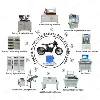
ACEY-BCT506-512H 18650 battery capacity tester uses modern electronic monitoring and control devices instead of manual work to monitor the real-time voltage, current, capacity, energy, formation state and other parameters of distributed battery formation in real time, diagnose and handle faults, record and analyze relevant data, so as to realize unattended and batch processing in the formation process, Computer control software for centralized monitoring and maintenance of equipment.

Below 0℃: usable capacity drops to 85%; at -10℃, only 70% remains; at -30℃, capacity loss exceeds half; and at -40℃, it's less than 50% of room temperature.
Above 45℃: while it may extend discharge time in the short term, it accelerates battery aging in the long run. Charging above 50℃ significantly accelerates electrolyte corrosion and casing aging.
The core logic behind this is that the charging and discharging of lithium batteries is essentially the "migration" of lithium ions between the positive and negative electrodes. Excessively high or low temperatures hinder this "movement"-low temperatures prevent lithium ions from "moving" effectively, while high temperatures cause them to "run erratically," ultimately leading to poor battery performance.
II. The impact of low temperatures on batteries
The impact of low temperatures on lithium batteries is far more complex than we imagine: it's not just about shorter range, but can also cause permanent damage.

1. Three Core Issues at Low Temperatures
Reversible Capacity Decrease: At low temperatures, electrolyte viscosity increases and conductivity decreases, much like a "frozen river." Lithium-ion diffusion slows down, making it difficult for them to successfully embed into the electrodes, leading to a significant decrease in usable capacity. However, this capacity loss is reversible and can be recovered upon returning to room temperature. For example, the range of an electric vehicle may be shorter in winter, but it can return to normal when temperatures warm up in spring.
Limited Charging and Discharging Power: The lower the temperature, the greater the internal impedance (resistance) of the battery. When the temperature drops below -10℃, the interfacial impedance between the positive and negative electrodes spikes rapidly. After -20℃, the electrolyte impedance also rises sharply, causing a decrease in battery discharge capacity and an inability to output high power. This manifests as sluggish acceleration in electric vehicles and sluggish movements in robots.
Permanent Damage from Low-Temperature Charging: This is the most concerning risk! When charging at low temperatures (especially below 0°C), lithium ions cannot embed into the graphite anode in time and will precipitate on the electrode surface, forming metallic lithium dendrites. These "tree-like" crystals consume active lithium ions, causing permanent capacity loss. More dangerously, lithium dendrites may puncture the battery separator, causing short circuits and fires.

(The relationship between battery capacity and electrolyte conductivity at different temperatures)

(The impedance levels of different parts within the battery at various temperatures)
2. Low-Temperature Usage Guidelines
- "Warm-up" before charging: Before charging outdoors in winter, park electric vehicles or robots indoors for 30 minutes to preheat until the battery temperature rises above 0°C before charging;
- Avoid high-power discharge at low temperatures: In low-temperature environments, avoid frequent rapid acceleration and heavy-load operation to reduce battery load;
- Do not force charging at low temperatures: If the device displays "Cannot charge at low temperatures," do not force charging, otherwise it may cause irreversible damage.
III. High Temperatures in Batteries
Compared to the "slow wear and tear" of low temperatures, high temperatures cause more sudden and severe damage to lithium batteries-not only significantly shortening their lifespan but also potentially triggering safety accidents.
1. A 5-Stage "Chain Reaction" at High Temperatures
Lithium batteries, under high temperatures, trigger a series of dangerous exothermic reactions, like a domino effect:
1. 90-120℃: The SEI film (the "protective clothing" protecting the lithium sheets) on the battery surface decomposes, releasing heat;
2. Above 120℃: The SEI film fails, and the lithium embedded in the negative electrode reacts directly with the electrolyte, releasing a large amount of heat;
3. Above 200℃: The electrolyte completely decomposes, and the rate of heat release accelerates dramatically;
4. Subsequent Reactions: The positive electrode active material decomposes and releases oxygen, which further reacts with the electrolyte. Simultaneously, the embedded lithium and binder also release heat.
5. Final Result: Heat cannot be dissipated in time, leading to battery leakage, smoke, and in severe cases, combustion and explosion.
2. The Fatal Impact of High Temperatures on Battery Life
High temperatures accelerate battery aging: Prolonged exposure to environments above 40°C drastically shortens battery cycle life. Studies show that for every 10°C increase above 40°C, cycle life is halved.
An experiment by the French company Saft provides a more illustrative example: a 2Ah cylindrical battery cycled 26 times at 85°C experienced a 7.5% capacity loss and a 100% increase in impedance; while at 120°C for 25 cycles, the capacity loss reached a staggering 22%, and the impedance surged by 1115%! At high temperatures, more SEI film forms on the negative electrode surface, continuously consuming active lithium ions.
Simultaneously, the positive electrode binder migrates and is lost, preventing the active materials from participating in the reaction properly, resulting in a precipitous drop in battery performance.

(The cycle curve of the battery under high temperature)

(The curve showing the increase in battery impedance under high temperature conditions)
3. High-Temperature Usage Avoidance Guidelines
- Avoid direct sunlight and high-temperature environments: Do not park electric vehicles or battery equipment in direct sunlight. Ensure proper cooling in high-temperature workshops and outdoor environments exposed to direct sunlight.
- Control charging temperature: Do not charge in environments above 50℃. Avoid using other equipment simultaneously while charging (e.g., driving while charging, or operating a robot while charging).
- Optimize heat dissipation design: New energy vehicles and industrial robots must be equipped with efficient heat dissipation systems to prevent localized high-temperature accumulation in the battery pack.
IV. The "Hidden Damage" of Temperature Difference
Besides high and low temperatures, temperature difference is also an easily overlooked "hidden killer," mainly divided into two situations: internal battery temperature difference (temperature uniformity) and inter-cell temperature difference (temperature consistency).
1. Chain Reaction Problems Caused by Temperature Difference
Internal temperature difference: Often occurs when heating or cooling one side, leading to uneven internal impedance, current, and heat generation in the battery, accelerating localized aging.
Inter-cell temperature difference: Caused by improper battery module layout and thermal management design, resulting in inconsistent degradation rates among individual cells within the battery pack. Because battery packs are connected in series, the "weakest link effect" is very pronounced-a decline in the performance of one cell can drag down the performance of the entire battery pack, ultimately leading to its failure. Even more dangerous is the "vicious cycle" created by temperature differences: cells with higher temperatures age faster, generate more heat, further widening the temperature difference with other cells, ultimately causing safety hazards.
2. Temperature Difference Control Techniques
Optimize thermal management design: Reduce temperature differences within the battery pack by rationally arranging water-cooling and air-cooling systems;
Avoid extreme operating conditions: High-current charging and discharging, and prolonged heavy-load operation exacerbate temperature differences, requiring reasonable control of equipment operating intensity;
Regular inspection: Industrial equipment and new energy vehicles require regular inspection of the temperature of each cell in the battery pack to promptly identify and address any abnormalities.
V. Summary: The Core Principles for Extending the Lifespan of Lithium Batteries
The adaptability of lithium batteries to temperature is like the human body's need for its environment-both excessively high and low temperatures are detrimental to their optimal performance. To ensure a battery is both powerful and durable, focus on three key aspects:
1. Adhere to temperature limits: Keep charging temperature between 0℃ and 45℃, and operating temperature between -20℃ and 60℃ as much as possible, avoiding prolonged deviations from the comfort zone;
2. Avoid hazardous operating conditions: Do not force charging at low temperatures, do not charge immediately after exposure to high temperatures, and do not operate under high power and heavy loads for extended periods;
3. Emphasize thermal management: Whether for consumer digital products or industrial equipment, good heat dissipation/insulation design is crucial for extending battery life.
About Us
Acey Intelligent specializes in providing one-stop solutions for semi-automatic/fully-automatic assembly lines of lithium battery packs used in ESS, UAV, E-Bike, E-Scooter, Power Tools, Two/Three Wheelers, Etc. In Addition, we provide a complete set of battery pack assembly equipment, such as Cell Grading Machine, Battery Sorting Machine, Insulation Paper Sticking Machine, CCD tester, Manual/Automatic Spot Welding Machine, BMS Tester, Battery Comprehensive Tester and Battery Pack Test System, etc.