With the widespread adoption of new energy vehicles, energy storage power stations, and portable electronic devices, lithium batteries have become an indispensable core component in our lives. The key indicator determining the "range" and "lifespan" of these products-lithium battery cycle life-has gradually become a focus of attention. The cycle life of a lithium battery refers to the number of cycles a battery undergoes under a specific charge-discharge regime until its usable capacity decays to 80% of its initial capacity.

This indicator not only directly affects the consumer's user experience and operating costs but also has a decisive impact on the technological iteration and product design of the new energy industry. Today, Battery Pioneer will comprehensively analyze the underlying logic of lithium battery cycle life from three dimensions: influencing factors, prediction methods, and practical techniques, using simple language to help you understand this key technology!
I. Core Factors Deeply Affecting the "Durability" of Lithium Batteries
The cycle life of a lithium battery is not a fixed value but is influenced by a combination of factors, including internal material properties, external usage environment, and operating methods. Each factor acts like a domino effect, affecting the entire battery and directly influencing its degradation rate.
1. Internal Materials: The Battery's "Inherent Genes," Determining the Upper Limit of Degradation
The internal structure of lithium batteries is complex. Core materials such as positive and negative electrode active materials, binders, conductive agents, current collectors, separators, and electrolytes undergo irreversible aging and degradation during long-term cycling, which is the fundamental reason for battery capacity decay.
For positive electrode materials, taking lithium iron phosphate as an example, long-term cycling leads to "lattice distortion" (an industry term referring to the destruction of the crystal structure), resulting in a decrease in lithium-ion insertion/extraction efficiency. According to research by Li Yang's team in *Energy Storage Science and Technology* in 2023, after 6000 cycles, the negative electrode volume of a lithium iron phosphate battery expands by 18%, and the SEI film (solid electrolyte interface film, a key protective film for the negative electrode of lithium batteries) thickens by 3 times, directly causing irreversible loss of active lithium. In addition, electrolyte decomposition, separator aging and damage, and current collector corrosion can all accelerate battery performance degradation from different perspectives, collectively determining the "inherent upper limit" of battery cycle life.
2. Charge/Discharge Cycle: Acquired Usage Habits, Directly Accelerating or Delaying Degradation
If materials are the "inherent genes," then the charge/discharge cycle is the "acquired habit" affecting battery life, including three core dimensions: charge/discharge method, charge/discharge rate, and cutoff conditions, each supported by clear scientific evidence.
The "optimal charging curve" theory proposed by American scientist Maas provides important guidance for choosing a charging method. This theory states that the optimal charging current of a battery gradually decreases as the charging time increases, as expressed by the formula I = I₀e⁻ᵅᵗ (where I is the acceptable charging current, I₀ is the initial maximum current, t is the charging time, and α is the degradation constant). Charging within the region below this curve minimizes battery damage. Exceeding this range with the charging current exacerbates battery polarization, reducing charging efficiency and causing severe gas evolution, thus shortening battery life.
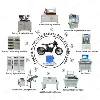
ACEY-BCT506-512H battery charge discharge test equipment uses modern electronic monitoring and control devices instead of manual work to monitor the real-time voltage, current, capacity, energy, formation state and other parameters of distributed battery formation in real time, diagnose and handle faults, record and analyze relevant data, so as to realize unattended and batch processing in the formation process.

Based on this theory, different charging methods have distinct advantages and disadvantages: Constant current charging, especially in the later stages, can lead to excessive current and internal gas evolution; constant voltage charging, with its initial high current peak, directly damages the battery. Constant current/constant voltage charging and stepped constant current charging methods overcome these drawbacks and have become the mainstream charging methods. While reverse pulse charging can eliminate polarization, it has a negative impact on battery life and is not yet widely used.
The charge/discharge rate and cutoff conditions are equally critical. Higher discharge rates result in faster capacity loss: after 300 cycles at 0.5C, 1C, and 2C rates, the capacity loss rates are 10.5%, 14.2%, and 18.8%, respectively. This is because high-rate charging and discharging causes lithium-ion diffusion to lag behind, leading to concentration polarization and accelerating the destruction of electrode material structures and the thickening of the SEI film. The charging cut-off voltage is equally crucial: increasing the charging cut-off voltage of lithium cobalt oxide batteries from 4.2V to 4.9V (K. Maher et al., 2024 *Chinese Journal of Electrochemistry*) causes a "phase transition" in the electrode structure (an irreversible change in the material's crystal structure), directly leading to a reduction in cycle life of more than 50%.
3. Temperature: A critical environmental variable; both high and low temperatures damage batteries.
Temperature: The 2024 *White Paper on Cycle Life of Power Batteries* from the Institute of Physics, Chinese Academy of Sciences, shows that the optimal operating temperature for lithium batteries is 25±5℃. Above 50℃, the SEI film decomposes three times faster; below -10℃, the electrolyte ionic conductivity decreases by 80%, resulting in a significant reduction in battery capacity.
Consistency: (2023, *Journal of Automotive Engineering*) tests show that batteries with a single-cell lifespan of 1200 cycles only achieve 191 cycles after being assembled into a battery pack-this is the "weakest link" effect in battery packs, where one battery drags down the entire system.
II. Three Prediction Methods for Early Understanding of Battery "Health Status"
Lithium-ion battery cycle life testing often takes months or even years, resulting in extremely high costs and failing to meet the rapid demands of product development, production quality inspection, and maintenance. Therefore, establishing scientific life prediction models has become a hot research topic in the industry. Currently, mainstream prediction methods can be divided into three categories based on information sources, each with its own advantages, disadvantages, and applicable scenarios.
ACEY energy-saving battery cycle life tester is designed for a comprehensive range of battery pack aging tests, suitable for various types including ternary, lithium iron phosphate, lead-acid, nickel-metal hydride, and nickel-cadmium. The equipment is ideal for battery manufacturing enterprises to test battery modules during production, as well as for high current charging and discharging detection in EV/HEV power battery systems. It is also used for high-current charging and discharging tests, battery performance assessments, and daily maintenance of battery modules in battery factories and charging stations.

1. Prediction Based on Capacity Degradation Mechanisms: Understanding the Internal Essence, High Accuracy but High Barrier to Entry
The core of this method is a deep understanding of the physicochemical reaction mechanisms within the battery. By establishing mathematical models to describe key processes such as active lithium loss, SEI film growth, and electrode material phase transitions, battery life can be predicted.
2. Prediction Based on Characteristic Parameters: Balancing Convenience and Accuracy Through External Signals
This method does not require in-depth exploration of internal mechanisms but rather utilizes changes in monitorable characteristic parameters during battery aging to indirectly infer battery cycle life. Currently, the most widely used characteristic parameter is electrochemical impedance spectroscopy (EIS). Electrochemical impedance spectroscopy (EIS) can reflect the internal impedance state of a battery in detail and has high prediction accuracy. However, the testing equipment is susceptible to external interference, and spectral analysis requires specialized knowledge. In contrast, pulse impedance measurement is simpler to operate and faster, making it suitable for online real-time monitoring and showing broad application prospects in battery management systems (BMS) for new energy vehicles.

The core advantage of this method is that it balances accuracy and convenience, requiring no complex mechanistic analysis, making it suitable for engineering applications. However, its disadvantages include the need for extensive experimental verification of the correlation between characteristic parameters and lifespan, differences in patterns among different battery types, and room for improvement in its universality.
3. Data-driven prediction: Relying on big data patterns, simple and practical but limited by data
This method does not involve the internal mechanisms of the battery. Instead, it collects a large amount of battery cycle test data and uses machine learning, statistical analysis, and other algorithms to mine patterns and trends in the data to build a predictive model. Currently, mainstream models include time series models (such as AR models), artificial neural networks (ANN), and correlation vector machines (RVM). The AR (Analog-Regression) model is a linear model that infers the current state based on historical data. However, battery capacity degradation exhibits a non-linear relationship with the number of cycles. Therefore, Luo et al. proposed an improved non-linear AR model by introducing an accelerated degradation factor, significantly improving prediction accuracy.
Artificial Neural Networks (ANNs) are typical non-linear models, composed of multiple neurons. They can handle complex relationships involving multiple variables and strong coupling, making them well-suited for addressing uncertainties in battery performance prediction. Relevance Vector Machines (RVMs) belong to data regression analysis methods. They can control overfitting and underfitting by adjusting parameters and provide probabilistic prediction results, offering greater flexibility and reliability.
The advantages of this method are its simplicity and wide applicability. It does not require in-depth knowledge of the battery's internal structure; a model can be built with sufficient historical data. However, its disadvantages are also obvious: the prediction effect heavily depends on data quality and coverage. If the data is biased or does not cover key operating conditions, the prediction results may have large errors and cannot explain the root cause of lifespan degradation.

III. Practical Life Extension Techniques
Mastering the following practical techniques can effectively slow down the degradation rate of lithium batteries, making them more durable:
- Temperature control is key: Avoid prolonged exposure of the battery to temperatures above 50℃. In summer, avoid direct sunlight on new energy vehicles, and ensure proper heat dissipation for energy storage devices. In winter, avoid prolonged operation of the battery below -10℃; preheating is recommended before use.
- Gentle charging and discharging: Use gentle charging methods such as constant current/constant voltage or stepped constant current charging whenever possible, avoiding high-rate fast charging and discharging. In daily use, avoid completely depleting the battery (deep discharge) or storing it fully charged for extended periods. Maintaining the battery level between 20% and 80% is more conducive to extending battery life.
- Choose high-quality battery packs: When purchasing new energy products, prioritize products from reputable brands with good single-cell consistency and reasonable heat dissipation design, such as CATL and EVE Energy, to reduce the risk of battery degradation from the source.
summary
Behind the cycle life of lithium batteries lies the interdisciplinary integration of materials science, electrochemistry, thermal management, and systems engineering. Understanding the influencing factors helps us better utilize lithium battery products; mastering the prediction methods can support technological upgrades in the industry.
Whether it's the issue of range degradation that ordinary consumers are concerned about, or the technological breakthroughs pursued by industry practitioners, the cycle life of lithium batteries is a core topic that cannot be avoided.